If you’re going to review a book, it helps to read it first
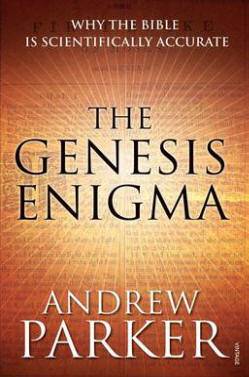
Interested in seeing what has been published recently on the relationship between science and Christian faith, I chanced upon some reviews on Amazon of Andrew Parker’s The Genesis Enigma (Black Swann, 2010).
Some of the reviews were favourable, others not. Among the latter, one individual informed us:-
[This] book is not worth reading.
Another opined:-
[This book has nothing] interesting to say at all. [It is] candy for believers, a comforter which has nothing relevant to contemporary discourse.
Yet another asserted:-
The main problem I had with this book is the lack of meat. With such weak arguments, the book is filled with irrelevant tangents. These may provide interesting reading if you’re unfamiliar with them, but if not you’ll find them a chore.
What do these three reviewers have in common? None of them has read the book! The first two base their comments on someone else’s review, while the third admits that s/he ‘flicked through this book in a shop.’
At least these extraordinary specimens of laziness were spotted by some of the other reviewers, who offered appropriate admonishments.
It seems to me that the Internet offers wonderful opportunities for immediacy in communication. But reviewing of a book before you have read it is surely taking immediacy a step too far.
Oh, and in case you’re wondering: no, I haven’t read the book myself. And therefore: no, I’m not going to give you my opinion on it.