The ‘perfect preacher’?
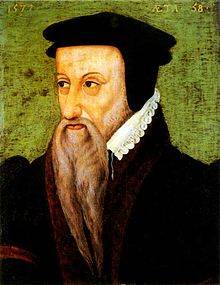
Tim Keller, in his recent book, Preaching: Communicating Faith in an Age of Scepticism, p50, notes:
Theodore Beza was a younger colleague and successor of John Calvin, the founder of the Reformed branch of Protestantism during the Reformation. In his biography of Calvin, Beza recalled the three great preachers in Geneva during those years— Calvin himself, Guillaume Farel, and Pierre Viret. Farel, said Beza, was the most fiery, passionate, and forceful in his sermonic delivery. Viret was the most eloquent, and audiences hung on his skillful and beautiful words. The time flew by fastest when sitting under his preaching. Calvin was the most profound, his sermons packed full of “the weightiest of insights.” Calvin had the most substance, Viret the most eloquence, and Farel the most vehemence. Beza concluded “that a preacher who was a composite of these three men would have been absolutely perfect.” Beza is acknowledging here that his great mentor, John Calvin, was not the perfect preacher. He majored in great content, but he was not as skillful as others in commanding attention, in persuasion, and in the engagement of heart motives. Viret and Farel were more engaging and moving.
Conclusion? For Beza, the ‘perfect preacher’ would be a combination of all three. Accordingly, ‘perfection’ is not attainable. Each preacher has a different combination of strengths and weaknesses. We should accept our strengths for what they are and seek to build on them. And we can recognise and weaknesses too, and strive to minimise their adverse effects.