Of the preaching of the word
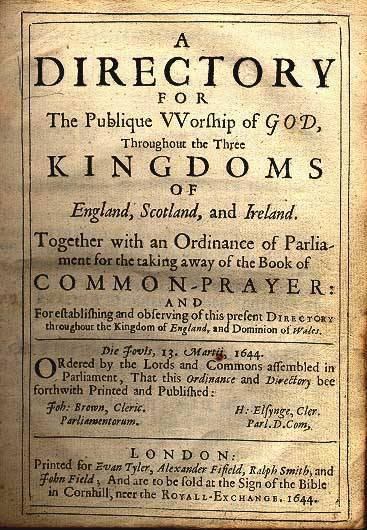
I here reproduce the wise words of the Westminster Directory for the Public Worship of God on this subject, as found here.
Preaching of the Word, being the power of God unto Salvation, and one of the greatest and most excellent Works belonging to the Ministry of the gospel, should be so performed, that the Workman need not to be ashamed, but may save himself, and those that hear him.
It is presupposed…that the Minister of Christ is in some good measure gifted for so weighty a service, by his skill in the Original Languages, and in such Arts and Sciences as are handmaids unto Divinity, by his knowledge in the whole Body of Theology, but most of all in the holy Scriptures, having his senses and heart exercised in them above the common sort of Believers; And by the illumination of Gods Spirit, and other gifts of edification which (together with reading and studying of the Word) he ought still to seek by Prayer, and an humble heart, resolving to admit and receive any truth not yet attained, when ever God shall make it known unto him. All which he is to make use of, and improve, in his private preparations, before he deliver in publike what he hath provided.
Structure and content
Ordinarily, the subject of his Sermon is to be some Text of Scripture, holding forth some principle or head of Religion; or suitable to some special occasion emergent; or he may go on in some Chapter, Psalm, or Book of the holy Scripture, as he shall see fit.
Let the Introduction to his Text be brief and perspicuous, drawn from the Text it self, or context, or some parallel place, or general sentence of Scripture.
If the Text be long (as in Histories and Parables it sometimes must be) let him give a brief sum of it; if short, a Paraphrase thereof, if need be: In both, looking diligently to the scope of the Text, and pointing at the chief heads and grounds of Doctrine, which he is to raise from it.
In Analysing and dividing his Text, he is to regard more the order of matter, then of words; and neither to burthen the memory of the hearers in the beginning, with too many members of Division, nor to trouble their minds with obscure terms of Art.
In raising Doctrines from the Text, his care ought to be, First, that the matter be the truth of God. Secondly, that it be a truth contained in, or grounded on that Text, that the hearers may discern how God teacheth it from thence. Thirdly, that he chiefly insist upon those Doctrines which are principally intended, and make most for the edification of the hearers.
The Doctrine is to be expressed in plain terms; or, if any thing in it need explication, is to be opened, and the consequence also from the Text cleared. The parallel places of Scripture confirming the Doctrine, are rather to be plain and pertinent then many, and (if need be) somewhat insisted upon, and applied so the purpose in hand.
The Arguments or Reasons are to be solid; and as much as may be, convincing. The illustrations of what kinde soever, ought to be full of light, and such as may convey the truth into the Hearers heart with spiritual delight.
If any doubt, obvious from Scripture, Reason, or Prejudice of the Hearers, seem to arise, it is very requisite to remove it, by reconciling the seeming differences, answering the reasons, and discovering and taking away the causes of prejudice and mistake. Otherwise, it is not fit to detain the Hearers with propounding or answering vain or wicked Cavils, which as they are endless, so the propounding and answering of them doth more hinder then promote edification.
Application
He is not to rest in general Doctrine, although never so much cleared and confirmed, but to bring it home to special Use, by application to his Hearers: Which, albeit it prove a work of great difficulty to himself, requiring much prudence, zeal, and meditation, and to the natural and corrupt man will be very unpleasant; yet he is to endeavour to perform it in such a manner, that his Auditors may feel the Word of God to be quick and powerfull, and a discerner of the thoughts and intents of the heart; and that if any unbeliever or ignorant person be present, he may have the secrets of his heart made manifest, and give glory to God.
(a) In the Use of Instruction or Information in the knowledge of some truth, which is a consequence from his Doctrine, he may (when convenient) confirm it by a few firm Arguments from the Text in hand, and other places of Scripture, or from the nature of that Common place in Divinity, whereof that truth is a branch.
(b) In Confutation of false Doctrines, he is neither to raise an old Heresie from the grave, nor to mention a blasphemous opinion unnecessarily: But if the people be in danger of an Errour, he is to confute it soundly, and endeavour to satisfie their judgements and consciences against all objections.
(c) In Exhorting to Duties, he is, as he seeth cause, to teach also the means that help to the performance of them.
(d) In Dehortation, Reprehension, and publique Admonition (which require special wisdom) let him, as there shall be cause, not only discover the nature and greatness of the sin, with the misery attending it, but also shew the danger his Hearers are in to be overtaken and surprized by it, together with the Remedies and best way to avoid it.
(e) In applying comfort, whether general against all tentations, or particular against some special troubles or terrors, he is carefully to answer such objections as a troubled heart and afflicted spirit may suggest to the contrary.
(f) It is also sometimes requisite to give some notes of trial (which is very profitable, especially when performed by able and experienced Ministers, with circumspection and prudence…) whereby the Hearers may be able to examine themselves, whether they have attained those Graces, and performed those Duties to which he exhorteth, or be guilty of the sin Reprehended, and in danger of the judgements threatned, or are such to whom the Consolations propounded do belong, that accordingly they may be quickned and excited to duty, humbled for their Wants and Sms, affected with their Danger, and strengthened with Comfort as their condition on examination shall require.
[J. I. Packer remarks that the above points are ‘inferential and logical’: ‘since this is true (‘this’ being the truth just taught), you must (1) be sure of the following further truths, which implies; (2) abjure the following errors, which it contradicts; (3) do such-and-such good things, which it requires; (4) stop doing, or avoid doing, such-and-such bad things, which it forbids; (5) take to yourself the encouragement which it offers; (6) ask yourself where you stand spiritually in the light of it, and how far you are living by it.’ (Among God’s Giants)
And, as he needeth not alwayes to prosecute every Doctrine which lies in his Text, so is he wisely to make choice of such Uses, as, by his residence and conversing with his flock, he findeth most needfull and seasonable: and, amongst these such as may most draw their souls to Christ, the fountain of light, holiness and comfort.
This method is not prescribed as necessary for every man, or upon every Text; but only recommended, as being found by experience to be very much blessed of God, and very helpfull for the peoples understandings and memories.
(Headings, lettering and emphasis added)