Approaching the Gospels
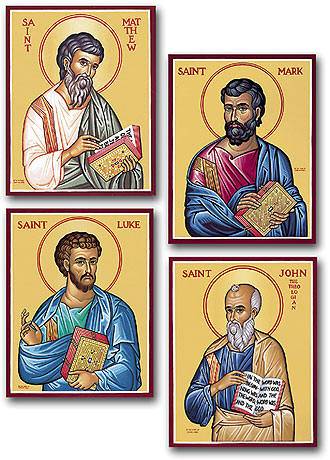
The Gospels are about Jesus – his coming, his earthly ministry, his cross and resurrection. The preacher should remember this for the following reasons:-
- The early Christians did not talk about four Gospels – the Gospel of Matthew, of Mark, and so on – but about the one gospel according to Matthew, according to Mark, and so on. This approaches emphasises what they have in common (in contrast to their diversity, which is often stressed in modern scholarly circles). They are all about the good news of Jesus Christ, and place centre-stage (as Paul does in 1 Cor 15:3) his death and resurrection. Later ‘Gospels’ are very different: the ‘Gospel of Thomas’, for example, has virtually no narrative, consisting rather of purported sayings of Jesus.
- It follows that we should not preach the teachings of Jesus in ways that are unconnected to the storyline that leads to his death and resurrection. Conversely, we should not seek to expound his death and resurrection in ways that do not seek to draw together themes that were developing in the preceding narrative, such as kingdom (in the Synoptics) and eternal life (in John).
- It follows too that the Gospels are not primarily about discipleship, say, or evangelism. Our preaching will be skewed if we fail to deal with these other topics – vital as they are – in relation to the person and work of Christ. This is simply to do what Paul did: to do nothing but preach Christ, and him crucified.
- Preachers should not be too quick to overdo the parallels between the coming-to-faith of the disciples (and others) in the Gospels and our own coming-to-faith today. Lessons can and should be leaned from, say, their strengths and weaknesses, their successes and failures, and our own. But (to give one example) Peter’s great confession of faith (Mark 8; Matthew 16) took place before Jesus’ crucifixion – an event which, at the time, was utterly incomprehensible to Peter. But the cross and resurrection, and the redemption that they achieved, have now happened, and we cannot think of Jesus apart from these events. So, we should not dwell for too long on how the various people who crop up in the Gospel narratives came to faith. We should, rather, focus on who Jesus is, and how ‘he himself drew the strands together that showed him to be, simultaneously, the promised Davidic Son of god and the Passover Lamb (John), he Conquering King and Suffering Servant (Matthew).’
All this means that he focus is on Jesus himself, and especially how he is the goal – or, if we change the image, the fulcrum – of God’s redemptive purposes. The partial or even failed understandings of the participants in the narraitve function to point to him, not to provide a profile of a generic coming-to-faith.
In short, if we preach the Gospels faithfully, we will focus supremely on preaching Jesus Christ.
Based on D.A. Carson, ‘Preaching the Gospels’, in I. Paul & D. Wenham, ‘We Proclaim the Word of Life’: Preaching the New Testament Today, p17-20.