The blind men and the elephant
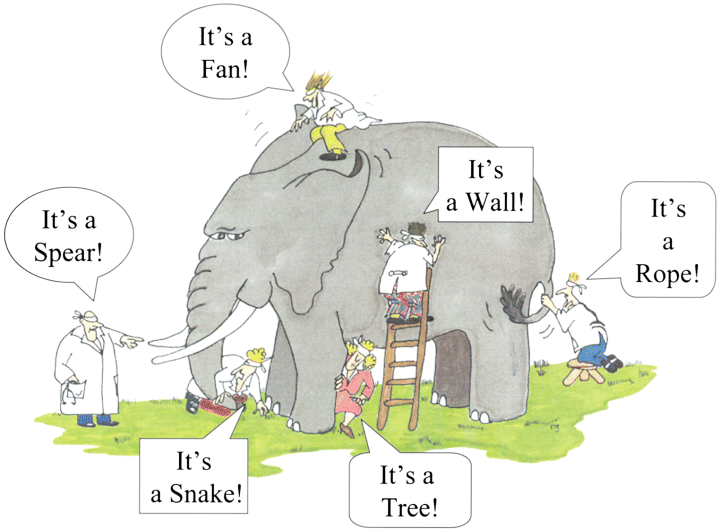
A famous Indian fable tells of a number of a blind men who try to describe an elephant. One, touching its side, declares that it is ‘like a wall’. Another, feeling the tusk, think that it is ‘like a spear’. Yet another, encountering its trunk, says that it is ‘like a snake’. Other contenders are ‘like a fan’ (the ear), ‘like a rope’ (the tail) and so on.
The intended moral of the story is clear: no-one has a monopoly on the truth. Religious truth, especially, is a matter of limited knowledge, based on one’s own experience and perspective.
I’ve certainly heard this story used to promote an attitude of religious inclusivism. Each religion has its own view of God. Each one has a bit of truth, but none has the whole truth. Let’s be humble about our own truth-claims and accepting of other people’s.
There are, however, some serious flaws in the argument.
For one thing, the story depends on there being an elephant out there. There is a whole to be discovered, even if our knowledge of it is incomplete. Someone has put it like this:-
For another thing, as Tim Keller observes, the story ‘backfires on its users’:-
(The Reason for God, p9)