Preaching Christ from the Old Testament
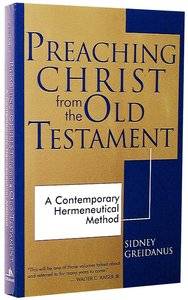
How can we preach Christ from the Old Testament? Sydney Greidanus outlines seven ways:-
1. Redemptive-historical progression—seeing the message of the passage in the context of redemptive history from beginning to end, especially following the progression of redemptive history as it moves forward from the text’s historical setting to Jesus’ First and/or Second Coming. [Example: Gen 3 and the ‘Fall’, finding its remedy in the saving work of Christ]
2. Promise-fulfillment—showing that the promise of a coming Messiah was fulfilled in Jesus’ First Coming or will be fulfilled in his Second Coming. [Example: Isa 53 as a promise of the coming Messiah]
3. Typology—moving from an Old Testament type prefiguring Jesus to the antitype, Jesus himself. [Example: Jesus as the ‘new Moses’]
4. Analogy—noting the similarity between the teaching or goal of the text and the teaching or goal of Jesus. ‘[Example:
5. Longitudinal themes—tracing the theme (or subtheme) of the text through the Old Testament to Jesus Christ in the New Testament. [Example: the oneness of God, developing into a revelation of God’s triunity]
6. New Testament references—moving from the preaching text to Jesus by way of New Testament verses which cite or allude to the preaching text and link it to Christ. [Example: the OT texts upon which the Letter of the Hebrews is based]
7. Contrast—noting the contrast between the message of the text and that of the New Testament, a contrast which exists because Christ has come. [Example: Adam and Christ]
(Emphasis and [examples] added)
Of course, there is some overlap between the categories, and not all of them may be relevant to any particular OT text.
Preaching Christ from Daniel: Foundations for Expository Sermons, p27.