Presuppositionalist apologetics
Many Christians will be aware of the evidentialist approach to apologetics. This approach uses among other strategies, logical arguments for the existence of God and historical evidence for the person and work of Jesus Christ. These are marshalled in order to convince the unbeliever see that the Christian faith is reasonable and evidence-based.
Less familiar, however, is the presuppositionalist approach. Rooted in the thought of Augustine and Anslem (“I believe in order to understand”), it is most often associated with Cornelius Van Til and his disciples. Presuppositionalism asserts that the knowledge of God begins with certain unprovable assumptions, including his very existence. The presuppositionalist then aims to show that it is only by accepting these basic assumptions that we can come to anything like a coherent and meaningful view of things. S/he also attempts to demonstrate the flaws and weaknesses in worldviews that ignore these basic assumptions.
Presuppositionalism, then, does not end with God as the conclusion of rational enquiry. It begins with God as the very basis for all rational enquiry:-
‘Because the God of the Bible is the creator of all things, we know that He is not just the source of all physical things, but all laws whether they be scientific laws, moral laws, or logical laws. Therefore there can be no reason or logic, for example, apart from God.’ (Powell)
Van Til and others would argue that sin has so blinded the unregenerate mind that it is incapable of being persuaded by argument and evidence. There is, accordingly, very little common ground between the believer and the unbeliever. Dan Story (himself not a presuppositionalist) summarises:-
‘Human rebellion against God caused a fundamental rift to occur between God and man. This rift was so traumatic and devastating that it rendered human beings incapable of responding to and thinking clearly about their Creator. The only way these terrible consequences can be overcome is by God reaching out to us, redeeming and restoring us to our right minds and a right relationship with Him. Until He does that, however, we are not capable of accepting or even understanding Christianity, much less accurately considering whether its claims to truth are really valid or not.’
We might say, then, that whereas the aim of the evidentialist is to persuade, the aim of the presuppositionalist is to proclaim.
The two approaches are often considered (by their own adherents) to be mutually incompatible. However, I am inclined to think of them as complementary.
The issue turns on whether reason and evidence have any place in bringing sinners to a knowledge of God. The presuppositionalist would argue in the negative, whereas the evidentialist would argue in the positive.
An important strand of biblical teaching supports the idea that true knowledge of God transcends reason and evidence. As Frame writes: ‘Jesus himself reveals the Father to those he chooses (Mt 11:25ff). Believers know God’s mysteries by revelation of his Spirit, in words inspired by the Spirit, giving them “the minds of Christ” (1 Cor 2:9-16; cf. 2 Tim 3:16). So, by believing in Jesus, they know that they have eternal life (1 Jn 5:7)’ (Frame). God cannot be known through merely human wisdom (1 Cor 1:18-2:16; 3:18-23). As sinners (i.e. apart from God’s grace), we know the truth of God and yet suppress that knowledge, exchanging it for a lie (Rom 1:18, 25). It is supernatural knowledge which is powerful to overcome arguments and pretensions so that it becomes possible to ‘take captive every thought to make it obedient to Christ’ (2 Cor 10:5). When Peter opposes uniformitarianism, he does so not by appeal to empirical enquiry, but rather by appeal to the word of God (2 Pet 3:1-13).
‘Indeed,’ (Frame continues) ‘Christians believe that the very meaningfulness of rational discourse depends on God, as everything depends on God. Indeed, it is Christ in whom ‘all things hold together’ (Col 1:17) and ‘in whom are hidden all the treasures of wisdom and knowledge’ (Col 2:3). It is the ‘fear of the Lord’ that is ‘the beginning of knowledge’ (Prov 1:7) and ‘the beginning of wisdom’ (Ps 111:10; Prov 9:10).’
Evidentialists might argue that since unbelievers do not accept Christian presuppositions, apologetics cannot appeal to them. They therefore present arguments that avoid distinctively Christian presuppositions. Presuppositionalists respond by saying that there can be no neutrality in this matter. The wisdom of God and the wisdom of the world are incompatible. It is only by trusting God’s word that we can come savingly to Christ (Jn 5:24; 8:31; 15:3; Rom 10:17). After it is that very word which is the ultimate criterion of truth and error (Deut 18:18f; 1 Cor 14:37; Col 2:2-4; 2 Tim 3:16f; 2 Pet 1:19-21).
Presuppositionalism and evidentialism do present two contrasting and seemingly incompatible approaches to apologetics. But I’m not convinced that it is quite as simple as those two polar opposites would suggest. The presuppositionalist is correct to argue that fallen human nature cannot comprehend the things of God, but wrong if s/he supposes that the Holy Spirit does not work in and through reason and evidence in order to point the way to God. Conversely, the evidentialist is right to appeal to reason and evidence in order to point to the truth about Scripture and its God, but wrong if s/he supposes that these are sufficient to bring a person to a saving knowledge of the gospel.
It seems to me that Scripture paves the way for both approaches. It has often been noted that Scripture makes no attempt to prove the existence of God, and that the word of God comes as a simple command to repent and believe. But it is also true that reason and evidence are appealed to in order to point the way towards God and his truth. After all, God’s image in humankind is deeply tainted by sin, but not obliterated.
I think we can see both approaches working in John’s Gospel, chapter 8. When Jesus declares himself to be ‘the light of the world’ (v12), the Pharisees challenged him, saying, “Here you are, appearing as your own witness; your testimony is not valid.”
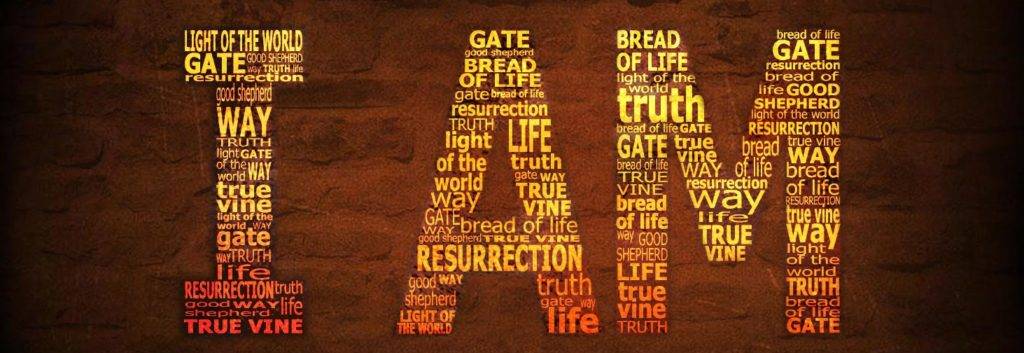
Jesus replies, first of all, that his testimony is valid, because he knows where he comes from and where he is going. Moreoever, he says, there is a second witness in the case – the Father, who sent him. Now, there is some appeal to reason and evidence here, because our Lord refers them to their own Law, in which it is written that the testimony of two men is valid. But Jesus is speaking ad hominem. The main thrust of what he says at this point is that his self-testimony is valid simply because of who he is and what he knows. It is interesting that there is a greater concentration of ‘I am’ statements in this passage than in any other. Jesus ‘is’, just as God ‘is’. Here is ultimate truth, the starting point of enquiry, rather than its conclusion.
But when they failed to understand (v27), Jesus added: “When you have lifted up the Son of Man, then you will know that I am and that I do nothing on my own but speak just what the Father has taught me.” This ‘lifting up’ of the Son of Man is a reference to his being ‘lifted up’ on the cross, and from the cross. Both are verifiable historical events. Their factuality will be so apparent that the Pharisees will ‘know’ (some, but not all, savingly) then what they are at present ignorant of. And the bare promise of events that had not yet taken place was enough for ‘many’ to ‘put their faith in him’ (v30).
Dan Story, ‘Defending Your Faith’
Doug Powell, ‘Holman Quicksource Guide to Christian Apologetics’
Paul Copan, ‘Questioning Presuppositionalism’. Online.
K. Scott Oliphant, ‘Answering Objections to Presuppositionalism’. Online.
William Edgar, ‘Fides Quaerens Intellectum: What Is Presuppositionalism?’ Online.