‘I’m really sorry’
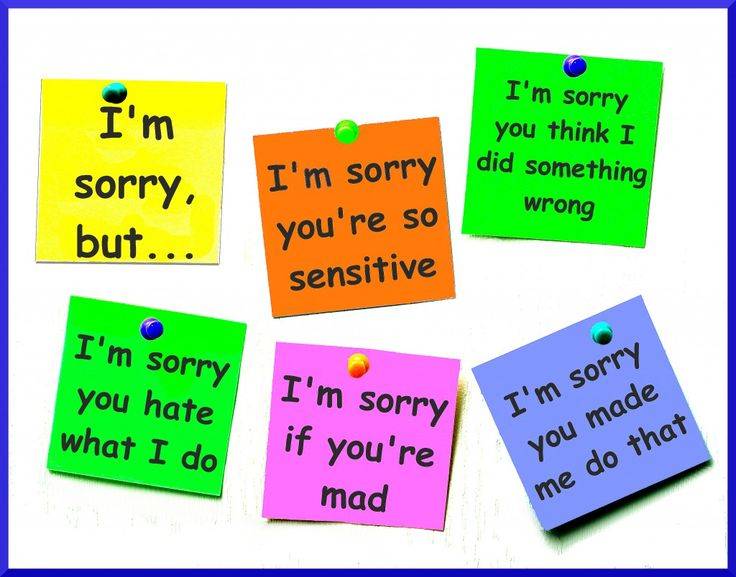
[This is a repost of something I wrote in February 2008. It kept attracting spam comments, so let’s see if re-locating it throws the spammers off the trail.]
Many psychologists emphasise the healing power of forgiveness. Professor Aaron Lazare, Dean of the University of Massachusetts medical school, however, has written a book called On Apology. As reported at the time in The Independent, 28/12/04, Lazare says that saying sorry has the power ‘to heal humiliations, free the mind from deep-seated guilt, remove the desire for vengeance, and restore broken relationships.
‘A wronged person is in a state of humiliated rage, interpreting the external world through the lens of fear and rage.’ A humiliated person feels stunned for several minutes with thoughts about the event seeming to multiply and intensify and persist for hours or even days. the comes anger, motivating often irrational behaviour and gradually resolving into a grudge, ‘a form of residual or dormant anger.’
Ending this suffering, however, needs more than a mumbled “sorry.” ‘Two persons must participate in an interaction at high risk of producing discomfort: the offender, in the position of a supplicant who exposes weaknesses and risks rejection or retaliation; and the offended party, who may be reluctant to relinquish a treasured grudge or even admit being hurt.’
According to Lazare, the greatest apology was delivered by Abraham Lincoln, in his second inaugural address. ‘He offered an apology full of humility and remorse for the “national offence” of slavery, describing how “one-eighth of the whole population” had been forced into “250 years of unrequited toil” by “blood drawn with the lash.”
One form of pseudo-apology is one which fails to take full responsibility for what has happened. Cardinal Edward Egan, of New York, qualified the apology he delivered at the height of the Catholic Church’s paedophile crisis as follows: “If in hindsight we also discover that mistakes may have been made as regards prompt removal of priests and assistance to victims, I am deeply sorry.” Another type of pseudo-apology is one which does not involve a subsequent change of behaviour. According to Ken Blanchard (The One-Minute Apology), ‘an apology needs to be substantiated by a change in behaviour that recognises the hurt caused to others and demonstrates a commitment not to repeat the act.’
Why people won’t apologise
-
Fear that the recipient will lose respect, become smug, make a scene or withhold forgiveness.
-
The belief that, if you don’t apologise, the offended party will remain unaware that any offence has been committed against them.
-
A strong desire not to feel weak, defeated, guilty or in any way a loser.
-
Ignorance about how to apologise properly.
Factors that make a good apology
-
A fully expressed sense of remorse, shame and humility on the part of the offender.
-
Specifically about the grievance: it can be helpful to list all the causes of the grievance.
-
A willingness to take responsibility for the offence, thereby assuring the victim that it was not their fault.
-
A willingness to make reparation where necessary, and – vitally to go on the change harmful behaviour.
It seems to me that in our relationships with other followers of Jesus Christ, there might be more to it than this. But not less.