Old Testament violence: yes, let’s apply the hermeneutic of Jesus
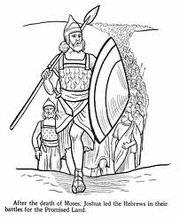
Christian writers of a certain stripe seem to be queueing up to say pretty much the same thing: the Old Testament contains texts that have repeatedly been used to legitimate violence in the form of colonialism, abuse of women, and genocide. We should not ignore these texts, nor yet try to justify them. We should see, rather, how they have been thoroughly subverted by the teaching and example of Jesus Christ.
One such writer is Eric Seibert, in The Violence of Scripture: Overcoming the Old Testament’s Troubling Legacy.
I think that Paul Copan’s comments on this book are helpful. Here’s some of what Copan has to say:-
1. Seibert is right to challenge us to take these texts seriously. Scholars such as Christopher Wright, Gordon Wenham, David Lamb, and John Goldingay have done just that, although reaching rather different conclusions to those of Seibert. Moreover, we should, with Seibert, question the abuse of Scripture by professing Christians. But, then again, ‘despite “Christian” distortions of Scripture across the centuries, let’s not forget about the numerous moral gains brought about by, yes, Bible-reading Christians in Western civilization—democracy, human rights, women’s rights, civil rights, abolition, and much more.’
2. Seibert is critical of the church’s ‘grand claim’ that Scripture is ‘the word of God.’ Trouble is, if we are to accept the ‘Jesus hermeneutic’, as Seibert urges, then we will have to agree that Jesus made pretty much the same ‘grand claim’ himself (see, for example, Matthew 5:18; John 10:35).
3. Seibert’s appeal to Christ’s authority is selective. As Copan says:-
‘In OT prophetic fashion, Jesus regularly issues denouncements and threats of judgment. He routinely pronounces temporal judgment on Jerusalem, which would come at the hands of Rome in AD 70. He also assumes Sodom, Tyre, and Sidon had been divinely judged, which serves a springboard for condemning Bethsaida, Chorazin, and Capernaum in Matthew 11:21-24 (cf. Matt. 10:15). Notice these warnings of judgment immediately precede Jesus’ self-description as gentle and humble in heart (Matt. 11:28-30)! Jesus likewise takes for granted divine judgment in Noah’s day (Matt. 24:37-39). And in a symbolic act, an enraged Jesus makes a whip to drive out moneychangers from the temple (John 2:15). Does this act not have a touch of the kind of “violence” Seibert condemns? What of Jesus’ indictment of stumbling blocks who should have a millstone tied around their necks and be drowned (Matt. 18:6)? Christ also threatens the “wretched” vinegrowers (Israel’s leaders) with judgment (Matt. 21:41; Mark 12:9)—just as he does the Nicolaitans and “Jezebel” in Revelation (Rev. 2:16, 21-23). Unlike Seibert, Jesus clearly believes in the appropriateness of temporal divine punishment.’
4. What about the rest of the New Testament?:-
‘Paul references severe temporal punishments on Israel as an example to us (1 Cor. 10)—some Israelites laid low, others destroyed by serpents, others by “the destroyer.” He acknowledges the judgment of sickness and even death because of the abuse of the Lord’s Table (1 Cor. 11:30). Stephen matter-of-factly mentions nations dispossessed by Joshua (Acts 7:11). Paul says Israel “overthrew” the seven nations of Canaan (Acts 13:19). The author of Hebrews speaks of the faith of those who “conquered kingdoms,” “became mighty in war,” and “put foreign armies to flight” (Heb. 11:33-34). He also commends Noah and Abraham for their faith (Heb. 11:7, 17)—the very settings of “virtuous violence” Seibert rejects. And what about the temporal judgments—and final judgment—on unbelievers mentioned throughout Revelation?’
The truth is, that Jesus and the apostles simply do not read the Old Testament the way Seibert thinks they should. It is only by ignoring, glossing over, or even denying the authenticity of certain sayings or the historicity of certain events that he can even begin to mount his case. The ‘Jesus hermeneutic’, in Seibert’s hands, becomes a hermeneutical straightjacket. It becomes, not a lens through which we read Scripture, but rather a sieve through which we force Scripture to pass, allowing some texts through and blocking others. As it was in the days of Marcion (around AD155), so it is today: the price to be paid for side-stepping the violence of Scripture is violence to Scripture.