Burial or cremation?
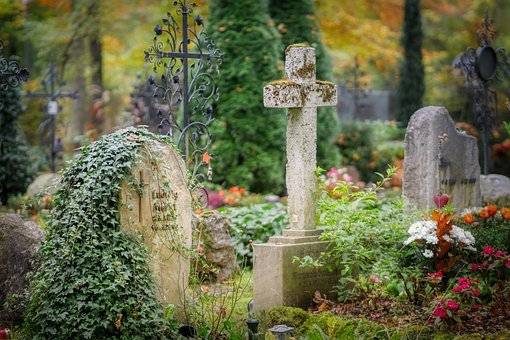
Although in primitive times cremation was uncommon, in the ancient civilised world it became the normal means of disposing of the dead. The main exceptions were Egypt, Judea and China.
Because of their belief in bodily resurrection, the early Christians favoured burial, and this remained common practice until the 19th century. This change was due partly to the influence of free-thinkers (the secular humanists of their day), although the practice of cremation has become increasingly accepted among Christians.
The number of crematoria in Britain has increased from 1 (1885), to 4 (1900), to 58 (1950), to 310 (2020). (Source)
Cremation has become more accepted not only because of the influence of secular thinking, but also for reasons of hygiene, space and economics (burial tends to be considerably more expensive than cremation).
Cremation is not practiced by orthodox Jews or Muslims. The Eastern Orthodox Church normally forbids cremation, whereas in the Roman Catholic Church is has been permitted (but not recommended) since 1963. The Church of England permits cremation, but requires that, where possible, the ashes should be interred or deposited in consecrated ground.
In the Old Testament, burial in mentioned over 200 times, whereas cremation is clearly the exception (see 1 Sam 31:11-13; Amos 2:1; 6:8-10).
So, what, for the Christian, are the issues?
The question is not whether God can, at the general resurrection, re-assemble a cremated body. A body that has been buried decomposes too. And what would we have to say about a person who has been burned at the stake, or fed to the lions, or torn apart and digested by sharks? And, in any case, resurrection cannot simply be a matter of gathering one’s atoms and molecules and revivifying them, since we are all ‘recycled material’ from that point of view*. Of course God can resurrect the body, however the person died, and whatever happened to their physical remains.
Nor is the question whether cremation is sinful. It is, rather, whether it is wise and prudent.
Consider the following pair of scenarios:
1. A deceased person’s body is cremated, and the ashes are scattered to the four winds. What is that saying? It is saying that there is no more use for the body, and its elements are being returned to the ground from whence they came.
This scenario reflects (consciously or unconsciously) a Platonic way of thinking. The body is the prison of the soul. At death, the soul is released and there is no more use for the body. Many Christians have been taught to think like this. For them, death means that the soul goes to heaven, and leaving the body behind. It is also worth noting that cremation is common in Buddhism and Hinduism (both of whose outlooks on the physical world and on the physical body are very different from that of classical Christianity).
2. A deceased person’s body is buried, and laid in a grave. What is that saying? It is saying that the body does have a future, and that it will be raised at the last day (though not in the same physical form or with the same physical constituents that it had before). It is saying that the body is waiting (‘sleeping’ is a common biblical metaphor), just as the seed ‘waits’ in the soil (1 Cor 15:37,42-44).
This second scenario recognises that beyond death, with its wonderful hope of being ‘with Christ’, there is ‘a yet more glorious day’ to come – a day when their bodies will be transformed and raised, and the complete person (body and soul) will live and reign with their Saviour (himself raised bodily from his grave) in the new heaven and the new earth (Phil 3:21; Rom 8:11). (N.b. a ‘cemetery’ is, literally, a ‘sleeping place’).
To be sure, God can (and will) raise our mortal bodies, whether our remains have been created or buried. Those of us who have accepted cremation for our loved ones need not feel too badly about it. But it is worth asking: which of the two ways of dealing with the body after death more faithfully witnesses to God’s plan and purpose for it, both in this life and in the life to come?
*Bill Bryson writes:
‘Every atom you possess has almost certainly passed through several stars and been part of millions of organisms on its way to becoming you. We are each so atomically numerous and so vigorously recycled at death that a significant number of our atoms—up to a billion for each of us, it has been suggested—probably once belonged to Shakespeare. A billion more each came from Buddha and Genghis Khan and Beethoven, and any other historical figure you care to name.’ (A Short History of Nearly Everything)
See also
Joe Carter, What Christians Should Know About Cremation
Richard Phillips, What Should Christians Think About Cremation?
John Piper, Should Christians Cremate Their Loves Ones? A Modest Proposal.
Tom Wright, Surprised by Hope, chapter 2.