Our faithful Queen?
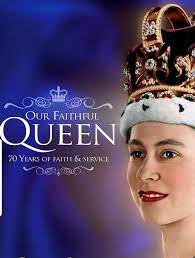
“Never speak ill of the departed” is reasonable advice, even if it sometimes leads to representing a drunken lout as ‘the life and soul of the party’, or a foul-mouthed youth as merely ‘cheeky’.
In the case of her late Majesty, Queen Elizabeth II, a lot has been said and written in praise her charm, wit, intelligence, steadfastness and worldwide influence for good.
And her Christian faith.
After her death, church leaders scoured her Christmas messages and other utterances for signs of orthodox and vital religion. And they found much to encourage them and their hearers.
I did that too.
But honesty requires that we ask whether we have engaged in a bit too much wishful thinking regarding our late monarch’s Christian faith.
Don’t get me wrong. I have no reason to doubt that her faith was genuine. But was it the untainted jewel that so many have made it out to be? Was it an example that we should all seek to emulate?
Paul Smith suggests that it was not. Writing in the Evangelical Times, Smith seeks to balance things out a bit.
The Queen was, no doubt, diligent in duty, and lived a life unsullied by scandal. She inspired affection and loyalty around the globe.
But consider, says Smith, the legislation that the Queen gave royal assent to: the 1967 Abortion Act, the 1994 Sunday Trading Act, and the 2003 Marriage (Same Sex Couples) Act.
Consider the Queen’s meetings with five different Popes.
Consider her passion for horse-racing, ‘a pastime inseparable from covetousness and gambling’.
With regard to her Christmas messages, many have pointed out that she became more outspoken in her expression of Christian faith in her later years (some would say, after the death of her mother).
In 2002 she said:
‘I know just how much I rely on my own faith to guide me through the good times and the bad. Each day is a new beginning, I know that the only way to live my life is to try to do what is right, to take the long view, to give of my best in all that the day brings, and to put my trust in God.’
The 2011 message is often quoted by those who want to paint her faith as rebustly evangelical:
‘Although we are capable of great acts of kindness, history teaches us that we sometimes need saving from ourselves – from our recklessness or our greed. God sent into the world a unique person – neither a philosopher nor a general, important though they are, but a Saviour, with the power to forgive. Forgiveness lies at the heart of the Christian faith. It can heal broken families, it can restore friendships and it can reconcile divided communities. It is in forgiveness that we feel the power of God’s love.’
But, even here, it is to be noted that the forgiveness is of one another, not of God’s forgiveness of us.
Right at the end of her life, in August 2022, the Queen wrote to the Lambeth Conference:
‘throughout my life, the message and teachings of Christ have been my guide and in them I find hope’.
But quotations can be drawn from these message in support of a range of beliefs and ideas, not always robustly orthodox:
‘In 2000 she stated that ‘the Bible, the Koran and the sacred texts of the Jews and Hindus, Buddhists and Sikhs, are all sources of divine inspiration and practical guidance passed down through the generations’.
In 2002 the Queen stated, ‘like others of you who draw inspiration from your own faith, I draw strength from the message of hope in the Christian gospel.’
In 2004 the Queen claimed that “diversity [seemingly cultural and religious] is indeed a strength and not a threat”.
‘In 2005 she said, “I believe also that… our faith – whatever our religion – can inspire us to work together in friendship and peace for the sake of our own and future generations.”‘
‘In 2006 she said, “It is very easy to concentrate on the differences between the religious faiths and to forget what they have in common – people of different faiths are bound together by the need to help the younger generation to become considerate and active citizens.”‘
Often, Jesus Christ is presented as a Great Example. In 1996 she said:
‘If only we can live up to the example of the child who was born at Christmas with a love that came to embrace the whole world.’
In 2000 she mused that Christ’s
‘great emphasis was to give spirituality a practical purpose’.
In 2006 she claimed that:
‘Christ was born to bring peace and tolerance to a troubled world’.
In 2013 she said, as a great-grandmother:
‘as with all who are christened, George was baptised into a joyful faith of Christian duty and service’.
In 2015 she claimed that:
‘Christ’s unchanging message was not one of revenge or violence but simply that we should love one another’.
When we consider that our late Queen was not a trained theologian; when we think of the difficulty of her position, as head of state in an increasingly plural society; and when we remember that her spiritual advisers were a veritable rag-bag of priests and bishops, we should not be surprised if her faith too often looked like a reflection of liberal Anglicanism.
Paul Smith concludes:
‘Should this not spur us on to pray that King Charles III would seek out and hear the gospel from believers he knows at this momentous time? And that he would hear faithful preaching from gospel men of which the Anglican Church is certainly not bereft.’