Knowing God, and knowing about him
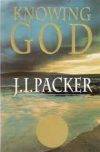
‘A little knowledge of God,’ wrote J.I. Packer, ‘is worth more than a great deal of knowledge about him.’
He continues:-
1. One can know a great deal about God without much knowledge of him.
I am sure that many of us have never really grasped this. We find in ourselves a deep interest in theology (which is, of course, a most fascinating and intriguing subject—in the seventeenth century it was every gentleman’s hobby). We read books of theological exposition and apologetics. We dip into Christian history, and study the Christian creed. We learn to find our way around in the Scriptures. Others appreciate our interest in these things, and we find ourselves asked to give our opinion in public on this or that Christian question, to lead study groups, to give papers, to write articles, and generally to accept responsibility, informal if not formal, for acting as teachers and arbiters of orthodoxy in our own Christian circle. Our friends tell us how much they value our contribution, and this spurs us to further explorations of God’s truth, so that we may be equal to the demands made upon us.
All very fine—yet interest in theology, and knowledge about God, and the capacity to think clearly and talk well on Christian themes, is not at all the same thing as knowing him. We may know as much about God as Calvin knew—indeed, if we study his works diligently, sooner or later we shall—and yet all the time (unlike Calvin, may I say) we may hardly know God at all.
2. One can know a great deal about godliness without much knowledge of God.
It depends on the sermons one hears, the books one reads, and the company one keeps. In this analytical and technological age there is no shortage of books on the church booktables, or sermons from the pulpits, on how to pray, how to witness, how to read our Bibles, how to tithe our money, how to be a young Christian, how to be an old Christian, how to be a happy Christian, how to get consecrated, how to lead people to Christ, how to receive the baptism of the Holy Spirit (or, in some cases, how to avoid receiving it), how to speak with tongues (or, how to explain away Pentecostal manifestations), and generally how to go through all the various motions which the teachers in question associate with being a Christian believer. Nor is there any shortage of biographies delineating the experiences of Christians in past days for our interested perusal.
Whatever else may be said about this state of affairs, it certainly makes it possible to learn a great deal secondhand about the practice of Christianity. Moreover, if one has been given a good bump of common sense one may frequently be able to use this learning to help floundering Christians of less stable temperament to regain their footing and develop a sense of proportion about their troubles, and in this way one may gain for oneself a reputation for being quite a pastor. Yet one can have all this and hardly know God at all.
Knowing God