‘Why Are There Differences In The Gospels?’ – 1
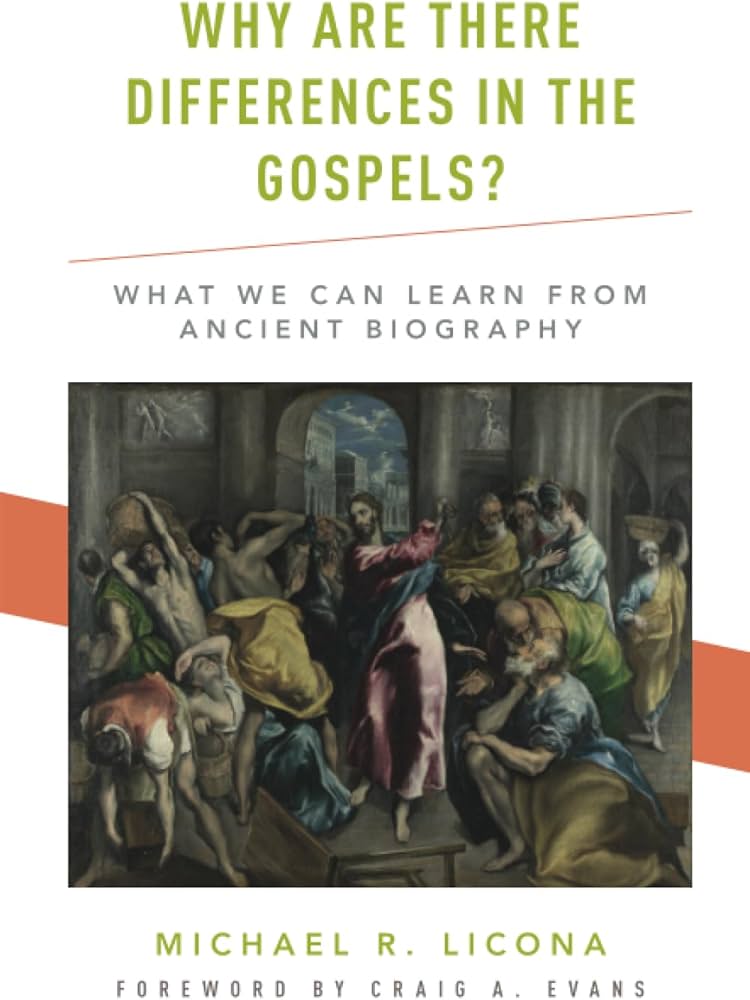
Summarising chapter 1 of:
Licona, Michael R. Why Are There Differences in the Gospels?: What We Can Learn from Ancient Biography. Oxford University Press. Kindle Edition.
Compositional Textbooks
Students of rhetoric were taught preliminary exercises or progymnasmata. The earliest known textbook of these was by Theon, and dates to the 1st century CE.
A chreia is a brief account of what a person said or did. Relating of a chreia could be varied in any of a number of ways: by varying the number of people involved, for example.
Narrative, too, could be varied. Theon takes the following factual statement from Thucydides…
‘A force of Thebans a little over three hundred in number made an armed entry during the first watch of the night into Plataea in Boeotia, a town in alliance with Athenians.’
…and varies it by restatement…
‘The arrival at Plataea of the Thebans was, it seems, the cause of great troubles for Athenians and Lacedaimonians and the allies on each side; for a force of Thebans a little over three hundred in number made an armed entry during the first watch into Plataea in Boeotia.’
…by turning it into a question…
‘Is it really true that a force of Thebans a little over three hundred in number made an armed entry during the first watch into Plataea in Boeotia?’
…by expressing it as a command…
‘Come, O Plataeans, be worthy of your city and of your ancestors who contended with Persians and Mardonius, and of those who lie buried in your land. Show the Thebans that they do wrong in thinking you should harken to them and be slaves and in forcing those unwilling to do so, contrary to oaths and treaties, when, a little more than three hundred in number, they entered under arms during the first watch into our city, an ally of Athenians.’
…and so on.
Theon describes four kinds of paraphrase: by altering the syntax, by adding words for clarification, further description or artistic improvement; by subtracting words or thoughts from the original; or by substituting words in the original.
Regarding the NT authors, Gerald Downing remarks:
‘The procedures are always so similar that it would be absurd to suppose without massive supporting evidence that the NT evangelists could have learned to write Greek and cope with written source material at all while remaining outside the pervasive influence of these common steps toward literacy.’