Abortion: a quest for principles
Summarising an article by Donald MacLeod in The Monthly Record; March, 1979
11,000 terminations in Britain per month. [N.B. this figure has increased, as of 2024, to around 16,500]
‘Many Christians have never looked at the problem in the light of moral and theological considerations and provably accept prevailing attitudes without thinking.’
A woman’s right to control her fertility
‘The slogan of those who advocate a liberal attitude to abortion is that women have the right to control their own fertility. We may readily accept this in the abstract, while at the same time commenting that if a woman finds herself involved in an unwanted pregnancy she has controlled her fertility rather badly.’
But a woman’s rights are not absolute: they are limited, for example by the rights of her husband (1 Cor 7:4), and by the rights of the foetus.
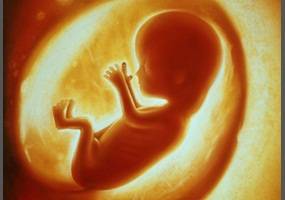
When does the foetus become a human being? Various answers are given:-
- We cannot know. But this attitude should lead to the fullest protection being given to the foetus, for fear of killing an unborn human being.
- The law should protect the foetus from the moment of viability. The prima facie evidence of viability is that a pregnancy is 26 weeks advanced. But the legal definition is that a foetus is viable if it is capable of being born alive. There have been several reports of live births after only, say, 26 weeks, and also reports of aborted foetuses showing clear signs of viability, such as crying and
- Humanness begins at the moment of birth. But birth involves little more than a change of environment, a transition to breathing, and the commencement of oral ‘Even an emancipated career-woman can allow herself to say, “The night before the abortion I apologized to whatever it was I was carrying and said I had no choice. I suppose I had, but I believed I was doing the right thing”‘
- Humanness begins at the moment of conception. The genetic blueprint is laid down at the moment the ovum is fertilized. ‘There is no moment of remotely equal significance for the future development of the child.’
But what about the soul? –
‘The distinction between the soul and body is not unimportant but there is the closest possible bend between them, Indeed, Scripture does not say that man has a soul but that he is a soul (Gen 2:7). He is, if we may lapse into jargon, a psycho-somatic unity.’
Hints in Scripture that this is the correct view: Lk 1: 41; Psa 139: 15ff. ‘It is interesting. that the incarnation involved our Lord entering upon foetal existence. He did not unite himself to mankind at the point of birth or at the point of viability but at the point of conception.’
Much main-stream psychology attaches importance to foetal life: cf. Freud.
Reasons for abortion
Some very frivolous,
‘yet in all these instances two registered medical practitioners were of the opinion that the pregnancy could be legally terminated under the Abortion Act.’ The terms of the Act are hopelessly indefinite. ‘This is especially true of the provision that pregnancy could be terminated if its continuation involves risk to the physical or mental health of the mother. There is scarcely a pregnancy which this does not cover, as all the victims of heartburn, high blood pressure and depression will remember.’
But two situations require special consideration:
(a) Where the pregnancy is the result of sexual assault. But even here one needs to consider the rights of the foetus. If the mother is genuinely incapable of looking after the child there is always the opportunity of adoption.
(b) Where there is a substantial risk of a child being born with severe physical or mental defects. But the risk, even in early rubella, is less than 50%. Remember: the foetus is a human being; deformity does not change that. Handicapped people can give, as well as take, a great deal. And is abortion the only alternative, even if parents are quite unable to cope with the child?
Not abortion but grace
‘Abortion should never be contemplated, even remotely, unless the risks involved are associated either with the pregnancy itself or with childbirth.’
‘We must distinguish between an unwanted pregnancy and an unwanted child.’
In situations of acute stress, we must look to God for grace.
‘The Christian position on this issue is not simply that abortion is wrong but that, by divine help, we can triumph over all the difficulties. The woman asked to bear and rear the child of a rapist; the wife of a drunken husband raising a large family in an overcrowded home; the mother who has to care for a [child with *cerebral palsy or *Down’s Syndrome]; these are far from easy situations. But God knows that, and his word to those involved is not simply negative and prohibitory, but positive: “My grace is sufficient for you.”‘
*N.B. terminology adjusted.