April fools?
April Fool’s Day sets up interesting challenges for readers of newspapers and other media in trying to tell which stories are true and which are pranks.
Which (if any) of the following would you think are true (or at least seriously intended)?
1. Durham University is offering a course on Harry Potter. The module, entitled Harry Potter and the Age of Illusion includes a section “Welcome to Hogwarts: the commodification of education”.
2. In Sweden, news website The Local reports that workmen digging a rail tunnel under Stockholm have found Mjoelnir, the hammer used in Norse mythology by the thunder god Thor. It reports that the object, covered in runic writing and about 60cm long, was found embedded in granite and initially taken for “piping sticking out of the ground”.
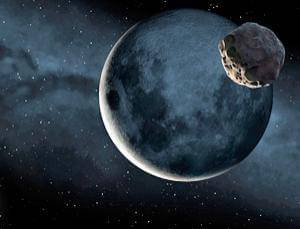
3. NASA is planning to use a giant bag to capture an asteroid and tow it to the Moon. The $100m project will be included in its 2014 budget request. If successful, the asteroid will be used to help long-distance space missions.
4. In Russia, the State Duma (lower house of parliament) features a draft law submitted by deputy Sergei Ivanov, in which he proposes banning the consumption of garlic – popular among Russians – in public places.
5. A woman in Bradford claims she was raised by a group of capuchin monkeys in Colombia. Marina Chapman says she spent five years of her childhood with the primates after being kidnapped and abandoned in the jungle. Over time she developed leathery skin and powerful, sinewy arms.
6. Researchers at the Fuldstændig Består University in Denmark claim that research carried out under laboratory conditions proves plants have feelings and can react to external stimuli in “an almost human” fashion. At the John Innes Centre in Norwich, work will soon begin on developing a communication system which will allow scientists to hold ‘conversations’ with plants.
What did you think? Answers, along with the credits, are at the bottom of this post.
But it raises a more serious question: when unusual or surprising claims are made, how do we decide if they are true?
If our sole criterion is to test truth-claims by our present knowledge and experience, then we would have committed ourselves to a radical and paralysing scepticism.
We could ask: does the ‘claim’ show any signs of the intent of its originator? In the case of news items, the fact that it was published on 1st April or that it contains a half-hidden anagram raises the index of ‘suspicion’.
We could also ask: what are the sources? Can we check them? Is there any evidence of eye-witness testimony or independent corroboration?
When it comes to the truth-claims of the Bible, including (and expecially) the resurrection of Jesus Christ, then it will not do to say, ‘This has never happened before, or since, and so we cannot accept that it happened then’. But we do not have to treat it with credulity either. We can ask those same questions: What did the writers intend? Are the sources reliable? Can we detect eye-witness testimony and independent corroboration?
The answers to those questions might themselves be surprising. And life-changing.
[Answers to quiz: 1, 3 & 5 are TRUE. 2, 4 & 6 are FALSE. That’s according to this BBC source and Eastern Evening News 24.