Did he really say that?
Shared recently on Facebook was an image of Pope Francis and the following quote, attributed to him:-
In his book Tell the World (Evangelical Press, 1981), Eric Wright summarises the terminology used for the Christian message in the book of Acts. To my mind, this terminology contrasts markedly with that of our own day, where (I suggest) the Christian message is most popularly referred to as ‘sharing the love of God’.
| Term | Frequency |
|---|---|
| Jesus, or Jesus the Christ, or the whole message of his life, or the name of Jesus Christ, etc. | 16 |
| The Word of God, or the Word of the Lord | 13 |
| The gospel, the good news | 9 |
| The way, way of the Lord, way of salvation | 9 |
| The hope of Israel, the things announced beforehand, the good news of the promise, etc. |
“I am…”
(a) Why do you think Jesus said “I am the bread of life”, rather than “the caviar,” or “the cake” or the “confectionary” (assuming those things were available in those days!)?
(b) Jesus talks about ‘eating his flesh’ and ‘drinking his blood’. To those hearing this for the first time, it must have sounded shocking. But in what sense do his followers do precisely that (for example, when they take Holy Communion)?
(c) A leading thought in John 8:12-20 is that of ‘testimony’. …
In his book Tell the World (Evangelical Press, 1981), Eric Wright sets out the main terminology used in the Book of Acts for apostolic communication (which was, as recorded in that book, mainly evangelistic communication). The following table reproduces the substance of Wright’s work. The summary definitions are based on Vine’s Expository Dictionary.
| English (NASV) | Greek | Frequency (approx.) | Meaning | As in... |
|---|---|---|---|---|
| To witness | Various forms of martureo | 6 | To aver what one has seen or heard or knows | Acts 1:18; 3:15 |
| To testify | Also various forms of martureo | 7 | As above, often with the suggestion of solemn protestation | Acts 2:40; 8:25 |
| To declare | apophthengomai anangello apangello | 5 | To speak forth To announce To declare | Acts 2:14; 26:25 Acts 20:20,27 Acts 26:20 |
| To speak | laleo | 17 | To speak | Acts 4:1; 6:10; 14:1,3 |
| To teach | didasko | 9 | To give instruction | Acts 2:42; 5:28, 42; 28:31 |
| To proclaim | katangello kerusso euangelizo | 11 | To declare, announce To herald To preach good tidings | Acts 4:2; 13:5; 16:17; 26:23 Acts 8:5; 9:20 Acts 8:12 |
| To preach | euangelizo kerusso | 17 | To preach good tidings To announce as a herald | Acts 5:42; 8:12, 25, 35, 40; 10:36 Acts 10:42; 20:25; 28:31 |
| To prove | sumbibazo | 1 | To join together; to prove | Acts 9:22 |
| To reason | dialegomai | 7 | To ponder, dispute, reason | Acts 17:2, 17; 18:4,19; 19:8f; 24:25 |
| To explain | dianoigo ektithemi | 5 | To open up To expound | Acts 17:3 Acts 11:4; 18:26; 28:23 |
| To persuade | peitho | 6 | To persuade, win over | Acts 17:4; 19:8; 26:28; 28:23f. |
Important to Richard Rohr – important enough to use it as the title of a book – is the idea of the Holy Trinity as a dance.
Rohr explains:-
…‘At the heart of Christian revelation, God is not seen as a distant, static monarch but— as we will explore together— a divine circle dance, as the early Fathers of the church dared to call it (in Greek perichoresis, the origin of our word choreography). God is the Holy One presenced in the dynamic and loving action of Three.’
This is an unpopular thought in some academic circles; but it is the clear teaching of our Lord himself. As Goldsworthy says: ‘We do not start at Genesis 1 and work our way forward until we discover where it is all leading. Rather we first come to Christ, and he directs us to study the Old Testament in the light of the gospel.’ (According to Plan, p55)
On the road to Emmaus, Jesus preaches on the theme of ‘The Things Concerning Himself’, taking as his text Moses, all the prophets, and all the Scriptures (Luke 24:27). …
William Hendriksen summarises the approach of Paul and his companions:-
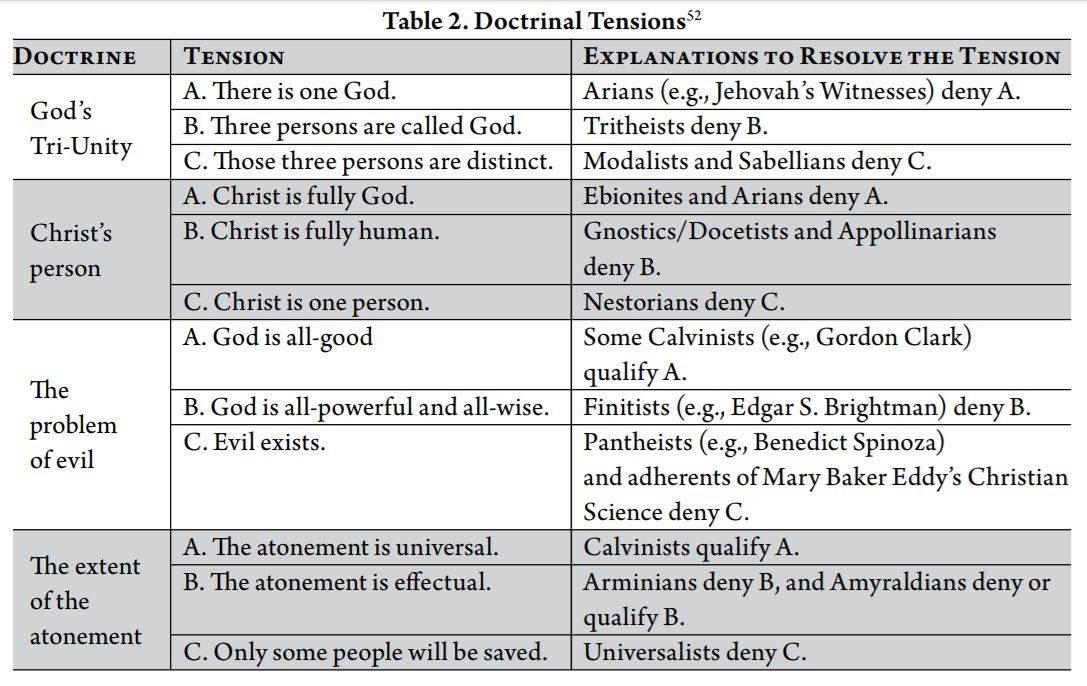
Paul’s stand may be summarized in the following ten propositions:
The Spirit often effects greater fruitfulness in our lives in the presence of adversity, Jas 1:2-4; Rom 8:28:-
(a) If you could summarise Paul’s main point in this passage in a single sentence, what would that sentence be?
(b) What might each of the following have to say about their ‘previous way of life’ (i.e. their life before conversion to Jesus Christ): Peter, James, Lydia, Timothy…and you?
(c) Think of the different places you have visited or lived in. Looking back, what does that say about God’s purposes for his kingdom and for you?…
Over the years, a number of attempts have been made to put some kind of wedge between ‘Christ’ and ‘Jesus’. Some, for example, have distinguished between ‘the Jesus of history’ and ‘the Christ of faith’. Philip Pullman, in similar vein, would have us imagine ‘Jesus’ as a ‘good man’ and ‘Christ’ as a ‘scoundrel’.
A couple of months ago, I read Richard Rohr’s book The Divine Dance: The Trinity and Your Transformation (Whitaker House: 2016).
I had been prompted to read it by a friend, who had felt reassured by Rohr’s challenge to evangelicalism’s ‘exclusivism’ and thought that this book offered a new and better way.…