admin
Mic 2 – Situation vacant – sermon notes
Wanted: prophetic discernment
In Micah, chapter 2, the prophet suddenly turns from a message of stern warning to one of hope. It strikes me that to know when people are living under God’s frown, and when they are living under his frown requires a level of discernment that we might characterise as ‘prophetic’ .
In this connection, I was interested in a note concerning the Puritan Nicholas Byfield. He ‘was known for his excellent scholarship, judgment, and aptitude, in addition to his ministerial skills.…
Lk 1:57-80 – “What will this child be?” – sermon notes
Lk 1:1-4 – “Dear Theophilus” – sermon notes
Preaching the Minor Prophets
Alison Lo notes that the Minor Prophets resonate strongly with our contemporary church and society, with their themes of ‘social justice, religious corruption, financial impropriety and social and political unrest’.
They offer rich material for the preacher, then, and the following principles will help. I summarise:-
- Consider the historical and cultural context. Each prophet spoke into a specific situation: sometimes this is indicated by the heading of the book (Hos 1:1; Amos 1:1; Mic 1:1, etc.).
The grace of law
Many members of the Galatian church, and many professing Christians since, have supposed that sinners are saved by their own best efforts, by keeping the law of Moses as promulgated in the Sinai covenant.
As Paul insists in Galatians 3 and 4, this is a fatal error, because it undermines the gospel of God’s free grace.
David Murray shows how the Sinai covenant is, in face, ‘a revelation of Jesus and his gracious salvation.’ Like this:-
- ‘The Sinai covenant painted pictures of grace.
What difference does it make?
I am sure that many of us lament the fact that the thoughts, attitudes and behaviours of many professing Christians seem to be indistinguishable from those of many who make no profession of faith in Christ.
The danger for the preacher here is that he encourages moralism: “You think you’re a Christian, then you really ought to … more.”
In order to avoid moralism, Randall Pelton finds it helpful to put the matter like this:-
‘When you trust Christ it changes the way you think about…’
(Fill in the blank, according to however the passage you are preaching from may be applied to the Christian life.…
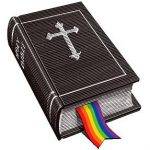
Domesticating the Bible’s teaching on homosexuality
If people don’t like what the Bible teaches, they may try one of a number of strategies designed to blunt its impact.
Applied to the thorny issue of same-sex behaviour, it can work like this:-
- ‘The Bible has been misinterpreted’. Sodom is not about homosexuality, but about inhospitality. Romans 1 is not about committed, loving same-sex relationships but about exotic and exploitative sexual behaviour.
- ‘The Bible is wrong’. The Scriptures do indeed teach that homosexual behaviour is sinful, but we must work with the Bible’s underlying principles and values, re-applying them to changing times and situations.
Preaching. Discuss.
Some discussion starters for preachers.
- Do we agree on what preaching is (and is not?)
- What are the qualities of a ‘good’ sermon?
- If the aims of preaching may be defined as ‘having something to say’, and ‘knowing how to say it’, are we in danger of neglecting the skills involved in the latter of these?
- How important and helpful is it to have systematic appraisal of our preaching?
- Are we missing opportunities for consecutive teaching?