Category Archives: Prayer
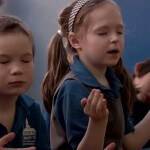
Silence!
‘Silence is golden’, we say. And we can agree that silence can have more eloquence than any words, serving (as Francois De La Rochefoucauld said) ‘sometimes to approve, sometimes to condemn; there is a mocking silence; there is a respectful silence.’
But what is the role and value of silence in Christian prayer and worship?
In the Middle Ages, silent prayers were added to the liturgy, and these were taken up by the Tractarians, and in the Roman Ordo. …
Hallowed be your name
Matthew 6:9
Notes for a short group Bible study. They were going through the Lord’s Prayer, one line per week, and I was asked to take this line with them.
Names
Share something about your name
Names in Scripture
Deborah (Bee); Jonah (Dove); Esau (hairy); Benoni (Son of my sorrow); Ichabod (The glory has departed)
Change of name – Abram/Abraham; Jacob/Israel; Simon/Peter; Saul/Paul
Names of God
Ex 3:13-15 (“What is his name?” … ” ’… The Lord, the God of your fathers…has sent me to you.’” …
Hallowed be thy name
Or, as the New Living Translation puts it: ‘May your name be honoured.’
This, the first petition of the Lord’s Prayer, established the Number One priority for prayer. Not me, and my shopping lists of aches and pains, interests and concerns. But God, and his honour. We have not even begun to understand who God is, if we have no interest in putting him first. In reality, God is first: as Creator, Sustainer, and Ruler of the cosmos. …
Time for God?
It’s about time…
We make, time, spend time, save time, give time, waste time, call time, buy time, keep time, and kill time.
The one thing we cannot do is defy time. All the time, time moves steadily forward. Or is it that we move forward through time? Either way, you can’t stop it.
Some people are good time-keepers. Victor Borge once told a friend that he could tell the time by his piano. He demonstrated this by pounding out a loud march. …
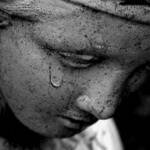
Let us lament
“They are grieving as if they have no God!”
These were the words of a pastor, describing the reaction of Christians soon after a hotel fire had killed over seventy people – mostly pastors and lay workers – in Manila.
A wife, standing at the graveside of her recently-deceased husband, is commended for ‘being strong’, because she is not weeping.
A Christian asked for prayer for success in an examination which would qualify her for a certain job. …
Implications of the Lord’s Prayer
See Matthew 6:5-15
- I cannot say OUR if I live in a watertight spiritual compartment; if I think a special place in heaven is reserved for my denomination.
- I cannot say FATHER if I am not one of his family, through faith in his Son.
- I cannot say WHO ART IN HEAVEN if I am so occupied with the earth that I am laying up no treasures there.
- I cannot say HALLOWED BE THY NAME if I, as a Christian called by his name am not holy.
No ‘I’ in the Lord’s Prayer
See Matthew 6:5-15
You cannot pray the Lord’s Prayer and even once say “I.”
You cannot pray the Lord’s Prayer and even once say “My.”
Nor can you pray the Lord’s Prayer and not pray for one another.
And when you ask for daily bread, you must include your brother.
For others are included … in each and every plea,
From the beginning to the end of it, it doesn’t once say “Me.”‘
(Anon)…
How the Lord’s Prayer defines us
Matthew 6:5-15
- “Father” – we are sons.
- “Hallowed be your name” – we are worshipers.
- “Your kingdom come” – we are subjects.
- “Your will be done” – we are servants.
- “Give us each day our daily bread” – we are recipients.
- “Forgive us our sins” – we are sinners.
- “Lead us not into temptation” – we are wayward.
- “Deliver us from the evil one” – we are conquerors.
Yes, the Lord’s Prayer IS offensive
In the run-up to Christmas, the Church of England hoped to place a 60-second advert – a presentation of the Lord’s Prayer – in cinemas around the UK.
But Digital Cinema Media – the advertising agency responsible for advertising in 80% of the cinemas across the country – has decided that it won’t be showing the advert after all. It has a policy, it says, of ‘not accepting political or religious advertising’. It added that ‘some adverts could cause offence to those of different faiths or of no faith.’…