Experimental knowledge
No, this is not another post about science and faith, but a quotation from Puritan Thomas Brooks about the importance of what these days we might call ‘experiential’ knowledge of Christian truth:-
Stephen Charnock (1628-1680) held that men can and do know something of God, “though nothing of Christ.” Though they are sinners by nature, they are unable to blot out completely the knowledge of God’s existence, Rom 1:20.
Charnock lists ten attributes of God that may be thus known from nature:
Hebrews 4:16 urges us to ‘come boldly unto the throne of grace, that we may obtain mercy, and find grace to help in time of need.’
The Puritan Robert Traill, in the course of preaching a series of sermons from this text, noted that one time of special need of God’s grace is the time of spiritual decay. Here’s a summary.
1. Whence it comes
(a) It comes from the weak and infant state of the new Christian. …
William Spurstowe (1605-1666), along with other Puritan writers, catalogued many of Satan’s devices, and indicated the remedies that the Christian should take:-
Device 1 – Satan leads us from lesser sins to greater.
Remedy – ‘Do not give the devil a foothold’ (Eph 4:27). If you let the serpent’s head into the house, the whole body will soon follow. Do not trivialise ‘lesser’ sins: ‘the least sin is contrary to the law of God, the nature of God, the being of God, and the glory of God’ (Brooks).…
Recent re-thinking about the doctrine of justification throws up a related question about the final judgment:-
Are we warranted to say that we are justified by faith, but are judged by works? The very idea seems to undermine the grace of God and to take away with one hand what has so freely been given with the other.
…‘Here [in Rom 2:1-16] is the first statement about justification in Romans, and lo and behold it affirms justification according to works!
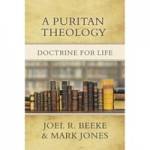
A major publishing event has recently taken place. A Puritan Theology: Doctrine for Life is a large-scale work by Joel Beeke and Mark Jones. In 60 chapters, it summarises Puritan teaching on Christian truth, from principles for Biblical interpretation to ‘theology in practice’.
Beeke and Jones were recently asked to highlight those aspects of Puritan teaching that might be most helpful for today’s church. They mentioned the following:-
Outline of a sermon on Luke 23:23f by John Flavel (1628-1691).
I. The trial of Christ was conducted most maliciously and illegally by his unrighteous judges. The righteous Judge of all the world is judged most unrighteously.
1. He was inhumanly abused, both in word and action.
2. He was falsely examined by a court (the Sanhedrin) that had no authority to try him.
3. He was absurdly accused of perverting the nation, and of denying tribute to Caesar.…
In a recent article reprinted in The Banner of Truth, Johann Odendaal sets out some of the principle priorities of Puritan preaching. These help to explain why these men should be regarded as ‘God’s giants’:-
1. Good preaching to them was the primary means of God’s grace to man. It was the highlight of public worship. Through the preaching the Holy Spirit would apply the Word in power to save people from their sins. It is primarily through the preaching of the Word that believers are built up in their faith.…
Some very short notes on the first few sermons from a series preached by Robert Traill (1642-1716).
Text: Heb 4:16
Q. Where is God to be found (cf Job 23:3)? Ans. On a throne of grace: this the antitype of the mercy seat, Heb 4:4ff, which was characterised by (a) limited access; (b) solemn atonement, Lev 16:12ff; (c) communion with God, Ex 25:17ff.
Doctrine: God in the gospel sits on a throne of grace, and from it calls and invites sinners to come to him.…
In A Quest for Godliness (p35), J.I. Packer identifies a breed of evangelical Christians as ‘restless experientialists’.
Their outlook is one of casual haphazardness and fretful impatience, of grasping after novelties, entertainments, and ‘highs’, and of valuing strong feelings above deep thoughts. They have little taste for solid study, humble self-examination, disciplined meditation, and unspectacular hard work in their callings and their prayers. They conceive the Christian life as one of exciting extraordinary experiences rather than of resolute rational righteousness.…