A major publishing event in reformed theology
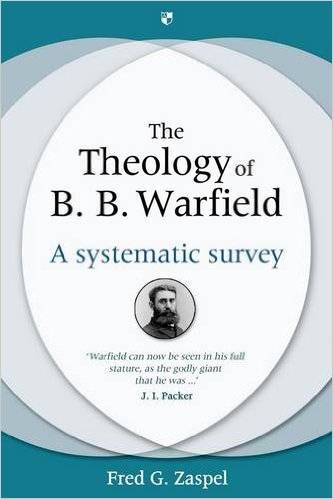
‘The Theology of B.B. Warfield: a systematic survey‘, by Fred G. Zaspel, IVP/Apollos, 2010.
I acquired most of B. B. Warfield’s writings (in their Presbyterian & Reformed editions) over thirty years ago. ‘The Person and Work of Christ’, for example, was given to me by my fiancee (soon after to become my wife) in 1977; ‘Calvin and Augustine’ was snaffled up while on holiday in Lochgilphead, Scotland, in 1979.
I have always been impressed by Warfield’s lucidity, versatility, spiritual warmth, and biblical faithfulness. However, most of his writings consist either of articles published in Christian journals and magazines, or entries in major reference works. This meant that he never presented his theology in anything approaching a systematic way. One effect of this is that the broad sweep of Warfield’s thought has been neglected at the expense of a couple of aspects of it. Warfield tends to be known these days, for two things. Firstly, he is know for his advocacy of the ‘inerrancy’ of Scripture. And secondly, he is known for his belief in the cessation of the extraordinary charismatic gifts after the days of the apostles. It will indicate something of my regard for Warfield if I say that I am not fully persuaded by either of these two positions and yet hold hold him in such high esteem. (With regard to the second of these – the cessation of the charismata – it should be noted that Warfield’s argument was almost entirely historical, rather than biblical; he had little difficulty in demonstrating that many historical claims to miraculous gifts have been spurious, but spent little time showing from Scripture that such gifts could not, or are not, given today).
Anyway, Fred G. Zaspel has put the Christian church in his debt by compiling this systematic survey of Warfield’s theology. Zaspel has read every that Warfield ever published (and quite a lot else besides) and arranged it in the form of a systematic theology.
This handsome volume of about 600 pages provides an ‘historical context’ for Warfield and his teaching, summarises his teaching on the doctrines of Scripture, God, Christ, the Spirit, salvation, church, last things, and so on, and finally offers an evaluative chapter entitled ‘Warfield in perspective’.
Of course, Warfield wrote more on some theological subjects than on others. Accordingly, the sections in this book on ecclesiology (the doctrine of the church) and eschatology (the doctrine of last things) are briefer than some of the other sections.
Zaspel’s book should be self-recommending for those who already know Warfield, or who have an interest in reformed theology or, indeed, for those who desire to dig deeper into the truths of the Christian faith. But don’t just take my word for it: it also comes with commendations from J.I. Packer, D.A. Carson, Mark Noll, Paul Helm, and others. As Packer says, ‘Warfield can now be seen in his full stature as the godly giant that he was, thanks to Fred Zaspel’s labour of love.’