The Spirit and Creation
Atheism must regard the existence of the cosmos as inexplicable. Pantheism (which undergirds Buddhism, Hinduism, and Taoism) robs God of his transcendence, by subsuming the divine within the universe (‘all is one and all is God’). Paganism believes that the divine is immanent in nature, and that spells, incantations and rituals enable the individual to control people’s destiny. Gnosticism posits a dualism between spirit and matter, and has as its aim the ascending, through illumination and secret knowledge, up to God. According to Deism, God set the universe in motion, but now leaves it to largely run itself by the laws of nature. Panentheism teaches that God is in all creation. God is its energising and animating force. Panentheism is found in the spirituality of the Eastern Church, and in some forms of Christian mysticism. It have become increasingly popular in those influenced by postmodern culture.
In biblical teaching, God is neither remote from his creation, nor subsumed within it. He is both immanent and transcendent.
With regard to the role of the Spirit in relation to creation, some of the key texts are:-
Genesis 1:1-2
1:1 In the beginning God created the heavens and the earth.
1:2 Now the earth was without shape and empty, and darkness was over the surface of the watery deep, but the Spirit of God was moving over the surface of the water.
Genesis 2:7
2:7 The LORD God formed the man from the soil of the ground and breathed into his nostrils the breath of life, and the man became a living being.
Job 33:4
33:4 The Spirit of God has made me,
and the breath of the Almighty gives me life.
Psalm 104:24-30
104:24 How many living things you have made, O LORD!
You have exhibited great skill in making all of them;
the earth is full of the living things you have made.
104:25 Over here is the deep, wide sea,
which teems with innumerable swimming creatures,
living things both small and large.
104:26 The ships travel there,
and over here swims the whale you made to play in it.
104:27 All of your creatures wait for you
to provide them with food on a regular basis.
104:28 You give food to them and they receive it;
you open your hand and they are filled with food.
104:29 When you ignore them, they panic.
When you take away their life’s breath, they die
and return to dust.
104:30 When you send your life-giving breath, they are created,
and you replenish the surface of the ground.
Acts 17:27-28
…he is not far from each one of us. 17:28 For in him we live and move about and exist.
According to Paul’s teaching in Romans 8, ‘the ultimate destiny of creation is not annihilation but transformation’ (Moo).
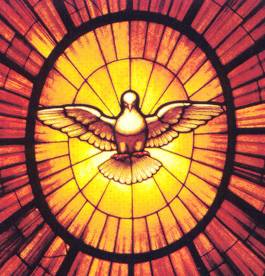
The Holy Spirit, then, is intimately involved with creation, from its first beginnings to its ultimate renewal.
Implications
The Spirit’s involvement with creation
- ‘must lead us to a greater appreciation, wonder, and awe in God who made this for us.’
- ‘must lead us to a deeper synthesis between our doctrines of creation and redemption; the Spirit is preparing the bridal suite for the eternal romance.’
- ‘must lead theological thinkers to engage creatively and intellectually with science, and to engage at a practical level with respect for and a sense of responsibility towards the ecological structure of this world.’
- ‘led to his groaning with and for it, awaiting the day of redemption. We look at the glorious cosmos and in wondrous awe know “the best is yet to be”.’
Based on Simon Ponsonby, God Inside Out (Muddy Pearl Books, 2015), pp-43-51