The mystery of providence
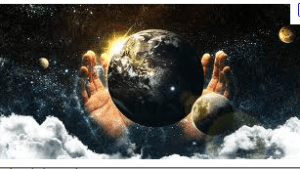
Recent study of Psalm 107 has led me to think about the doctrine of providence.
By ‘divine providence’ we mean God’s superintendence over all things; his ordering of everything that comes to pass. Providence is an extension of creation: it is God sustaining that which he has made.
There is an instinct whereby even irreligious people ask, ‘Why?’ People seem to have a deeply-held belief that everything that happens not only has a cause, but also a reason.
Providence is to be distinguished from determinism and fatalism. These are impersonal notions, and the only proper response to them would be resignation (‘What will be, will be’). But providence assumes a God whose purposes are benevolent, and who engages, rather than over-rides, our human wills.
Ancient Stoicism, as well as modern Eastern religions, see an essential unity in the cosmos, and seek serenity through harmony with this oneness. But, again, this falls short of the biblical view of providence.
Deism is the view that God created the cosmos as a vast machine, but has left the machine to run by itself, without further divine intervention. It is to be suspected that many Christians today are, in effect, semi-deists, assuming that God has little involvement in the world he has made, with the possible exception of occasional miracles.
The doctrine of providence, then, affirms that God is involved in everything that happens. According to the Westminster Confession of Faith (1647)
God, the great Creator of all things, doth uphold, direct, dispose, and govern all creatures, actions, and things, from the greatest even to the least, by his most wise and holy providence, according to his infallible foreknowledge and the free and immutable counsel of his own will, to the praise of the glory of his wisdom, power, justice, goodness, and mercy.
It is evident that divine providence implies divine foreknowledge and divine predestination. If God directs everything that happens, it follows that he sees (and determines) the end from the beginning.
Of course, any doctrine that attempts to address the will and action of an infinite and eternal God in the affairs of finite and time-bound world is bound to throw up troubling questions. If God foresees and determines all things, where does that leave human freedom and responsibility? Moreover, if God foresees and determines all things, did he not foresee (and then prevent) evil and suffering? But for the creature to question the Creator in this way is to invite the answer that God gave to Job: “Who is this that darkens my counsel with words without knowledge?” (Job 38:2). Before God, we are like children who are placed by their loving parents under the surgeon’s knife, incapable of understanding, for the time being, the wise and loving purposes behind the pain and distress.
God has promised one day to abolish evil, 1 Cor. 15:24–28, and to do away with pain and distress, Rev. 21:3–4. And, in the meantime, we believe that God works for the good of those who love Him, Rom. 8:28 and bids us cast our cares on Him, 1 Pet. 5:6–7, trusting that he will provide, Matt 6:26–33.