The anthropic principle
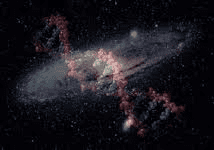
According to the anthropic principle, the universe is extraordinarily adapted for the emergence of life in general, and human life in particular.
The Baker Encyclopedia of Christian Apologetics outlines an ‘incredibly restrictive set of demands’ that needed to be present in order for life as we know it to emerge.
-
Oxygen comprises 21 percent of the atmosphere. If it were 25 percent, fires would erupt, if 15 percent, human beings would suffocate.
-
If the gravitational force were altered by 1 part in 10 to the power of 40 (that’s 10 followed by forty zeroes), the sun would not exist, and the moon would crash into the earth or sheer off into space. Even a slight increase in the force of gravity would result in all the stars being much more massive than our sun, with the effect that the sun would burn too rapidly and erratically to sustain life.
-
If the centrifugal force of planetary movements did not precisely balance the gravitational forces, nothing could be held in orbit around the sun.
-
If the universe was expanding at a rate one millionth more slowly than it is, the temperature on earth would be 10,000 degrees C..
-
The average distance between stars in our galaxy of 100 billion stars is 30 trillion miles. If that distance was altered slightly, orbits would become erratic, and there would be extreme temperature variations on earth. (Traveling at space shuttle speed, seventeen thousand miles an hour or five miles a second, it would take 201,450 years to travel 30 trillion miles.)
-
Any of the laws of physics can be described as a function of the velocity of light (now defined to be 299,792,458 metres [not miles, as stated in the Encyclopedia] a second). Even a slight variation in the speed of light would alter the other constants and preclude the possibility of life on earth.
-
If Jupiter was not in its current orbit, we would be bombarded with space material. Jupiter’s gravitational field acts as a cosmic vacuum cleaner, attracting asteroids and comets that would otherwise strike earth.
-
If the thickness of the earth’s crust was greater, too much oxygen would be transferred to the crust to support life. If it were thinner, volcanic and tectonic activity would make life untenable.
-
If the rotation of the earth took longer than 24 hours, temperature differences would be too great between night and day. If the rotation period was shorter, atmospheric wind velocities would be too great.
-
Surface temperature differences would be too great if the axial tilt of the earth were altered slightly.
-
If the atmospheric discharge (lightning) rate were greater, there would be too much fire destruction; if it were less, there would be too little nitrogen fixing in the soil.
-
If there were more seismic activity, much life would be lost. If there was less, nutrients on the ocean floors and in river runoff would not be cycled back to the continents through tectonic uplift. Even earthquakes are necessary to sustain life as we know it.
Many more features could be added, including the position of the earth in the ‘Goldilocks’ zone (not too close and not to far away from the Sun), and the vital effect of the moon on the ocean’s tides.
Those who doubt that these remarkable features point to a Creator who intended human life to develop and flourish often respond by asserting that this universe with these characteristics is only one of an almost infinite number of universes (a multiverse). The argument is that if there is a sufficient number of universes then at least one of them was bound to come up with this particular combination of characteristics. This strikes me a counsel of despair, not least because it is so speculative.