Calvin on divine providence
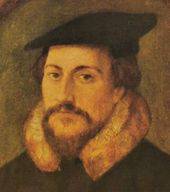
John Calvin deals with this doctrine fairly early on in the Institutes – in Book 1, Chapters 16-18.
In Chapter 16, he begins by asserting that ‘we see the presence of divine power as much in the continuing state of the universe as in its inception.’ In other words, God’s power is as apparent in his works of providence as it is in his work of creation. The One who made the world sustains and governs it.
By faith, says Calvin, we see that the Creator is not only Governor and Preserver of the universe at large, but that he ‘sustains, nourishes, and cares for, everything he has made, even to the least sparrow (cf Mt 10:29).’ See how naturally David moves from creation (Psa 33:6) to providence (Psa 33:13; cf. Psa 104:27-30).
There is no such thing as fortune or chance. If the very hairs of our head are numbered (Mt 10:30) then there can be nothing that happens outside the plan and purpose of God. Even inanimate objects, though endowed by nature with their own properties, do not exercise those properties except by the direction of God’s ever-present hand. We marvel at the power of the sun, and the way in which it brings warmth and fruitfulness to the earth. And yet God commanded that the earth bring forth fruitfulness before the sun even existed, Gen 1:3,11,14. Then again, God caused the sun to stand still (Josh 10:13) and its shadow to retreat by ten degrees (Isa 38:8), from which we learn that the sun does no operate from blind instinct, but God governs its course. Nothing is more natural than the march of the seasons, and yet each year, each month, and each day is governed by a new and special providence of God.
God’s omnipotence is such that he governs and regulates all things. He has not merely set things up so that they follow some pre-determined law of nature, but rather continually watches, directs, and guides them. We have ample cause to praise God, then, firstly for his ability to direct things benevolently, and secondly for his ability to protect us from all harmful things. Those who do not trust in God’s providence have many uncontrolled and superstitious fears; but there is no place for such fears in those who trust God. Let us take comfort that the universe is not governed by impersonal stars and erratic heavenly signs (Jer 10:2), but by the secret plan of an almighty and benevolent God.
Let us understand, then, that God’s providence does not simply mean that God knows in advance what will take place, but that he actively governs all events. Nor does it mean that God has set in motion certain laws (including the law of human nature), and left them to operate without any further divine intervention.
We can readily concede that God is indeed the author of the ‘laws of nature’, and that he continues to sustain all things by his mighty power (Jn 5:16; Acts 17:28; Heb 1:3). But we must insist, further, that he directs each and every event, and each and every person. Otherwise, no place would be left for his fatherly favour, nor for his judgments. No: Scripture teaches that God is at work alike in rain (Lev 26:3f; Deut 11:13f; 28:12) as in drought (Lev 26:19). Not a drop of rain falls except at God’s command. Not a sparrow falls to the ground without the Father’s will (Mt 10:29).
We know that the universe was established with mankind especially for the sake of mankind. But God does not leave humankind to its own devices, but directs our steps, Jer 10:23; Prov 20:24, and our speech, Prov 16:1,9.
Even events that seem the most fortuitous are subject to God’s will, such as a branch breaking off a tree and killing a man, Ex 21:13. We might judge a man’s poverty or wealth to be due to his laziness or his industry; but Scripture teaches that it is God who as judge humbles one and raises up another.
What we regard as ‘natural’ process are subject to God’s power and will. He stirs up the south wind, bringing an abundance of birds, Ex 16:13; Num 11:32, and sends a whirlwind in order to cast Jonah into the sea, Jon 1:4. And let us not say that these are exceptional: no wind every increases or decreases except at God’s command. Otherwise, it would not be true that he makes the winds his messengers and the clouds his chariots, Psa 104:3f. So it is that controls the rising and calming of the storm, Psa 107:25,29.
Similarly, although God has planted in man a power to procreate, it is according to his will that some are barren and others blessed with offspring, Psa 113:9; 127:3. Again: nothing could be more ‘natural’ than the production of bread, and yet it is God who witholds or provides it, Gen 30:2; Isa 3:1; Mt 6:11.
The Christian doctrine of providence is not at all the same at a belief in fate, fortune, or chance, and we would be wise to avoid such terms. It is true that many events may appear to our finite apprehension to be fortuitous, and it is impossible for us to predict the future with accuracy; and yet for his part God knows and controls everything that happens. It is in this sense that Ecclesiastes (Eccle 2:14f; 3:19; 9:2f, 11) speaks of ‘fate’.
The exactness of God’s providence can be seen in the incident in which we find David trapped in the wilderness, 1 Sam 23:26f. At that precise moment the Philistines invaded the land, and Saul was compelled to depart. What appears to be a contingency, faith recognises as the secret impulse of God.
We cannot always detect a reason in the complex arrangement and timing of events; but yet we may know that everything happens as result of a secret impulse from God. There are some things which, from a natural point of view, are perfectly possible (such as the breaking of Christ’s bones) and yet will never happen, because God wills it so (cf. Jn 19:33,36).
Application of the doctrine
When considering this doctrine, we must appreciate that it concerns the future as well as the past, that God’s providence sometimes works with, and sometimes without, intermediate means, and that it is directed at God’s purposes for the whole human race, but especially the church.
Even though events express either God’s fatherly favour or his judgment, the causes of these events are not always clear to us. But we should not think that we are at the mercy of mere fortune, or that God acts capriciously. If only we could know, the final outcome would show that God always has the best reason for his plan – to teach us patience, to tame our lusts, to encourage our self-denial, or to arouse us from our indolence. See Psalm 40:5.
We must be careful that we do not make God render account to us, as if he were obliged to explain his ways to us. Whatever tempests beset us on earth, we can trust and believe that ‘a constant quiet and serenity ever remain in heaven’, and that God always directs events in the best order to the right end even when we do not understand how or why.
We will do well, then, to accept that God has his own wise and righteous purposes for directing events as he does, and not to foolishly object to everything that we cannot understand by our own weak reasoning.
This is not a doctrine of human contrivance. Scripture clearly teaches that behind God’s revealed will there is a will whose workings are unknown to us, Deut 29:29; Rom 11:33f. The mysteries of the gospel have indeed now been made clear to us; but his method of governing the universe remains hidden. The former are to be studied assiduously; but before the latter we must bow with reverent awe.
God’s providence does not relieve us from responsibility. We will neither complain against God for the adversities that befall us, nor blame him for our own wickedness. Nor will we throw all caution to the wind, because we believe that God controls all things, including the moment of our death. Nor, again, will be conclude that all prayer is superfluous, since God has ordained all things from the beginning. No: belief in God’s providence does not render useless all plans we might make for the future.
The truth is that the same God who rules over all and who has set limits on our lives has at the same time told us what our duty is with regard to caring for the life he has given us. He who knows the end from the beginning has ordained means by which that end shall be attained. It is for this very reason that God has chosen to hide future events from us, that we should use all means in order that God’s will for our lives might be fulfilled. See Prov 16:9. God’s eternal decress do not hinder us from planning ahead, and putting our affairs in order.
‘For he who has set the limits to our life has at the same time entrusted to us its care; he has provided means and helps to preserve it; he has also made us able to foresee dangers; that they may not overwhelm us unaware, he has offered precautions and remedies.’
Some might argue that because all events lie within the providence of God, human wickedness is therefore excused. If God has determined that a life should end, why punish the murderer who kills that person? Is the murderer not serving God’s will? But it is impossible to serve God by doing evil. ‘God requires of us only what he commands.’ It is true that God, in his boundless wisdom knows how to use evil instruments to do good (including carrying out his own judgment); but this does not excuse the evil instruments. The heat of the sun make a dead corpse stink, but we do not conclude thereby that the rays themselves are putrid.
The happiness of meditating on God’s providence
The Christian, then, can know that all things happen by God’s plan, and nothing by chance, and yet will give due attention to means and secondary causes. We can know that God rules over all things, and that the plans, wills, efforts and abilities of all men are under God’s hand, and that he can bend then and constrain them as he pleases.
Many Scriptures testify to God’s singular providence watching over the welfare of believers. See Psa 55:22; 91:1, 12; Isa 49:15, 25; Jer 1:18; 15:20; Zech 2:8; 1 Pet 5:7. Christ himself teaches that God has particular care of his creatures, especially human beings, Mt 10:30-32.
We see God’s providence at work when we prosper. He is able to grant his people favour even ‘in the eyes of the Egyptians’, Ex 3:21. He can confuse and frustrate our enemies, 2 Sam 17:7, 14; 1 Kings 12:10; 22:22. Even Satan himself cannot act without his permission, Job 1:12.
It follows that we can have gratitude of mind, patience in adversity, and freedom from worry. We can know that whatever good befalls us comes from God.
Likewise, we can rest in the assurance that our adversities are not accidental. We can thus maintain a loving attitude even towards those who seek our harm. Joseph, for example, sees behind his brothers’ treachery and perceives God’s gracious will, Gen 45:5-8; 50:20. Job did not seek revenge against the Chaldeans, but rather praised his Lord, who gives and takes away, Job 1:21. David did not seek revenge against Shimei, for, once again, he perceived the Lord’s hand, 2 Sam 16:11. The remedy for all our anger and impatience, then, is the thought that ‘the Lord has willed it’. And the Lord wills nothing but what is just and expedient. Light and darkness, prosperity and disaster, all come from him, Isa 45:7.
We do not, indeed, overlook secondary causes. We do not, for example, fail to thank those who a ministers to us of God’s goodness. We do not fail to blame ourselves if we come to harm through negligence or imprudence, even though we know that it came about by the Lord’s will. Nor do we excuse those who act fraudlently or maliciously towards others.
Especially, we do not presume upon God’s providential will with respect to future events. We will take counsel, and seek appropriate help, to bring desired events about. Thus Joab, though he recognised that the outcome of the battle was in the Lord’s hands, dd not yield to idleness, 2 Sam 10:12.
Without certainty about God’s providence life would be unbearable. We are in continuous threat from disease within, and from harm without. We feel as if a sword is being perpetually held against our neck. If all of this is subject to chance, or fortune, we would indeed by most miserable. But the light of providence sets us free from every care and anxiety. ‘His solace…is to know that his Heavenly Father so holds all things in his power, so rules by his authority and will, so governs by his wisdom, that nothing can befall except he determine it.’ The world may appear to be tumbling about, but the Lord is everywhere at work, and that work will be for his people’s welfare. He has entrusted their care to his angels. The devil himself is restrained by God as by a bridle. The wicked cannot hatch any lot against the godly except in so far as God has permitted, indeed commanded. Paul can therefore in one place say that his journey had been hindered by Satan, 1 Thess 2:18, and in another that he set out with God’s permission, 1 Cor 16:7.
But, it might be objected, God’s plan does not stand firm and sure, because we read of him ‘repenting’ or changing his mind. How can we therefore speak of God’s eternal decree? But these expressions of ‘repentance’ are to be taken figuratively, for when Scripture speaks openly, it declares that God is not a man, that he should repent, 1 Sam 15:29. No: Scripture speaks of God’s ‘repentance’ to make allowance for our understanding. It is an anthropomorphism. He accommodates himself to our understanding by revealing himself not as he is in himself, but as he seems to us. For example: although God is beyond all disturbance of mind, yet he is said to be angry with sinners. So, all that is implied when God is said to ‘repent’ is that he changes with respect to his action.
When God is said to have pronounced judgment on Nineveh, and then to have relented, we are to understand that a condition was implied in that pronouncement of judgment: “Unless you repent, you will perish”. That it was God’s will for the Ninevites to repent is seen precisely in the fact that it was he who sent Jonah to preach to them.
Is God blameless?
If even the deeds of wicked people and Satan himself are under God’s control, such that their evil is directed by God to good ends, how is it that God himself can be regarded as blameless in such matters? And how can it be fair a man, who is about to be punished by his blindness, to be blinded by God’s will and command?
This difficult problem has let some to distinguish between what God actually does and what he permits.
But there are many acts of evil recorded in Scripture that cannot be ascribed merely to God’s ‘permission’. Although at first sight, Job’s affliction by Satan was merely at God’s permission, Job 1:6; 2:1, it soon becomes clear that God was the author of Job’s trials, Job 1:21. When Absalom commits incest, God declares the work to be his own, 2 Sam 16:22. When the devil renders Ahab insane, it is at the Lord’s command, 1 Kings 22:20,22. When the Jews acted wickedly in the matter of Christ’s crucifixion, it was ‘by the definite plan and foreknowledge of God’, Acts 2:23; 4:28. Jeremiah declared that every cruelty inflicted by the Chaldeans against Judah was God’s work, Jer 1:15; 7:14; 50:25. God arouses the impious to war, Isa 7:18; Hos 8:1; Zeph 2:1. He calls the Assyrian the rod of his anger, Isa 10:5. He calls the destruction of the Holy City and the ruin of the Temple he calls his own work, Isa 28:21.
What is said of the heart of a king being turned at God’s good pleasure (Prov 21:1) is certainly true of every person. God’s hardening of Pharaoh’s heart, Ex 9:12, while entirely consistent with the statement that Pharaoh hardened his own heart, Ex 8:15, 32; 9:34), is clearly more than bare permission. It makes no sense at all to suppose that Pharaoh allowed himself to be hardened. No: Scripture repeately ascribed such acts to the definite will of God, and not to mere permission (Ex 4:21; Josh 11:20; Psa 105:25). An evil spirit afflict Saul; and yet it is said to come from God, 1 Sam 16:14. On the one hand, it is Satan who blinds the minds of unbelievers, 2 Cor 4:4, and, on the other hand, the working of error flows from God, 2 Thess 2:11.
The statements of Scripture on this matter are so clear and frequent that we may not hide behind pretended ignorance.
What then? Shall we say that God has two contrary wills, so that in his secret plan he decrees what his law openly forbids? Those who argue thus need to be aware that they are arguing against the express teaching of Scripture, Job 1:21; 1 Sam 2:25; Psa 115:3; Isa 45:7; Amos 3:6. And consider again Acts 4:28 – unless Christ had been crucified according to God’s will, how could we have redemption? No: God’s will is not at war with itself. But even though his will is single and simple to himself, to our finite minds it seems manifold. The calling of the Gentiles had been a ‘mystery’ hidden from the minds of men, but it was indeed an expression of God’s manifold wisdom, Eph 3:9f. It is not without reason that God is said to dwell in ‘unapproachable light’, 1 Tim 6:16. As Augustine says: just as it is true that a good man can will what God does not will (e.g., that his father should live), so it may be true that a man wills with a bad will what God wills with a good will (that his father should die). And yet the filial piety of the first man (who does not will what God wills) is more consonant with God’s good will than the impiety of the second (who wills the same thing as God). So it is that the wicked, from their own point of view, do what God does not will, and yet his will is accomplished in them.
So, if God not only uses the work of the ungodly, but actually governs their plans and purposes, shall we say that he is the author of all wickedness? And shall we also say that he is unjust to damn them, given that he has decreed that they obey his will? But to argue this is two confuse two very different things: God’s will and his precept. When Absalom committed adultery with his father’s wives, 2 Sam 16:22, God intended this as a punishment for David for his own adultery, yet God did not for this reason bid the son to commit adultery. Let us be clear that while God accomplishes his secret will through the deeds of the wicked, they are not thereby excused, as if they had been obeying his express command.
Such reasoning solves the apparent contradiction, where Jeroboam is said to have become king without God’s knowledge or approval, Hos 8:4, and then expressly as a result of God’s appointment, Hos 13:11. On the one hand, we know that it was God’s will for his people to be united under one king, and yet on the other hand the division of the kingdom came from the will of the same God. ‘In the same act as man’s evil deed shows itself, so God’s justice shines forth.’
Let us recall what Augustine says:- ‘Who does not tremble at these judgments, where God works even in evil men’s hearts whatever he wills, yet renders to them according to their deserts?’ And that is exactly what we see in the case of Judas: that Christ was delivered up to death by his own criminal act, and yet also by the express and loving will of God.
Let those for whom this seems harsh consider for a little while how bearable their squeamishness is in refusing a thing attested by clear Scriptural proofs because it exceeds their mental capacity, and find fault that things are put forth publicly, which if God had not judged useful for men to know, he would never had bidden his prophets and apostles to teach. For our wisdom ought to be nothing else than to embrace with humble teachableness, and at least without finding fault, whatever is taught in Sacred Scripture.