‘The First-Born Seraph’
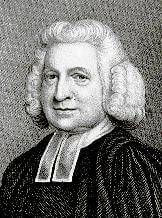
Charles Wesley’s famous hymn ‘And can it be?‘ is still sung from time to time today, even though many of the other hymns that were still popular when I was a Methodist teenager have fallen into neglect. It is a shame, although I think that the vigorous tune Sagina prompts us to sing it more lustily than the awe-struck words suggest. At any rate, we would reflect the words better if we didn’t crank the volume up until we reached the bit about ‘my chains fell off’.
I was once invited to comment on the reference in this hymn to ‘the first-born seraph’:-
‘Tis mystery all! The immortal dies:
Who can explore his strange design?
In vain the first-born seraph tries
To sound the depths of love divine.
‘Tis mercy all! let earth adore,
Let angel minds inquire no more.
Who is ‘the first-born seraph’? Is it Satan? It is held by many, of course, that Satan was originally the prince of angels, but fell into disobedience, along with a host of lesser angels. According to Scripture, a seraph is a high-ranking angel. Thus, it is possible that Charles Wesley had Satan in mind when he penned these words. Nor is it impossible to suppose that this hymn-writer would be averse to mentioning the powers of evil even while engaging in lofty praise of God’s grace, for he does precisely this in, for example,
Jesus! the name high over all,
In hell, or earth, or sky;
Angels and men before it fall,
And devils fear and fly.
I’m not sure that the identification of ‘Lucifer’ with the devil was current in Wesley’s day. My guess is that it is a 19th-century rather than an 18th-century interpretation. But, in any case, would Wesley want to say that ‘Satan tries to sound the depths of love divine’? Probably not. According to Scripture, it is those who love God, not those who hate him, who long to know more about his love (Eph 3:17-19). Echoing this passage, Wesley himself sings,
I long to know, and to make known
the height and depth of love divine.
We know that Wesley’s hymns are, to a large extent, a patchwork of biblical quotations and allusions. If we ask, ‘What is the biblical passage that prompted the reference to ‘the first-born seraph?’, I think the answer might be:
1 Pet 1:12 It was revealed to [the prophets] that they were not serving themselves but you, when they spoke of the things that have now been told you by those who have preached the gospel to you by the Holy Spirit sent from heaven. Even angels long to look into these things.
Wesley’s point, then, would be: ‘The gospel of salvation has been made known by the prophets to us, but not even the highest of angels (the first-born seraph) can understand it, try as he may.’
The point is made simply and forcefully in that much-maligned hymn, ‘There’s a friend for little children’:-
There’s a song for little children
Above the bright blue sky,
A song that will not weary
Though sung continually,
A song which even angels
Can never, never sing;
They know not Christ as Saviour,
But worship him as king.’
This understanding is, I think, supported by the continuation of the verse from ‘And can it be’:
‘Tis mercy all! let earth adore,
Let angel minds inquire no more.
This perfectly-rhyming verse would have scanned just as well if Wesley had written:
Let devil minds inquire no more.
But he didn’t. The assumption must be that just as he is thinking of ‘ordinary’ (i.e. non-fallen) angels in the latter part of the verse, he is thinking of them earlier as well.