Imagining the Kingdom
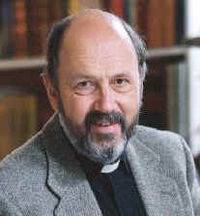
‘Imagining the Kingdom: Mission and Theology in Early Christianity’: This is the title of Tom Wright’s inaugural lecture at St Mary’s College, University of St Andrews 26th October 2011.
Here is the full text of that lecture.
It is something of a tour de force, and I’m going to attempt to sketch out the main steps of the first part of Wright’s argument.
The four Gospels are remarkable documents, and we should not allow their familiarity, or the existence of purported rivals (such as the ‘Gospel of Thomas’ or the hypothetical ‘Q’) to blind us to ‘their remarkable blend of page-turning narrative, vivid portraiture (especially of their central figure), historical verisimilitude and sophisticated theology.’
But have we really grasped the central message of the Gospels? Has New Testament scholarship not been guilty of screening out the main point?
Let us consider the Gospels as telling the story of ‘How God Became King’.
The idea of the launch of a ‘theocracy’ feels uncomfortable. It smacks of popes bishops and priests laying down the law in Medieval times, or of recent attempts to establish theocracies in some Muslim lands.
But some kind of theocracy is more than implied in the term ‘kingdom of God’. And that latter term is, of course, a central motif of the Gospels. We should not suppose that it referred to some other-worldly realm, such as a future ‘heaven’, but rather that it denoted ‘the long-awaited rule of Israel’s God on earth as in heaven’.
The Gospels, then, tell the story of how God became king in Jesus. They do this, first, by showing that Jesus is the continuation and climax of the ancient story of Israel. They repeatedly emphasise the general point that Jesus is the fulfilment of Old Testament prophecy. But, more specifically, they stress that he is the culmination of Israel’s story. In the Jewish world of the day, a number of attempts were made to discern where the ancient story might be heading, and to interpret contemporary events in that light. And particular attention was paid to Daniel 9, and to the end of the predicted 490 years of exile. History was not at a standstill, but was moving forwards towards its appointed goal.
And, for the Gospel-writers, Jesus of Nazareth provides that fulfilment. Matthew makes the point in his genealogy, Mark with his opening quotations from Malachi and Isaiah, Luke by telling the story of John the Baptist as a reprise of the story of Samuel, and John by showing that Jesus is not only the fulfilment of Israel’s story but also the fulfilment of the story of the entire creation.
But the Gospels do not only tell the story of Jesus as the climax of the story of Israel. They also tell that story as the story of how God returned to his people. Exodus 40, 1 Kings 8 and other passages tell of how God had been gloriously present with his ancient people. In Jesus, John asserts, God came, and we saw his glory. Matthew has his Emmanuel promise, Mark his quotations from Malachi and Isaiah, and Luke his story of the returning king (Luke 19).
But now, thirdly, the Gospels tell the story of Jesus as the story of how Israel’s God becomes the king of the whole world. This is in direct competition with a prevailing narrative at the time: the narrative that told the story of Rome as climaxing in the accession of Augustus and the ushering-in of a time of unheard-of peace and prosperity. The Gospels, on the other hand, insist that Israel’s king, who would himself bring peaceful world-wide rule (Psa 89; Zechariah 9; cf Acts 17:7) has come. The two narratives – of Caesar and of Jesus – were bound to collide.
Although the four Gospels scarcely mention Rome, its presence and influence is everywhere assumed, from the decree of Caesar Augustus at beginning of Luke to the trial scene leading up the crucifixion and right up to the close of Luke’s second volume, where Paul is found, preaching Jesus as king and Lord in Rome, ‘openly and unhindered’. There are hints in the Gospels of the striking contrasts between the kingships of Jesus and of Caesar: it may be, for example, that the descent of the Holy Spirit as a dove is intended as a contrast with the Roman eagle, and that Jesus’ triumphal entry into Jerusalem should be seen as a deliberate parody of the regular entry into that city by Poltius Pilate – on horseback and surrounded by soldiers. More certainly, the utterance by the Roman soldier at the foot of the cross is astonishing, transfering as it does from Caesar to Jesus the title ‘son of God’. And, of course, all four Evangelists record that fact that Jesus was executed with the title ‘king of the Jews’ hanging above his head.
The Jews had dreamed for ages of a king who would be king of the whole world (see Isaiah 40-55 and many other passages). If Israel’s God was the creator of the entire world they could have expected nothing less. And the Gospels tell us how Jesus became king, not by military might, but by the unique qualities of his life and the strange victory of his death.