The twelve disciples as ‘official’ eyewitnesses
At first glance, the lists of Jesus’ disciples (Matt 10:2-4; Mark 3:16-19; Luke 6:13-16; see also Acts 1:13) seem simply to introduce some of the key players in the story. But these lists probably serve a more specific purpose, especially given that about half of the characters named in the lists are never named again in the Gospels. So this more specific function of the lists of disciples is that they display continuity between Jesus and the early Christian community, and provide the latter with reassurance about the overall shape and content of Jesus ministry that could only come from those who had closely associated with him. This information from the central group is then supplemented, by the Evangelists, by testimony deriving from individuals who came into contact with Jesus for shorter or longer periods of time (including some of those who had been healed by Jesus), or were present when the disciples were not (including various groups of women, and Simon of Cyrene).
Just as Matthew’s account of the genealogy (Mt 1:2-17) shows Jesus pre-history to lie in Abraham’s descendants, so the list of disciples in Mt 10:2-4 points forward to his post-history in the formation and growth of the Christian church. In Luke’s case, the list of disciples identifies by name those ‘eyewitnesses and servants of the word’ whom he refers to as his sources in Lk 1:2.
But were the names of the Twelve accurately remembered? Some scholars, noting the differences between the accounts, have thought not. The differences are not great, they amount mainly to differences in order. The one substantive difference is that Mark and Matthew have ‘Thaddaeus’ (a Greek name), whereas Luke (in his Gospel and in Acts) has ‘Judas son of James’ (a Hebrew name). But it is quite possible that Thaddaeus and Judas son of James are the same person: it was quite common for Palestinian Jews to have both Greek and Semitic names, and it was obviously necessary for the Evangelists to distinguish between this Judas and Judas Iscariot either by identifying his as ‘son of James’ or by giving him his Greek name (in Jn 14:22 is is rather awkwardly called ‘Judas, not Iscariot). It would be perfectly natural, after Judas’ betrayal, to refer to his namesake as ‘Thaddaeus’ rather than ‘Judas’.
Supporting evidence that the lists of the Twelve are accurate is found in the fact that pairs of disciples with the same names (Simon, James, and Judas) are carefully distinguished from one another in one of a number of ways, such as the inclusion of the father’s name (James the son of Zebedee, James the son of Alphaeus), the addition of a nickname (Simon Peter, Simon the Zealot) and so on.
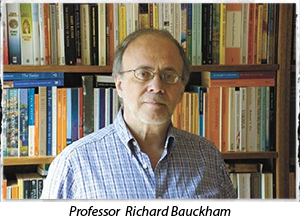
Bauckham concludes:-
‘The lists show, not carelessness about the precise membership of the Twelve, but quite the opposite: great care to preserve precisely the way they were known in their own milieu during the ministry of Jesus and in the early Jerusalem church. It is difficult to account for this phenomenon except by the hypothesis that the Twelve were the official eyewitnesses and guarantors of the core of the gospel traditions. It is not true that many of them were forgotten; as essential members of this official group of eyewitnesses all twelve were remembered.’
Based on Bauckham, Jesus and the Eyewitnesses