Jesus in the Proverbs
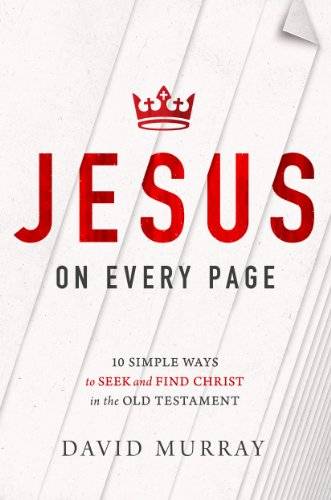
Compared with some other books of the Old Testament, it is not quite so easy to find Jesus in the Proverbs. So writes David Murray, in Jesus On Every Page, pp175-186. [The substance of this section of his book can be found here]
But, since all Scripture witnesses to Christ, we will look for him, and expect to find him there. Of course, the witness of Proverbs to Jesus will be ‘temporary, provisional, preparatory, and prophetic’, because in Jesus himself, “A greater than Solomon is here.”
1. God’s law in action
The Proverbs (the OT’s version of Twitter, suggests Murray) have their antecedents in the Ten Commandments (Ex 20). They give God’s law ‘eyes, ears, hands, and feet’. They show what obedience (and disobedience) to the law looks like in everyday life – in the home, at work, and out on the street.
-
- An exhibition of Christ’s character. The descriptions of holiness, wisdom, goodness, mercy, and so on that we find in the Proverbs we find perfectly exhibited in God.
- An exposition of Jesus’ life. We can see the Proverbs at work in Jesus’ life. Observe, for example, how his rebuke of Peter and his betrayal by Judas both expound Prov 27:5.
- An example of Jesus’ teaching. Jesus picks up seeds from the Proverbs and brings them into flower. So he takes Prov 27:1 and clarifies and expands its challenge.
- An examination in Jesus’ light. Like the spotlights of the Ten Commandments, so the lasers of the Proverbs target our sins and show our need for the grace of God in Christ.
- An explanation of Jesus’ death. The Proverbs describe the kind of scheming that characterised Jesus’ crucifiers, Prov 1:10-12. They deepen our understanding of the curse of the Law that was borne by Jesus. They demonstrate the principles of penal justice that he would experience on our behalf.
- The extent of Jesus’ death. Proverbs is taken up with both the great things and the small things, showing that there is no corner of our lives – or of the entire cosmos – that Jesus does not claim as his own, and that he is not concerned to renew. See Prov 12:10; 20:26.
- The execution of Jesus’ judgment. Proverbs repeatedly connects win with its consequences, presenting a foretaste of final judgment. See Prov 2:22; 22:3.
- The enjoyment of Jesus’ presence. Just as Proverbs connects disobedience to the divine law with alienation from God, so it demonstrates the blessings that come from obedience. See Prov 4:7-9; 11:18f.
- An entrance into Jesus’ home. In contrasting the houses of the wicked and the righteous, Proverbs provides an insight into our heavenly home that Jesus preparing for us right now. ‘The righteous life and society envisaged by Proverbs make the believer yearn for the perfection of that condition and place that will be enjoyed only in the new heaven and new earth wherein dwell the righteous and righteousness.’ See Prov 12:7; 15:6.
- The exaltation of Jesus’ glory. If the Proverbs show up our inability to keep God’s law, then they point us to Jesus’ perfections and salvation, and prompt us value him more and more highly.
2. Who, then, is Jesus, according to Proverbs?
He is wisdom personified:-
-
- A wise son, Prov 30:4. Solomon’s words to ‘my son’ would have suggested to Israel its status as God’s ‘son’. Her waywardness in this regard points to the ‘true Israelite’, the Son who would please his Father in every way.
- A wise teacher. Solomon – wise in word but so often foolish in behaviour – points to One who was wise in both what he said and how he lived.
- A wise host. Lady Wisdom’s preparation of a feast (Prov 9:1-6) portrays a divine Host who calls sinners into table fellowship with him, just as Jesus did.
- A wise creator. Prov 8 teaches the central role of God’s Son in the word of creation – a theme taken up in Jn 1:1-4 and Heb 1:1f.
- A wise bridegroom. We rightly understand Prov 31 to celebrate the qualities of a godly woman. But the Israelites understood their covenant relationship with God in terms of a marriage, and they would also see in this chapter, then, a description of what the Lord had called them to be.
3. How Jesus fits the profile
-
- His ministry. ‘He was indeed the Wise Son who pleased His Father in every area of life. He was the Wise Teacher whose unparalleled words of wisdom have stood the test of time. He was the Wise Host who invited weary, hungry, and thirsty outcasts to His gospel banquet and who also promised us a never-ending feast above. He is the Wise Creator, who demonstrated His goodwill toward and delight in humanity throughout His whole earthly life. And He was – and is – the Wise Bridegroom looking for an undeserving wife.’
- His manner. Jesus specialised in short, pithy, memorable sayings, many of which remain ‘proverbial’ to this day.
- His matter. Jesus quote from, or alludes to, the Proverbs some seven times in the first thirty verses of the Sermon on the Mount. His Apostles cite or echo the Proverbs around thirty-five times.
4. In conclusion
‘The greater Solomon is here – greater in holiness, greater in glory, greater in power, and far greater in wisdom. Let us worship His wisdom, let us hear His wise teaching, let us be made wise unto salvation, and let us live wisely to His glory and honour.’