What makes a story ‘true’?
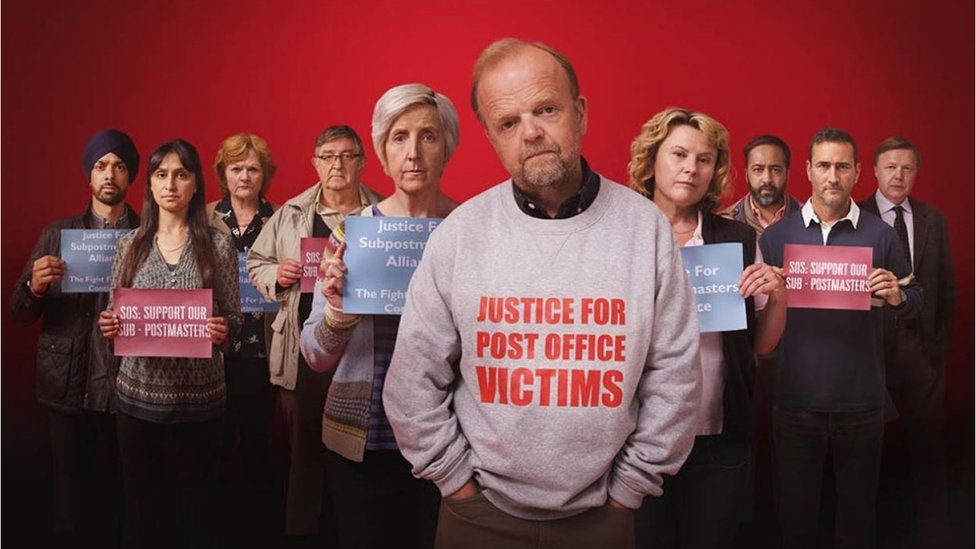
The recent screening on ITV of the four-part miniseries ‘Mr Bates vs The Post Office’ has brought the plight of hundreds of sub postmasters and postmistresses who, over a period of some 20 years, have been subjected to a massive miscarriage of justice.
What I would like to mention here is not the story itself, gripping and alarming as it is. Rather, I would like to focus on how the story has been told. At the beginning of each episode comes the following statement:
‘This is a true story. Some names and characters have been changed. Some scenes imagined.’
Is it possible for a story to be regarded as ‘true’, when ‘some names and characters have been changed’, and ‘some scenes imagined’?
Actually, Yes!
But this raises a question about how stories are told in the Bible. I’m thinking especially of the Gospels and Acts.
There is an assumption among both sceptics and conservatives that Matthew, Mark, Luke and John purport to tell their stories with absolute factual accuracy. If an inconsistency, however trivial, is found, then the sceptic responds, “There, I told you so. The Bible cannot be trusted!” The conservative replies, “No, wait! Every inconsistency can be resolved.”
But what if ancient norms of biography were rather different from what we might expect today? What if their authors, too, could claim: ‘This is a true story. Some names and characters have been changed. Some scenes imagined’?
Michael Licona gives the example of Jesus healing a centurion’s servant (Mt 8:5-13; Lk 7:1-10).
In Luke:
‘a centurion sends some Jewish elders to Jesus who request on the centurion’s behalf that he heal his servant. Jesus agrees and they begin their journey to the centurion’s home. When the centurion learns that Jesus is approaching, he sends some friends to communicate to Jesus that he’s unworthy to have him enter his home and that Jesus only needs to say the word and his servant will be healed. Jesus praises the faith of the centurion and heals his servant from a distance.’
But,
‘When the same story is reported by Matthew, the centurion himself goes to Jesus and makes the request. When Jesus agrees to come to his home and heal his servant, the centurion himself tells Jesus he is unworthy for him to enter his home but that Jesus only needs to give the command and his servant will be healed. Matthew has brushed out of the narrative the Jewish elders and centurion’s friends and transfers to the centurion what the emissaries had said to Jesus at the centurion’s direction.’
Licona says that this simplification of the narrative on Matthew’s part is consistent with ancient norms of biography, as evinced especially in the works of Plutarch.
According to Licona, the compositional devices used by ancient biographers included:
‘compression, conflation, displacement, transferal, the creation of some details, and the fabrication of a context to include historical items, which had occurred in a context unknown to the author.’
In fact, such compositonal devices can been found in much more recent works.
In this article, Licona discusses the the movie Apollo 13 (Howard 1995), which was ‘was praised for its commitment to historical accuracy’. Nevertheless:
‘Director Ron Howard exercised some artistic license. For example, when the actual Apollo 13 spacecraft ran into multiple life-threatening difficulties, flight director Gene Kranz and his team at Mission Control never gave up and produced solutions that brought the astronauts home safely. Kranz’s firm assertion, “Failure is not an option”, became the unforgettable tagline for the movie. However, the “historical Kranz”, you might say, never uttered those words. Instead, they were assigned to him by the scriptwriters, who had learned from Kranz and others that this was a creed at NASA’s Mission Control. Those scriptwriters had less than two-and-a-half hours to tell the story of events that spanned six days. Now, this is good writing, and it is an accurate portrayal of Kranz and his team, though not in a precise sense.’
Licona then mentions the autobiography of Nabeel Qureshi, ‘Seeking Allah, Finding Jesus‘. Qureshi states in his introduction:
‘By its very nature, a narrative biography must take certain liberties with the story it shares. Please do not expect camera-like accuracy. That is not the intent of this book, and to meet such a standard, it would have to be a twenty-two-year-long video, most of which would bore even my mother to tears.
‘The words I have in quotations are rough approximations. A few of the conversations represent multiple meetings condensed into one. In some instances, stories are displaced in the timeline to fit the topical categorization. In other instances, people who were present in the conversation were left out of the narrative for the sake of clarity. All of these devices are normal for narrative biographies … Please read accordingly.’