Me and my two left feet
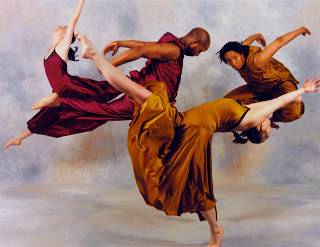
I’ve just finished reading The Divine Dance: The Trinity and your Transformation, by Richard Rohr and Mike Morrell (SPCK, 2016).
The essential message of the book is that we’ve all got it wrong about the Holy Trinity. And, as a consequence, Christians have failed to enter fully into the life of God. Rohr and Morrell invite us to re-think, and to re-experience, the Trinity less as personhood (noun), and more about relationship (verb). Although the headline metaphor is that of a divine dance, Rohr continually returns to the notion of ‘flow’. Flow is what happens between Father, Son and Spirit, and we are invited to flow with them.
But, rather than offer at this point an extended review of the book, I would like just to say why I would find it so difficult to write a review. Here goes.
- ‘The Divine Dance’ invites us to a deeper and more authentic experience of the Triune God. Surely, that’s what we all long for? Would it not be foolish to spurn such an invitation?
- Lots of people (including a friend of mine) say that they have found this book helpful. Who am I to say that they have not?
- I’m not used to reading books written by Catholic mystics. Maybe my unfamiliarity with this sort of spiritual reading means that I have a blind spot. Should I just ‘go with the flow’ and see where it takes me?
- Or, am I simply the wrong personality type? Am I a left-brain person struggling to make sense of right-brain thinking?
- I see that the book is recommended by certain writers and teachers with whom I have significant disagreements. Does this colour my opinion of this book, and lead to a prejudice against it?
- Rohr has a more optimistic view of the character of both of human beings and of God than that which conservative Christians seem to embrace. Hands up who wouldn’t like God to be better than we imagined, and human beings to be not as bad as we supposed?
- The book, then, appears to offer something more generous than what is conventionally offered by ‘liberals’ and ‘conservatives’. The former group, it seems, is busy emptying churches, and the latter seem pre-occupied with patrolling its boundaries, anxious to exclude all who differ from them just one iota. Is not the ‘third way’, proposed in this book, worth considering? If I represent the ‘conservatism’ against which the authors constantly push, then ought I not to listen graciously to the criticism and resist the temptation to push back?
- The book has some good things in it! Not just criticism of conservatives and liberals that needs to be heard by both, but some wise observations and counsel. There are, for example, some good thoughts on the place of wonder and of suffering in spiritual experience.
- Because it’s based on conference talks given by Rohr, the writing is quite choppy and unstructured. Some sections didn’t really make much sense to me, and, certainly, any attempt to comment on the overall argument is bound to be problematic.
- The authors do a pretty effective job of disarming potential critics. They are deeply suspicious of cerebral, analytical, negative, confrontational, approaches to doing theology. So, if any comments of mine seem cerebral, analytical, negative, or confrontational, they simply invite the response: ‘There: we told you so!’ The sword of theological criticism can cut easily enough through the water of spiritual devotion, but the water continues to flow anyway.