Do we meet God in particular places?
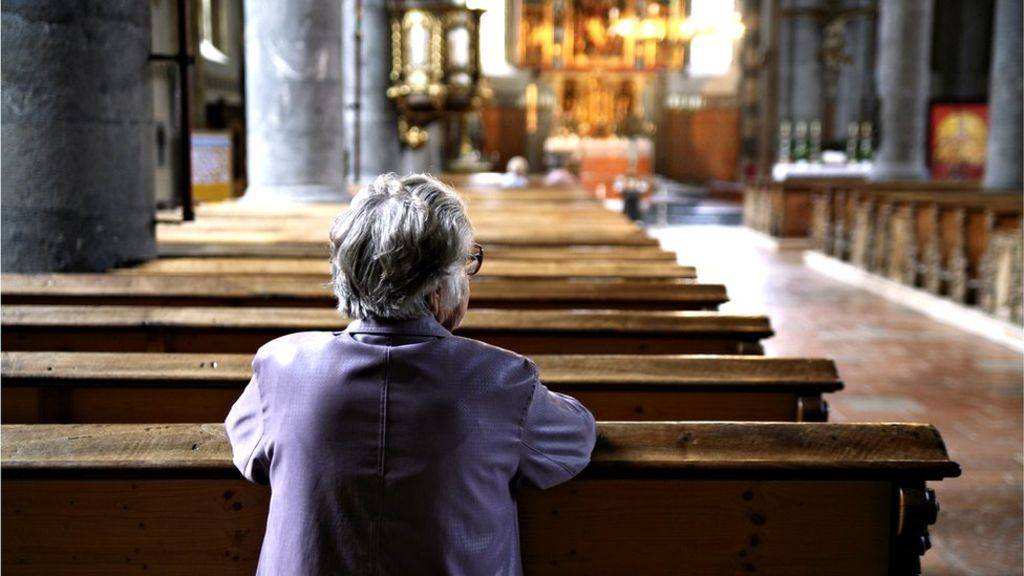
Life in lockdown has, for Christians, raised questions about what it means to meet God when our places of worship (aka ‘churches’) are closed.
Old Testament
Genesis 28:10-19 records Jacob’s experience of seeing in a dream angels on a stairway that led up to heaven, and of hearing God’s promise to give his descendants the land. Jacob concludes: “Surely the LORD is in this place, but I did not realize it!”
Specific localities are important in Moses’ encounter with God in the burning bush, and in the giving of the law at Mount Sinai. The tabernacle was a ‘portable’ focus of God’s presence, later made fixed and permanent in the temple of Jerusalem.
Psa 48:1f celebrates Mount Zion in glowing terms:
The LORD is great and certainly worthy of praise
in the city of our God, his holy hill.
It is lofty and pleasing to look at,
a source of joy to the whole earth.
Mount Zion resembles the peaks of Zaphon;
it is the city of the great king.
In Scripture, mountains seem to have a particular significance. Several factors may be at work in the symbolism: mountains are often remote, taking (sacrificial) effort to scale. They command wide views from their peaks. But, perhaps most significantly, they lift us above the ordinary places of life, matching our aspirations to reach up to God as he reaches down to us.
But the Old Testament is equally emphatic about God’s presence in the whole of his creation:
Psa 8:1 O LORD, our Lord,
how magnificent is your reputation throughout the earth!
Psa 19:1-4
19:1 The heavens declare the glory of God;
the sky displays his handiwork.
19:2 Day after day it speaks out;
night after night it reveals his greatness.
19:3 There is no actual speech or word,
nor is its voice literally heard.
19:4 Yet its voice echoes throughout the earth;
its words carry to the distant horizon.
In the sky he has pitched a tent for the sun.
At the very moment of the dedication of the temple, Solomon declares:
2 Chron 6:18 “God does not really live with humankind on the earth! Look, if the sky and the highest heaven cannot contain you, how much less this temple I have built!”
New Testament
In the New Testament, ‘the distinctive importance of all sacred spaces is deconstructed by the person of Jesus.’ We meet God, not in any particular geographical location, but ‘in Christ’. He is the embodiment of God’s presence (Jn 1:14). It is in and through him that the one final and complete sacrifice for sin is offered. All the promises of ‘the land’ are fulfilled him him. In Christ, God dwells with his people by his Spirit (Jn 7:38).
The hour has come when people will worship God neither on Mount Gerizim nor in Jerusalem, but ‘in spirit and in truth’ (Jn 4:21-23).
To be sure, there a places where we can feel a sense of peace, or a connection with the past, or a freedom from the distractions of everyday life. But we should be careful not to idolise any particular buildings or locations, because ‘God is lord of all creation, and can make his presence felt in any place he chooses, in the valleys just as much as in the mountains.’
(Based on this article by Ian Paul)