‘If the church were Christian’ – 6
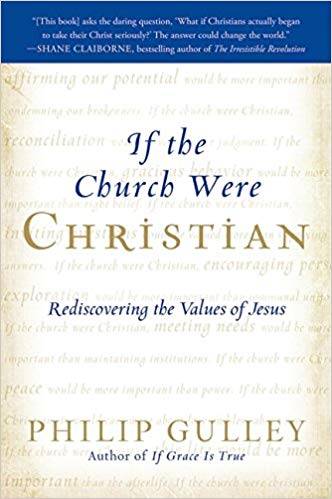
If the church were Christian, writes Philip Gulley, ‘Encouraging personal exploration would be more important than communal uniformity.’
Professed followers of Christ – from Jehovah’s Witnesses to Quakers – have their ways of disowning those who step out of line.
Such shunning seems far from the character of Jesus (though less so from that of Paul, 1 Cor 5:11; Rom 16:17). It was Jesus who was shunned, not he who shunned.
Of course, some form of correction may be needed for those who tarnish a group’s credibility, but too often the ‘solution’ is more damaging than the ‘problem’. Indeed, we might often wonder if the drive for uniformity is driven less by the need for purity and more by the need for control.
One effect of controlling behaviour is that followers end up being clones of the leaders, imitating their weaknesses as well as their strengths. It can close down discussion and debate. It can stop change in its tracks.
At first, Jesus’ disciples were very diverse, but the need for conformity soon reared it head when the Jerusalem Council was called in order to determine whether Gentile believers needed to observe the Jewish rituals.
Time and again, the church has opted for oppressive conformity over personal exploration. As a result, it is losing members at an alarming rate, as people look elsewhere for spiritual enlightenment.
Gulley wonders:-
In such a church, truth would not be imposed by someone in authority. Instead, people would be encouraged to discern it for themselves. Pastors, instead of teaching people what to think, will teach them how to think. Free thinking would be celebrated.
At the core of the Sermon of the Mouth (Matthew 5-7), we here ‘a back-and-forth rhythm of old revelation and new revelation.’
So often, when Jesus asked questions, he eschewed a didactic approach (‘tell me the right answer’), but rather encouraged people to think for themselves. So also in his story-telling.
Religious institutions rarely ask people questions, rarely engage people in the hard task of thinking for themselves.
We can agree with Michael Kruger that Gulley does make some helpful points along the way. It is uncomfortably true that some pastors are more interested in control than in truth. It is also true that Jesus based his teaching much more on questioning and story-telling than most modern preachers (although I don’t think that in getting people to think for themselves he was as unconcerned about getting at ‘the right answer’ as Gulley obviously thinks).
But, true to form, Gulley has only one way of presenting his version of the truth: take the worst example of those he disagrees with, allows us to consider these as typical, and then paint a rosy picture of his own vision.
But, Kruger remarks:-
Christianity is not just being on a journey. To make personal exploration the heart of it is to deny that God has revealed a message about himself and about the way of salvation. It is to say that religion is about our search for God, rather than God finding us. The gospel of Jesus Christ is not a question: it is a proclamation.
Christian churches welcome questioners. No doubt, there are some that do not (and I have not found that liberal Christians are any more amenable than conservative believers to having their own status quo questioned). But Gulley’s real complaint is not that many churches discourage questions, but rather that they presume to think that there are answers to those questions. They think that there is such a thing as definite, knowable, truth.
Jesus believed in church disciple. Neither Jesus nor Paul ‘shunned’ people. But they did teach that disciple was sometimes necessary: see Matthew 18:17, for example. Paul’s teaching 1 Cor 5:11 (cited by Gulley as evidence of ‘shunning’) is, also, about church discipline. As Kruger says:-
Gulley, Philip. If the Church Were Christian. HarperOne. Kindle Edition, chapter 6.