Why is the prosperity gospel so dangerous?
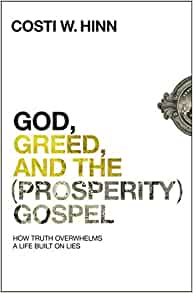
This question is addressed by Costi Hinn in his recent book, God, Greed, and the (Prosperity) Gospel (Zondervan).
(Costi, as the nephew of Benny Hinn, was raised in the bosom of prosperity gospel teaching and practice, although later came to thoroughly repudiate it, as his book documents.)
1. The prosperity gospel distorts the biblical gospel
The biblical gospel is all about God, and what he has done for us in Jesus Christ. This is seen clearly in passages such as Rom 3:23-25; 5:8-10; Eph 2:4-10. ‘When you look at these passages, what do you notice? Is the gospel about the gifts or the Giver? Is the gospel about the redeemed or the Redeemer? Is the gospel about earthly riches or eternal reward? Is the gospel about monetary gain or the glory of God? Is the gospel about obtaining my materialistic desires or using what I have to do good works for God? I bet, if you’re a biblically discerning Christian, you answered those questions correctly.’
But ‘the prosperity gospel distorts the biblical gospel by making the Good News all about you and all about stuff. The abundant life of John 10:10 is smeared to mean that God’s will is for you to have Bentleys, mansions, and job promotions. I’ve got news for you—no, actually, I’ve got good news for you: the abundant life is about the security of your soul for eternity. The abundant life is not a comfortable seventy years, courtesy of the prosperity gospel and leading to infinite suffering in hell if you don’t follow the biblical Christ as your Savior.’
2. The prosperity gospel insults God’s nature
‘God is divinely infinite and beyond our human comprehension. Still, he has made himself known to us through divine revelation (Scripture) and his Son, Jesus Christ. His attributes are such that he is beyond human control. He cannot be made into a formula. He cannot be manipulated. He is holy, the definition of perfection. He is eternal; time cannot hold him. He is sovereign, the majestic ruler of the universe.’ See Job 1:21; Psa 115:3; Jn 4:24.
But, in prosperity gospel teaching, ‘God can, like a cosmic magic genie, grant our wishes. The prosperity gospel teaches a version of the nature of God that is so skewed it scarcely communicates one iota of who he is. This is dangerous and abusive because it does not introduce people to their Creator, whom they desperately need to know. His love is not bought, and his blessings are free. His servants are ambassadors who represent who he really is.’
3. The prosperity gospel confuses the atonement
The benefits of Christ’s death and resurrection begin now, but do not reach consummation until the hereafter (see Jn 14:3; 1 Cor 15:42-53; Rev 21:4).
Prosperity preachers, however, ‘use and abuse the atonement to mean that God guarantees your healing because of the atonement for your soul. Worse, they promise that Jesus’ death on the cross didn’t provide just eternal life; it provides earthly riches. All you have to do is, by faith, tap into those things he already paid for. This is a damaging lie that takes something beautiful about our Savior’s work on the cross and turns it into a petty transaction for fleeting pleasures.’
4. The prosperity gospel demeans Jesus
In biblical teaching, Jesus is the end, and not merely a means to the end. See Jn 3:30; Phil 1:21; Heb 1:3; 1 Jn 5:12.
The prosperity gospel, in contrast, ‘makes human satisfaction to be material and Jesus to be the cherry on top. If it makes Jesus a central focus, it’s that he is the main avenue to getting what you want. This version of Jesus is a shell of who he really is. The prosperity gospel promises people the abundant life that Jesus offers only to deliver a gospel with no Jesus at all.’
5. The prosperity gospel twists scripture
Although there are things in Scripture that are difficult to understand, its essential message is not unfathomable. Because it is of divine inspiration, its message comes with divine authority. Because it was written by human authors, its meaning can be arrived at through normal methods of interpretation.
But ‘the prosperity gospel takes the age-old interpretative strategies that scholars have used for generations and turns them upside-down. The rules for hermeneutics (how to interpret Scripture) are tossed out the window! It takes passages that are plain in meaning based on what they literally say in Scripture and makes them to mean something completely different. Like an evil imposter taking a heartfelt letter from a king to his royal subjects and twisting it for self-serving purposes it was never intended to be used for, prosperity preachers take the Bible and twist it into a tool for abuse.’
6. The prosperity gospel is motivated by love for money
Scripture has many warnings about the deceptive attraction of money (Prov 3:13; 10:2; 11:28; 16:8; 1 Tim 6:10).
Notwithstanding, ‘the prosperity gospel is obsessed with money and material gain. To argue that is to argue that gravity does not exist. It’s a fact that we need to keep in mind when we’re tempted to buy in to the lies. Nothing good comes from the love of money.’
7. The prosperity gospel produces false converts
Because it depicts a false Jesus, and offers a false gospel, it produces false converts.
‘The prosperity gospel fills pulpits with imposters and the pews with people who either want to be fooled (2 Tim. 4:3) or are being deceived (2 Tim. 3:13).’
8. The prosperity gospel overcomplicates faith
‘Our salvation, our faith, and our ability to do good works on this earth are all gifts from God (Eph. 2:8–10). Having faith in Jesus Christ is what saves us, and the evidence of that faith being genuine is a life that follows after him. Jesus doesn’t make being his follower complicated. Though it may not be an easy life, it is a life full of freedom in him! He promises that his yoke is easy and his burden is light (Matt. 11:30), and that his people can cast their anxieties on him because he cares (1 Peter 5:7).’
By contrast, ‘any religion that says you need to do good works, give enough money, or speak enough positive declarations to unlock God’s saving grace or abundant blessings on your life is a false religion…The prosperity gospel turns faith into a works-based system and confuses it by adding burdens that people cannot carry. The Pharisees did the same thing when they were manipulating and exploiting people (Luke 11:46).
9. The prosperity gospel ruins Christianity’s witness
Jesus taught his disciples to have a very loose grip on their possessions (Lk 14:33). But the world can see that the pedlars of the prosperity gospel worship material goods.
‘Christian leaders are expected to be free from the love of money (1 Tim. 3:3), not obsessing over how to raid the offering buckets. Christian leaders are expected to care for people as loving, humble shepherds (1 Peter 5:2), not act as manipulative salesmen. Finally, Christian leaders are expected to use their God-given authority to protect people from deception and boldly steer the church into truth (Heb. 13:17), not exploit and control desperate people.’
10. The prosperity gospel abuses vulnerable people
‘The prosperity gospel attracts those who are looking to get rich off of people desperate for hope. What these desperate, vulnerable people need is a pastor who will love them, protect them, and give them real hope. Too many churches are being overrun by charlatans, and the church at large has got to say, “Enough is enough.” Vulnerable people should be targeted by the church for the purpose of serving their spiritual and physical needs, not squeezing every dollar out of them in exchange for empty promises.’
Hinn, Costi W. God, Greed, and the (Prosperity) Gospel (pp. 168-178). Zondervan. Kindle Edition.