The tabernacle – God’s dwelling place
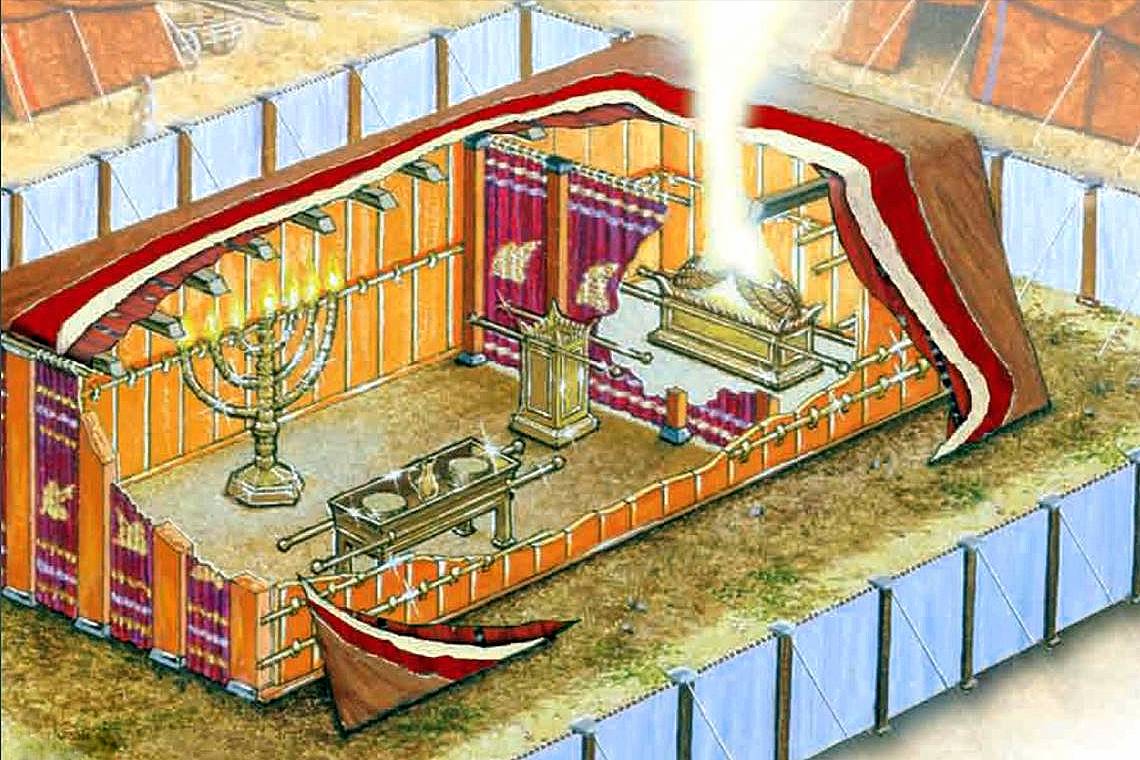
Christians sometimes regard the accounts of the tabernacle, temple and priestly service as tedious and irrelevant. This is a mistake. They point to a vital reality – the presence of God with his people.
The tabernacle itself is of seminal importance. It is the first in an important series (tabernacle, temple, incarnation, church, new Jerusalem). The account of its construction is much more detailed than that of the temple (see 1 Kings 5-8), and the tabernacle found a permanent home in the latter structure. It would seem that the temple was built to the same basic plan as the tabernacle, only on a larger scale, and with different materials.
According to Heb 8:5, the tabernacle was ‘a sketch and shadow of the heavenly sanctuary.’ Moreover, ‘the NT declares that the law had ‘a shadow of the good things to come’, which good things actually came with Christ (Heb. 10:1; 9:11). So Christ is said to have entered through the veil (Heb. 6:19–20), and to be set forth as a propitiatory, or mercy seat (Rom. 3:25, hilastērion; cf.lxx Ex. 25:17–22; Lv. 16:15–16. RSV ‘expiation’ is scarcely exact); while the writer to the Hebrews indicates that he could have expounded in this fashion all the tabernacle vessels and not simply the one feature which was relevant to his immediate argument (Heb. 9:5).’ (D.W. Gooding NBD)
The tabernacle and priesthood became corrupted in time. But the prophets rail not against the institutions themselves, but against their misuse (see Isa. 1:10–17; Hos. 6:6; Amos 5:21–24; Mic. 6:6–8; see also Ps. 40:6; 50:7–15; 51:16–17). God could not be ‘boxed in’ the tabernacle. The many allusions to creation in its construction indicate that the God who is worshiped is the Maker of heaven and earth.
The tabernacle – and, later, the temple – was at the centre of Israel’s identity and worship. The Exile and the destruction of the temple were, accordingly, devastating events. If God was not longer seated above the ark, between the cherubim, where was he? Had he forsaken them? Where would the sacrifices now be offered?
Although the temple was rebuilt, the second temple was was a mere shadow of the first one (cf. Hos 2:3). Temple worship never recovered its earlier grandeur and significance.
Jesus as the tabernacle, the dwelling place of God, is alluded to in Jn 1:14 – ‘the Word became flesh and tabernacled among us.’ And, adds the Evangelist, ‘we have seen his glory.’ ‘The glory that resided above the ark in the Most Holy Place, to which the high priest alone had access once a year, is now walking the streets of Jerusalem for all to see’ (Enns). Jesus referred to himself as the temple in Jn 2:19-21.
Just as the priests embodied the tabernacle (their garments were made of the same materials), so Jesus and priest embodies God’s presence with his people.
At Christ’s return, there will be no need of an earthly temple in the new city, for ‘the Lord God Almighty and the Lamb are its temple’ (Rev. 21:22).
As we wait for the last day, Christ, who has ascended to the Father, has sent his Spirit to abide with us and in us. The people of Christ have become God’s holy dwelling place, his temple. See 1 Cor 3:16f; 6:19.
Based on Enns, Exodus (NIVAC), pp552-557.