1 Cor 11:3 – Gender complementarity and the immanent Trinity
1 Corinthians 11:3 reads:
‘But I want you to know that Christ is the head of every man, and the man is the head of a woman, and God is the head of Christ.’
The statement ‘God is the head of Christ’ comes in a context which deals with the expression of gender roles in public worship. Does it then provide a basis for gender complementarity on the basis of the immanent Trinity?
Most evangelical egalitarians, such as Kevin Giles, answer with a resounding, ‘No!’ The doctrine of the Trinity has nothing to say about gender relations.
But some evangelical complementarians, such as Bruce Ware and Wayne Grudem, say, ‘Yes!’ They maintain that the present passage refers to the eternal relations between God the Father and God the Son, and that the text therefore directly supports the complementarian view of gender relations.
Kyle Claunch, however, argues from this text in a more nuanced way, while still affirming a complementarian view.
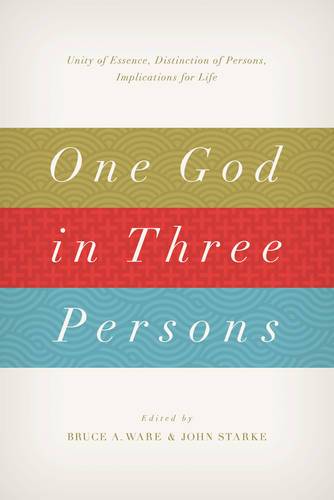
What follows is based on his chapter in ‘One God in Three Persons: Unity of Essence, Distinction of Persons, Implications for Life‘, edited by Ware and Starke and published in 2015.
In context, the second clause (‘man is the head of a woman’) is central, with the first and the third both grounding it theologically and guarding it against misunderstanding.
This passage recalls Eph 5:23, where Paul says that ‘The husband is the head of the wife, as Christ also is the head of the church’, and it is reasonable to suppose that he has something similar in mind here. Paul refers to ‘a man’ in 1 Cor 11:3, rather than to ‘the church’, as in Eph 5, not to exclude women, but rather to emphasise the point that he is making about male authority: that it should be carried out in obedience to Christ.
The third clause (‘God is the head of Christ’) points to the divine precedence and therefore the dignity of the woman in her role of submission:
‘By submitting to the headship of men in corporate worship, women are reflecting the character, attitude, disposition, and role of Christ.’
The important question remains, however, as to whether this verse refers to Christ in his incarnate state, or his eternal state.
It seems clear that the first clause (‘Christ is the head of every man’) refers to Christ in his present exalted and incarnate state as head of the church. The second clause (‘the man is the head of a woman’) would also refer to the current situation, with the man’s headship over the woman as modelled on Christ’s headship over the church (as in Eph 5:22-33). It seems logical to conclude that the third clause (‘God is the head of Christ’) should be understood in relation to the economy of redemption:
Paul has in mind that God the Father sent the Son into the world (cf. Gal. 4:4) and that the Son came forth not to do his own will, but the will of the one who sent him (cf. John 6:38).
It would seem, then, that this passage models male/female relationships on economic, or covenantal, Trinitarian relationships (rather than immanent, or ontological, relationships).
Nevertheless, it can be argued that this verse does refer indirectly to eternal Trinitarian relations.
This is significant, or course, since gender relations, in Paul’s teaching, would not be rooted merely in the cultural status quo, but in the very being of God.
Augustine argued that the economic missons of the Son and the Spirit reveal the imminent and eternal relations of the Trinity.
There is, in other words congruity between (what we conventiently call) the immanent Trinity and the economic Trinity. God’s acts in history are consistent with who he is eternally. Just as, in the immanent Trinity, the Father begot the Son and the Son was begotten by the Father, so in the economic Trinity the Father sent the Son and the Son was sent by the Father. It is through the economic Trinity that we come to know something about the immanent Trinity.
In the immanent Trinity, the Son is ‘from’ the Father by virtue of his eternal generation. In the economic Trinity, the Son is ‘from’ the Father in that he is ‘sent’ into the world to be incarnate. The fact that he is thus ‘sent’ in time makes known the fact that he has eternally been ‘from’ the Father.
To argue otherwise would be to postulate an epistemological void that might suggest there there is no correspondence at all between the immanent and the economic Trinity.
Returning to 1 Cor 11:3, we note that egalitarians argue that the clause ‘God is the head of Christ’ refers exclusively to our Lord’s incarnate state. But, actually, the incarnation itself reveals something fixed and irreversible about the eternal Triune God:
‘It was the Son and not the Father who was sent and became the submissive one; furthermore, it was the Father, not the Son, who sent the Son to become the submissive one.’
We can conclude that there was something about the Father, and something about the Son, that made them suited to them sending and being sent, respectively.
If, then, 1 Cor 11:3 reveals something – albeit indirectly and analogically – about the immanent nature of God, then,
‘It is, therefore, legitimate to appeal to the very triune being of God, by such good and necessary inference from direct statements in Scripture, when explaining the nature of the submission of women to men in the church and in the home.’
But may we speak, then, of eternal authority and submission within the Godhead. Bruce Ware, Wayne Grudem and others think we may. But one problem with this is that it seems to assume three distinct wills within that Godhead:
‘In order for the Son to submit willingly to the will of the Father, the two must possess distinct wills.’
This way of putting it certainly runs counter to Nicene orthodoxy. For,
‘According to traditional Trinitarian theology, the will is predicated of the one undivided divine essence so that there is only one divine will in the immanent Trinity.’
Ware, Grudem, et al must therefore postulate three wills, not within the essence of the Godhead but among the distinct persons.
It is too strong to say that ‘the Son submits eternally to the will of the Father’ because this implies two distinct wills in relation to one another.
Better to say that, in the imminent Trinity,
‘The one eternal will of God is so ordered that it finds analogical expression in a created relationship of authority and submission: the incarnate Son submits to the will of his Father.’
In the case of the Incarnation, we would then say that the one united will of the triune God is that the Son should become incarnate in order to accomplish redemption for the people of God. The Father, the Son and the Spirit each expresses this one united will according to his place in the intratrinitarian order of subsistence.
The point here is that many gender complementarians have adopted a view of the Trinity that entails three distinc wills, thus making the authority of the Father and the submission of the Son a direct reflection of the immanent Trinity. But by grounding gender complementarity indirectly in the immanent Trinity, Nicene orthodoxy regarding the one will of God can be maintained.
The argument, then, is that
‘Gender complementarity is grounded in the immanent Trinity indirectly. Thus, the basic contention of most gender complementarians that gender relationships reflect something about the very being of God is correct. However, this essay has argued that the correspondence must be seen as indirect and is best understood according to pro-Nicene Trinitarian categories rather than by the terminology of eternal immanent submission of the will of the Son to the Father.’
The statement ‘God is the head of Christ’ refers directly to Christ in his incarnate state. Neverthess, the submission of the human Christ to his Father’s will does does express something about the way the one will of God is ordered among the persons of the immanent Trinity.
1 Cor 11:3 does, therefore, ground gender complementarity (albeit indirectly) in the immanent Trinity.
Note
Kevin Giles, in his extended review of One God in Three Persons, has a brief and dismissive comment on Claunch’s chapter, in which he fails to acknowledge, let alone engage with, the main argument. Giles ends this section of his review with this ‘commendation’:
‘I commend Claunch for his honesty and openness. He admits that the understanding he and his fellow complementarians hold “of the eternal relationship between the Father and the Son,” in which the Son must eternally submit his will to the will of the Father “runs counter to the pro-Nicene tradition, as well as the medieval, Reformation, and post-Reformation Reformed traditions that grew from it.”’ (My emphasis)
But this is altogether misleading. Claunch is not agreeing, but rather disagreeing with (some of) his fellow complementarians at this point.
Here is a fuller quote from Claunch:
‘Bruce Ware, Wayne Grudem, and others insist that the Son of God eternally submits to the inherent authority of the Father, so that the authority-submission structure is a major factor in establishing the eternal distinctions between the persons. For these theologians, the submission of the Son to the Father in the economic state of incarnation is a reflection of the submission of the Son to the Father in the eternal preincarnate state. One often overlooked feature of such a proposal is that this understanding of the eternal relationship between Father and Son seems to entail a commitment to three distinct wills in the immanent Trinity. In order for the Son to submit willingly to the will of the Father, the two must possess distinct wills. This way of understanding the immanent Trinity does run counter to the pro-Nicene tradition, as well as the medieval, Reformation, and post-Reformation Reformed traditions that grew from it. According to traditional Trinitarian theology, the will is predicated of the one undivided divine essence so that there is only one divine will in the immanent Trinity.’ (My emphasis)
It is perfectly clear that Claunch is referring to what others (specifically, Grudem and Ware) think, and is judging it to be anti-Nicene. Giles has completely missed the fact that Claunch is attempting to set out a way in which the one will of the Triune God might be expressed differently by the three persons of the Godhead.