Resurrection: what difference does it make?
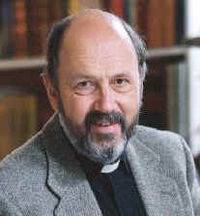
Some people ask (says Tom Wright in his Surprised by Hope, 201-206), ‘even if Jesus was raised from the dead, what difference does it make?’ Indeed, even Easter hymns can give an inadequate answer by obscuring the fact that Jesus’ resurrection guarantees something more than life in some kind of future ‘heaven’.
But when the New Testament strikes the great Easter bell, the main resonances it sets up are not simply about ourselves and about whatever future world God is ultimately going to make, when heaven and earth are joined together and renewed at last from top to bottom. Precisely because the resurrection has happened as an event within our own world, its implications and effects are to be felt within our own world, here and now.
Belief in resurrection is not just about putting a ‘tick’ in the right box. It is, rather,
a matter of a belief which is a symptom of an entire worldview, an accurate indext to a way of looking at everything else.
The point is that the future hope held out to us in Jesus Christ leads directly to the present hope which is the basis of all Christian mission. It is not an afterthought to hope for
a better future in this world – for the poor, the sick, the lonely and depressed, for the slaves, the refuges, the hungry and homeless, for the abused, the paranoid, the downtrodden and despairing, and in fact for the whole wide, wonderful and wounded world.
And this was precisely how Jesus went about his mission:
He was doing, in close up, in the present, what he was promising long-term, in the future. And what he was promising for that future, and doing in that present, was not about saving souls for a disembodies eternity, but rescuing people from the corruption and decay of the way the world presently is so that they could enjoy, already in the present, that renewal of creation which is God’s ultimate purpose – and so that they could thus become colleagues and partners in that larger project itself.
Paul draws the same kind of conclusion in 1 Cor 15:58. As he has argued throughout the letter, the present bodily life is not valueless just because it will die. It is destined for new life. And as 1 Cor 6 makes plain, all we do to build God’s kingdom in the present will last into God’s future.
Consequently, we must not fall back into that old split-level world
where some people believe in ‘evangelism’ in terms of ‘saving souls for a timeless eternity’ and other people believe in ‘mission’ in terms fo ‘working for justice, peace and hope in the present world’.