Could Jesus read and write?
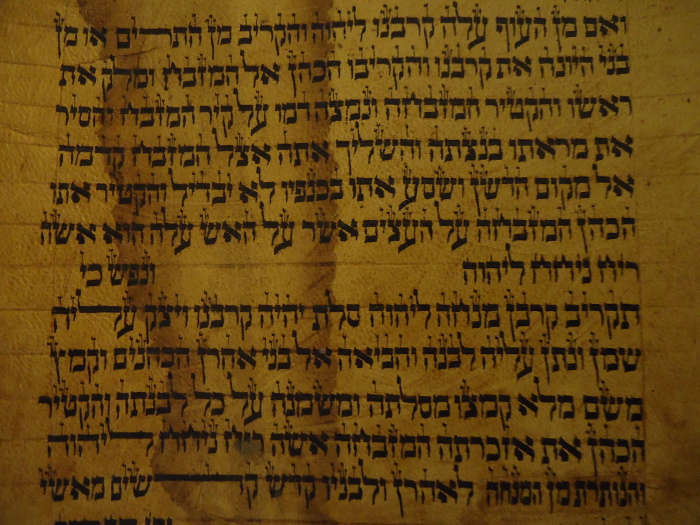
The question of Jesus’ level of literacy has been explored by Chris Keith and John Nelson, among others.
Without a doubt, Jesus of Nazareth was a man of great intelligence.
Even at the age of twelve, he was debating with the religious leaders in the Temple in Jerusalem, and amazing them with his knowledge and insight (Luke 2:46-47).
However, Keith thinks that
‘Even this portrayal of Jesus in the temple impressing educated teachers at twelve cannot automatically be taken at face value…It contrasts with the earlier portrayal of Jesus in the Gospel of Mark as someone who is rejected as a synagogue teacher by his fellow villagers in Nazareth because he is in the manual labor class (Mark 6:1-6; also Matt 13:54-58).’
I’m not sure what Keith expects us to infer from this ‘contrast’. Certainly, the two accounts cannot be regarded as contradictory, because their settings and circumstances are completely different.
According to Keith, it is highly unlikely that Jesus would have been educated. He mentions that Craig Evans, on the other hand, argues for the possibility of a literate Jesus.
Keith thinks that:
‘Jesus, like most Jews of the first century C.E., obtained most of his knowledge of Jewish history by listening to the sacred texts read weekly at synagogue.’
Helen Bond thinks that Jesus’ level of literacy would have been low:
‘The lack of formal schools and the universally low literary rates in ancient societies (usually put at 10 per cent, at best), suggest that any literacy Jesus may have achieved would have been extremely basic.’
Studies have shown, according to Nelson, that literacy levels (i.e. the ability to both read and write) in Palestine may have been as low as 3%.
Nelson cites Werner Kelber, to the effect that:
‘writing was in the hands of an élite of trained specialists, and reading required an advanced education available only to a few.’
Nelson’s conclusion is that it is ‘extremely unlikely’ that Jesus was able to write, and that his ability to read would have been well below that of educated scribes.
Crossan is quoted:
‘Jesus was a peasant from a peasant village. Therefore, for me, Jesus was illiterate until the opposite is proven.’
Of course, the only place where the Gospels record Jesus writing is Jn 8:6-12 (a disputed passage), where he writes something in the dirt.
But we do have a clear indication of his ability to read in Lk 4:17-21 –
4:16 ‘Now Jesus came to Nazareth, where he had been brought up, and went into the synagogue on the Sabbath day, as was his custom. He stood up to read, 4:17 and the scroll of the prophet Isaiah was given to him. He unrolled the scroll and found the place where it was written…’
I should think that this is clear evidence of Jesus’ ability to read.
Nelson, however, thinks that a tektōn like Jesus would have had a tradesperson’s basic ability to read. Moreover:
‘when Luke redacts Mark’s story of Jesus’ appearance in the synagogue, presenting Jesus as able to read, he drops Mark’s mention of Jesus as a tektōn. This suggest a tektōn like Jesuswould not typically have been able to teach as he did, let alone to read or write.’
I agree, however, that the ability to write, and the ability to compose a piece of writing, are not settled by the biblical text alone.
Nelson thinks that Jesus’ status as a rabbi does not prove that he had a high level of literacy. Noting the example of Paul, he acknowledges that a man might be both a craftsman and a rabbi. But the notion of a professional trained rabbi is, he says, a later one. In Jesus’ day, ‘rabii’ merely denoted a teacher, without reference to professional status or training.
Bart Ehrman adds some further thoughts:
- As few of 3% of the population of Palestine in the Roman period was literate.
- Those who were literate were primarily well-off people living in the cities.
- The kind of existence Jesus and his family led in Nazareth would probably not have afforded him the opportunity to learn to read and write.
- Luke 4:16 is the one text that indicates that Jesus could read. But much of his knowledge of the scriptures may have come from hearing them read aloud.
- We do not know how well educated rabbis were. This was, in any case, an honorary title for a teacher, and so not indicative of any formal training or qualifications.
- It is quite possible that Jesus could read. If so, he was probably taught by the leader of the local synagogue.
In sketching the case for Jesus’ literacy, Nelson remarks that the average jewish man might have been illiterate, but Jesus was no average Jewish man!
Consider:
‘His parables show signs of genius, weaving in subtle allusions to the Jewish scriptures;9 his teaching makes common reference to the Scriptures; and he spoke as someone with authority to ‘teach’ on religious matters, opining on matters addressed by literate scribes.
‘Perhaps even more telling, Jesus often goes head to head with the scribal elites. In these encounters, he often asks his opponents: ‘have you not read…? before quoting a passage from the scriptures. Though it is entirely possible that Jesus is only questioning the credentials of his interlocutors in a Socratic-like fashion, such a critique would be more powerful if he had read the passage in question.10
It is also noteworthy that Jesus was not the only religious virtuoso in his family. His brother, known to Josephus as ‘James the Just’, also became a major religious figure following his brother’s death. For one scholar [Casey], it is “culturally inconceivable that Joseph and Miriam produced two major Jewish religious leaders” without some form of schooling in the scriptures.’
But, concedes Nelson, it is not clear how Jesus would have been educated – whether at school (no school is mentioned anywhere in the Bible) or at home. Nevertheless, both Josephus and Philo have statements that suggest the value of children’s education.
(Published 14th February 2024. Updated 26th August 2024)