It is one thing to affirm that Christ was (and is) both human and divine. It is another to seek to understand how these truths relate to one another.
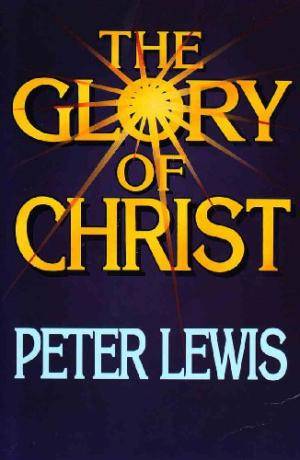
Peter Lewis has some helpful comments on our belief that the incarnate Christ did not cease to be divine.
According to John 1:14, ‘the Word became flesh’. ‘However,’ writes Lewis, ‘we are not to think of the Son as leaving a sort of gap in the Godhead, a vacancy in the Trinity, at his coming down to earth as a man. In his divine nature God the Son filled all things and was in all places at all times.’
There was no attenuation of this at the incarnation. Although Christ became what he had not been, he did not cease to be what he was. ‘He who continued to fill all things and to sustain all things, also became contained in a virgin’s womb, and was sustained by a human mother, living simultaneously the massive life of Godhead and the creaturely and painful life of humanity.’
According to Athanasius:-
The Word was not hedged in by His body, nor did His presence in the body prevent His being present elsewhere as well…At one and the same time-this is the wonder-as Man He was living a human life, and as Word He was sustaining the life of the universe, and as Son He was in constant union with the Father.
Calvin stated:-
Even if the Word in his immeasurable essence united with the nature of man into one person, we do not imagine that he was confined therein. Here is something marvelous: the Son of God descended from heaven in such a way that, without leaving heaven, he willed to be borne in the virgin’s womb, to go about the earth, and to hang upon the cross; yet he continuously filled the world even as he had done from the beginning! (Institutes, II, xiii, 4)
Helmut Thielicke comments:-
The point of the Calvinistic extra was that Calvin…did not want to see the second person of the Trinit ‘exhausted’ in the historical man Jesus. The Logos is not completely absorbed by the flesh which he assumes. For he is the subject of this assuming. He thus transcends it. Consequently he is out of the flesh (eksarkos) as well as in it (ensarkos).
This, then, is the mystery of the incarnation: that Christ is simultaneously the divine Word and human flesh. ‘For we affirm his divinity so joined and united with his humanity that each retains its distinctive nature unimpaired, and yet these two natures constitute one Christ.’ (Calvin, Institutes, II, xiv, 1).
What, then, did the eternal and infinite Word ‘become’? Lewis writes:-
His humanity was not only an adding, an extension, a new horizon. It was also a boundary, an entrance into an authentic human experience of finitude…The eternal Logos…was – and is – not merely God in the form of man, but God in the nature of man; not God in disguise, but God in the flesh. He did not only come among us; be became one of us, possessing, as his very own, a true and full human nature from its conception…In that humanity he flet pleasure and pain, as we fell pleasure and pain. In that human nature he laughed and cried, hoped and feared, knew delight and disappointment. In that human nature he received and gave, blessed and suffered, was tempted as man and perfected as Mediator. The mystery and message of the incarnation is that in Jesus God acquired manhood and the deity became a member of the human race.
The Glory of Christ, 122-124