Jesus in the Psalms
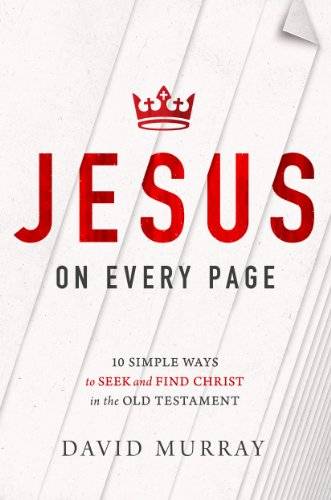
According to David Murray (Jesus On Every Page, ch. 16),
1. We sing to Jesus with the Psalms
‘God’ in the Psalms is not just some general-purpose God: he is the God who reveals himself as Trinity.
Accordingly,
‘We use the Psalms of lament to confess our sins to Jesus. We sing the psalms of praise to celebrate Jesus’ person and work. We sing the psalms of remembrance to look back on Jesus’ acts throughout redemptive history. We sing the psalms of confidence to express our faith in Jesus’ salvation. We sing the wisdom psalms to acknowledge that Jesus is our only source of wisdom. We sing the psalms of thanksgiving to express our gratitude for Jesus’ daily grace in our times of need.’
2. We sing of Jesus in the Psalms
Although only some of the psalms (around 15) are distinctly messianic, we have the authority of Jesus himself behind the assertion that the Old Testament in its entirety (and therefore the Psalms in their entirety) point to him and are fulfilled in himself.
With regard to the Psalms:-
- The New Testament quotes from the Psalter more often than from any other book of the Old Testament.
- Of the 283 direction quotes from the Old Testament in the New Testament, 116 (41%) are from the Psalms.
- The Psalms are used over 50 times in the Gospels to allude to the person and work of Jesus Christ.
- The writer to the Hebrews utilizes at least seven of the Psalms to prove the divinity of Jesus.
While we acknowledge the greater light and knowledge of New Testament faith, nevertheless we believe that writers of the Old Testament writers had a true and sufficient faith in the coming Messiah. (In this regard, their faith in Christ’s first coming is rather like our faith in his second coming – limited, but real).
The Psalms teach that
- God saves by grace, and not works
- God will send a deliverer
- The Deliverer will reveal God in an unprecedented way
- The Deliverer will suffer as a sacrifice for sin
- The Deliverer will reign everywhere and for ever.
Now, these are very Christian truths, and fully justify the use of the Psalms in Christian devotion and worship.
But we do not find only Christian doctrine in the Psalms, but also Christian experience.
We find believers wrestling with doubt and triumphing in faith. We find believers quaking with fear and finding refuge under the shadow of heavenly wings. We find believers being persecuted and anticipating God’s future rout of their and his enemies. We find some believers anxious about dying and others ecstatic with heavenly hope. We find hearts dissatisfied with human words, feasting on divine promises. We find concern for family and nation but also unblinkered and unfettered interest in the worldwide expansion of the gospel. We find pastoral words addressed to the young and the old, to fathers and mothers, to rich and poor, to ruler and ruled. We find weakness in the flesh and longings for more of the Holy Spirit. We find mourning over the state of the church and confidence in its future triumph. What Christian experience is not covered in the Psalms?
At face value, Psalm 16 does not look promisingly Messianic. But the New Testament (Acts 2) declares that David was speaking of Christ in that Psalm. to be sure, David was speaking of himself, in the first instance. But in God’s providence many things that David experienced would be true (especially true!) of Christ as well.
3. We sing with Jesus in the Psalms
Just as the Psalms cover the full range of Christian experience, so that cover the full range of the experience of Christ. In fact, just as the Gospels give us insight into his outward, public life, so the Psalms give us insight into his inward, spiritual life. Geerhardus Vos remarked that
‘our Lord found his inner life portrayed in the Psalter and in some of the highest moments of his ministry borrowed from it the language in which his soul spoke to God, thus recognize that a more perfect language for communion with God cannot be found.’
The Psalms fit every emotion and experience of our Lord – praise, lament, suffering, thanksgiving, remembrance, and so on. Equally, they fit every season of his life – boyhood, adolescence and adulthood, when he read the Scriptures, when he preached, when he saw the Devil at work, when he celebrated Passover, when he was falsely accused, when he was betrayed, when he was falsely accused, when he was forsaken, when he was dying, and when he was rising again.
Michael Lefebvre has written that
‘Finding Jesus in the Psalms is not simply about the prophecies of his work in this line or that line. We find Jesus in the Psalms by hearing his voice leading our praise in every line…Historically, the Psalms were treasured by the Church because they are the hymns of Jesus. The time has come for us to recover a passion for singing, not just about Jesus – but singing with him.’