Packer on eternal punishment
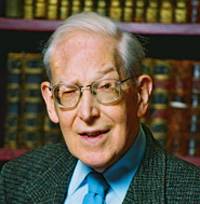
In 1990, aware that respected evangelicals such as John Stott, Philip Edgcumbe Hughes and John Wenham had recently lent their support to annihilationism/conditionalism, J.I. Packer gave a lecture on ‘The Problem of Eternal Punishment.’
Packer began by affirming what all evangelicals should affirm, namely that our views about ultimate destiny should be shaped not by what what we might like to be so, but by what Scripture actually says is so. Packer also observed what many before and after him have observed: that the Scriptural voice which speaks most frequently and firmly about hell is that of Jesus himself.
The phrase ‘eternal punishment’ is, as Packer notes, Jesus’ own. It occurs in Mt 25:41,46. The Greek word underlying ‘eternal’ is ‘aionios‘ which does not mean ‘endless’, but ‘pertaining to the age to come’. However, in the teaching of Jesus and the Jews the age to come will be endless; ‘aionios‘ should therefore be understood as entailing everlastingness ‘unless something is said to show the contrary’ and the parallelism between ‘eternal life’ and ‘eternal punishment’ demonstrates that just as the one is everlasting, so must the other be.
Eternal punishment, in the teaching of Jesus, is departure into the fire of Gehenna. This fire never goes out (Mk 9:43,48). A contrasting, yet complementary, image is that of ‘darkness’ (Mt 8:12; 22:13; 25:30). The one image speaks of painful distress; the other of hopeless desolation.
The apostle Paul speaks of God’s wrath, affirming the certainty of final judgement and final ruin for the impenitent (Rom 2:5-26). He speaks of ‘eternal ruin’ in 2 Thess 1:7-9. Jude uses both Jesus’ images of everlasting destruction: eternal fire (Jude 7) and ‘blackest darkness’ (Jude 13). In Rev 14:9-11 we have the image of torment, the smoke of which rises up ‘for ever and ever’. Perhaps most forcibly, Rev 20:10, 14 has a picture of endless pain and grief in the ‘lake of fire’.
Packer notes the tone with which the NT writers present these solemn truths: not a tone of gloating, but rather one of ‘traumatic awe’, ‘a passionate gladness that justice will be done for God’s glory, linked with an equally passionate sadness that fellow human beings, no matter how perverse, will thereby be ruined’ (see Lk 19:41-44; 23:28-31; Rom 9:2-3,10:1).
It is helpful, says Packer, to continue the discussion not using the language of ‘punishment’ or ‘torment’ (although both of these are scriptural terms), but rather using the language of ‘divinely executed retributive justice’. This language is (a) less emotionally fraught; (b) reflective of the fact that divine judgement is not arbitrary or capricious, but rather a part of God’s good plan to put the world to rights and to hold people accountable; (c) blends the complementary scriptural truths that God is just in condemning the wicked, and that the punishment of the wicked is, in a very real sense, self-inflicted: in their perversity, some people choose death over life (see Jn 3:18-20).
But why lecture on this subject? Packer gives the following reasons: (a) Christians have been increasingly uncertain about the finality of God’s judgement of sinners. Many, silently or vocally, embrace a doctrine of universalism, notwithstanding the verdict of Scripture concerning the fate of unrepentant sinners. (b) Evangelicals have become increasingly uncertain about the everlasting destiny of those who leave this world in a state of unbelief.
Concerning this latter trend – the trend towards annihilationism or conditionalism, Packer has the following to say:-
(i) the exegetical expedients used to suggest that teaching of Scripture concerning the eternal fate of the wicked entails annihilation rather that everlasting ruin and distress are not ‘natural’.
(ii) the argument used by conditionalists according to which it would be unduly cruel of God to punish sins committed by finite creatures for an infinite length of time is weak, not only because it is God’s prerogative to decide what is just and what is not just, but also because the objection could only be eliminated if it could be shown that God annihilated the wicked at death, rather than after some indeterminate period of punishment.
(iii) the argument that the harmony of God’s new creation will be marred if, somewhere, the lost continue to exist in pain and distress, is merely speculative.
(iv) similarly, the argument that the joy of the redeemed will be marred by the knowledge that some continue in everlasting retribution is flawed, since the same cannot be said of God, and in heaven we will be like him, loving what he loves and hating what he hates.
Philip Hughes maintains that God’s purpose in creating human beings was to perfect us in the image of his Son. But the logic requires full-blown universalism, and not the half-way house of annihilationalism/conditionalism.
Packer concludes:-
‘Does it matter whether an evangelical is a conditionalist or not? I think it does: for a conditionalist’s idea of God will miss out on the glory of divine justice, and his idea of worship will miss out on praise for God’s judgments, and his idea of heaven will miss out on the thought that praise for God’s judgments goes on (cf. Rev. 16:5–7, 19:1–5), and his idea of man will miss out on the awesome dignity of our having been made to last for eternity, and in his preaching of the gospel he will miss out on telling the unconverted that their prospects without Christ are as bad as they possibly could be—for on the conditionalist view they aren’t! These, surely, are sad losses. Conditionalism, logically thought through, cannot but impoverish a Christian man, and limit his usefulness to the Lord. That is why I am concerned about the current trend towards conditionalism. I hope it may soon be reversed.’
Comment
I have a huge respect for Packer. However, I think that he has not, in this lecture, been able to resolve the exegetical or theological arguments involved. I’ve reflected on these in other posts, so I won’t repeat them here.