Gender identity and the new gnosticism
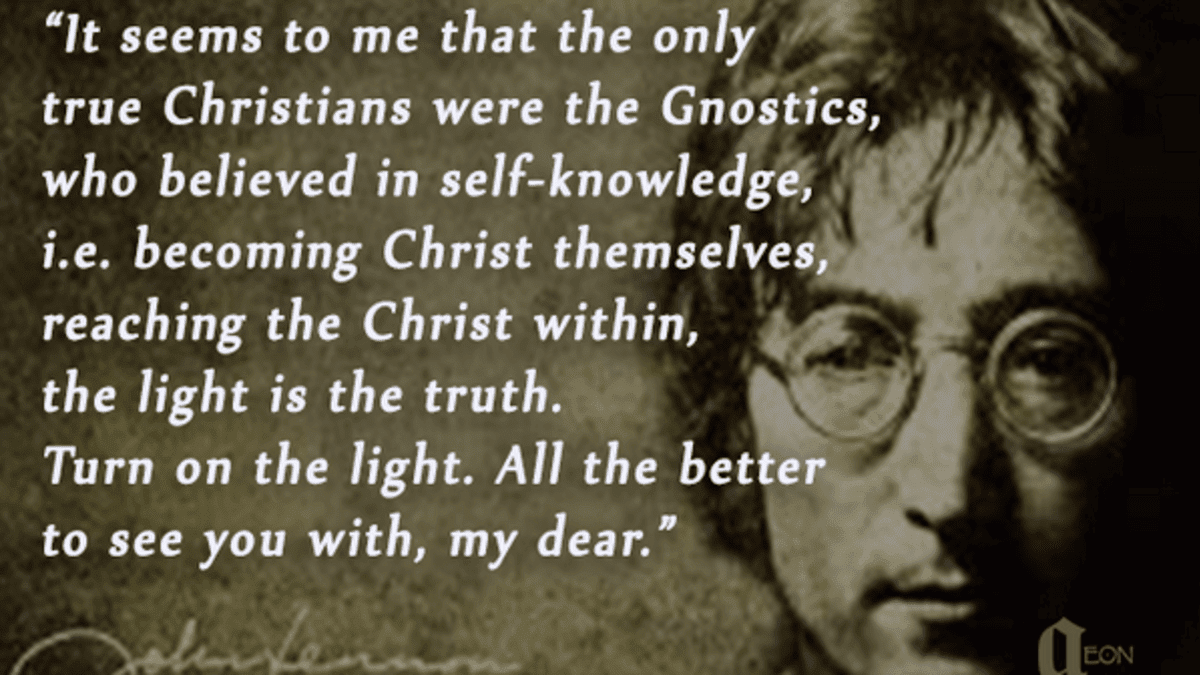
David Shepherd writes (on Ian Paul’s blog):
Gnostic dualism contrasted the ethereal other-worldly goodness of spirit and light with the transient worthlessness of flesh and matter. Consequently, Gnostics held that anything which perpetuated our God-given physical embodiment (including marriage and procreation) was to be rejected as evil, or, at best, inconsequential by comparison with spiritual pursuits.
Fast forward to the 17th Century and Descartes’ mind-body dualism (‘I think, therefore I am’) gave precedence to the mind over the body, conceiving the former to be essential and indicative of the true person, whereas the latter is relatively inconsequential to who we really are. Modern-day Gnostics have quoted Gospel of Thomas 22, as an encouragement to explore their sexuality. In New Dawn magazine, Dr. Stephan A. Hoeller wrote in support of this:
‘It is generally understood that at the non-physical level, people are not limited to their bodily gender. Jesus declared in the Gnostic scriptures that he “came to make the male and the female into a single one, so that the male will not be male and the female not be female.” [Gospel of Thomas Saying 22] We may take this to mean that in order to attain to the Wholeness of the Pleroma, all persons are striving toward a spiritual androgyny. In the hyletic phase of development this often manifests as polymorphous bisexuality, in the psychic phase as homosexuality, and in the pneumatic phase it moves increasingly into the area of a spiritually based androgyny. None of these are sinful or should be condemned in Gnostic thinking.’
The idea of a “crime against nature” is meaningless to the Gnostic, for our nature is not merely physical nature, such as our gender, but our total nature within which all dualities exist…
Today, gnosticism also finds expression in identity essentialism, where the body is merely the vehicle and the over-painted canvas of self-identification.In the SEC Doctrine Committee’s Theology of Marriage, this Gnostic precedence of the mind is continued:
‘It is the way people treat each other that counts, not the shape of the fleshly tools they use to express this. As we understand circumcision to be of the heart and not the penis, so the way in which we must treat each other sexually is dictated by the heart and the Spirit and not the genitals.’
This is an anti-incarnational false dichotomy, which sets up a false distinction between how we should employ both mind and body in relationship to others. It is also Hellenistic virtue ethics, which presumes that evidence (read, any declaration) of a virtuous motivation (‘I ended her life out of compassion. I couldn’t wait for marriage because I was so in love.’) is a true bellwether of right and wrong, rather than the actions in themselves, or foreseeable consequences of them.