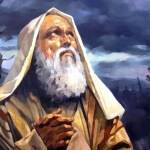
Abraham in Luke’s Gospel
The first two chapters of Luke’s Gospel contain many allusions to the story of Abraham (Genesis 11-21). In addition to the two explicit references to Abraham Lk 1:55; 1:79, S. Young (DJG [2nd ed.], art. ‘Birth of Jesus’ mentions:-
- Elizabeth’s barrenness (Lk 1:7 // Gen 11:30);
- the great age of the parents-to-be when receiving angelic visitation (Lk 1:7, 11 // Gen 17:1);
- the promise of a son, to be given a certain name and assigned a future role (Lk 1:13, 31 // Gen 17:16, 19);
- Mary’s presentation of herself as a “servant” (Lk 1:38, 48 // Gen 18:3–5);
- Zechariah’s questioning of the possibility of the angel’s message (Lk 1:18 // Gen 17:17; 18:11–12);
- the mention that nothing is impossible for God (Lk 1:37 // Gen 18:14); and
- the removal of Elizabeth’s disgrace together with the expression of the joy of her neighbors (Lk 1:25, 58 // Gen 21:6)
J.…
Mk 4:1-20 – The sower- sermon notes
Text: Mark 4:1-20
Spring-time by the Sea of Galilee. A large crowd gathered to hear Jesus.
What he said to the crowd, in public
The pathway – the stony soil – the thorny ground – the good soil.
No explanation given. What was it all about? Imagine a conversation between four family members:-
Father – “He’s a charlaton.”
Miriam – “I just love those charming stories.”
Mother – “He talks a lot of sense – but I have chores to do, friends to visit, letters to write.”…
What to look out for in Mark’s Gospel
Tim Chester has written a short piece on ‘What to look out for in Mark’s Gospel’. What follows is a précis.
The big question in Mark’s Gospel is ‘Who is this?’ (Mk 4:41). Who is Jesus and what has he come to do?
1. The King who must die
Right at the beginning, Mark introduces us to Jesus as the Messiah and Son of God (Mk 1:1). Messiah (Christ) means ‘anointed one’, and this reminds us that the kings of Israel were anointed with oil. …
Romans: a ‘Cook’s Tour’ of interpretative options
Before we embarked on a preaching series in Paul’s Letter to the Romans in our church, I was asked to provide a summary of some of the main interpretative issues. Most (but not all) of these are related to the so-called ‘New Perspective on Paul’.
| Issues | Questions | Implications |
| 1. Reformation spectacles (Rom 1:17) | Have we distorted the message of Paul by reading it through ‘reformation spectacles’? | Protestant/Catholic relations |
| 2. 1st-century Judaism (Rom 2:17ff; see also Lk 11:37ff) | Was the Judaism of Paul’s (and Jesus’) day essentially a religion of merit, or of grace? |
Kenosis theory
Taking Phil 2:7 (“he emptied himself”), along with 2 Cor 8:9 (“he became poor”), has led some to develop a kenosis theory, according to which Christ’s becoming human necessarily entailed a renunciation of some of his divine qualities. Otherwise, how could he share in those limitations of space, time, power, knowledge, and so on, that are part and parcel of human existence?
According to one version of the kenosis theory, Christ emptied himself of his ‘metaphysical’ attributes (omnipotence, omnipresence, omniscience and so on), but not his ‘moral’ attributes (love, justice, holiness, and so on).…
Our fellowship in Christ
Commenting on Philippians 1:5, William Hendriksen writes of the following characteristics of the fellowship of all believers in Christ:-
1. It is a fellowship of grace. It is not natural to us; nor is is manufactured by us. It is effects by Jesus Christ, 1 Cor. 1:9, and is the gift of the Spirit, 2 Cor. 13:13; Phil. 2:1, who has been sent from the Father.
2. It is a fellowship of faith. As Christ draws us to himself, so we approach him through faith. …
Luke 5:27-32 – The call of Levi – sermon notes
What would you rather do: eat your last Rolo yourself, or give it to me? Spend and hour and a half watching TV, or an hour and a half in a prayer meeting? Have a moan at your nosey neighbours for being nosey, or make friends with them so that it becomes the most natural thing in the world to invite them to one of our services here at HT?
Simple choices like this illustrate the chasm that so often looms between theory and practice, between what we know we should do, and what we actually do do. …
Faith, hope and love in Jesus’ ministry
The familiar Christian triad of faith, hope and love occur not only in the writings of Paul but also in the ministry of Jesus himself.
Faith is prominent in passages such as Matt. 6:30; 8:10, 26; 9:2, 22, 29; 14:31; 15:28; 16:8; 17:20; 21:21; 23:23.
The idea of hope (even if not always the actual word) occurs in Matt. 9:2; 14:27; Mark 5:36; 6:50; 9:23; John 11:11, 23, 40, etc.
And love, pre-eminent of the three, is stressed in passages including Matt.…
Miracle and metaphor
Marcus J. Borg describes himself as ‘moderate to liberal’ scholar. In setting out his ‘appreciative disagreement’ with Tom Wright (in response to the latter’s Jesus and the Victory of God), Borg homes in on the question of miracle. He sees the Gospels as a combination of ‘history remembered’ and ‘history metaphorized’. The first of these terms refers to those events that are recorded in the Gospels simply because they actually happened. The second term refers to other things that are related in the Gospels. …