Mary Whitehouse: ahead of her time?
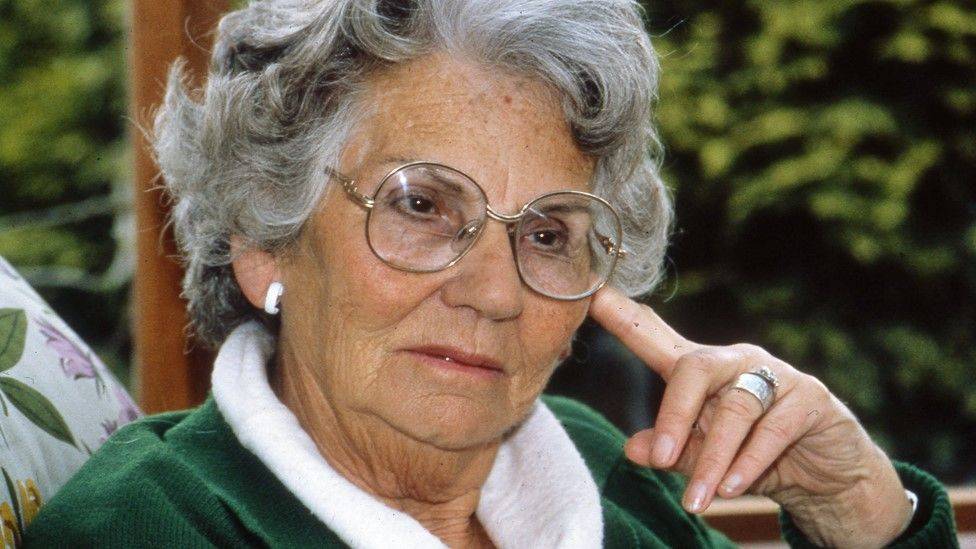
Moral compaigner Mary Whitehouse (1910-2001) is commonly remembered (if she is remembered at all) as an interfering moral busybody, an object of derision. Indeed, the entry about her on Wikipedia is laced with scarcely-disguised contempt.
I certainly did not expect the BBC to publish a thoughtful and sympathetic re-assessment of her work. But publish it they did, in the form of this article, by Samira Ahmed.
Here are some extracts.
‘The Christian decency campaigner Mary Whitehouse’s name became shorthand for anti-liberal prudery and censorship, but more than 20 years after her death, do her diaries reveal a woman who was ahead of her time in warning about the corrosive impact of internet pornography on society’
She was successful in lobbying lawmakers to draft legislation:
‘Her successes include the 1978 Protection of Children Act, which criminalised for the first time the making of indecent images of children, the 1981 Indecent Displays (Control) Act which controlled sex shops and the displays of pornographic material in newsagents, and the 1984 Video Recordings Act, to regulate the explosion in the sale of extreme content (so-called “video nasties”) in the new Wild West of home VCRs.’
She
‘She astutely diagnosed that big business and exploitation (she used the term “sexploitation”), not freedom of expression, was driving the [pornography] industry. She often said, “Pornography is the dirty face of capitalism”.’
When in 1975 she warned against the dangers of technology ‘overstepping’ itself,
‘She could have been talking about the impact of porn on school-age children today. An Ofsted report in June 2021 found 80% of girls were pressured to provide sexual images, and nominally adults-only platforms such as Pornhub and OnlyFans have been accused by campaigners and MPs of consistently failing to deal with abusive and exploitative material including under age content, upskirting, revenge porn and other non-consensual imagery.’
The name of Mary Whitehouse is often associated with that of Margaret Thatcher. But she found an ally in John Major, too. He said of her:
‘Mary was… an outsider taking on a powerful establishment with courage – and I admired that. Pornography and the exploitation of children was dangerous and growing, and Mrs Whitehouse was their undoubted foe. Upon these issues I supported her completely.’
She was frequently mocked for seeking to bring into law a list of proscribed sexual acts,
‘but the successful cross-party alliance that saw non-fatal strangulation finally made a criminal offence in the 2021 Domestic Abuse Act, seems a carefully targeted application of Whitehouse’s thinking – that there are acts which can be identified as of concern. The ubiquity of choking women in porn is recognised as just such an issue. The act also specifically blocks the use of a “rough sex gone wrong” defence.’
Whitehouse fought long and hard to make institutions accountable to ordinary citizens:
‘Ofcom has its origins in the Broadcasting Standards Council set up in 1988 – the outcome of her decades long push for ordinary citizens to have an ongoing role in the monitoring of broadcasting standards.’
When she discovered that it was common practice for the defence, in obscenity cases, to object to prospective women jurers, she campaigned the ensure that juries were 50% female:
‘”Anything else is certainly out of sympathy with the sex equality law which is just coming in,” she pointed out, a clever reference to the new Sex Discrimination Act.’
Mary Whitehouse would have recognised the current issue of no-platforming controversial speakers. She herself maintained an exhausting schedule addressing student unions and debating with well-known figures from the entertainment industry.
‘She often shaped the wording of the motions on pornography and indecency to frame the debate in a more nuanced way than censorship versus free speech.’
Throughout it all,
‘She braved death threats, verbal abuse, actual assaults and, in one case, students lowering an effigy of her on a rope as she spoke, often showing a remarkable sense of humour.’
As an evangelical Christian, some of her religious beliefs were (and are) out of step with modern Britain. But
‘she would see the impact of internet pornography on the young as exactly what she’d been warning against, and support the current efforts to finally get it under control.’