Classification of sermons 3 – Shedd
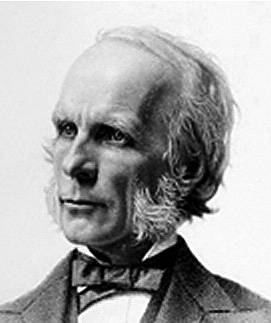
According to Shedd (Homiletics and Pastoral Theology), there are just three basic types of sermon.
1. The topical sermon. The sermon has one definite subject, which can be expressed in a single statement or proposition.
Shedd cites a sermon by Robert South (see here), on Number 32:23 – ‘Be sure your sin will find you out.’ In Shedd’s summary:
The proposition of the sermon is this: “Concealment of sin is no security to the sinner.”
The leading idea of the discourse is, the concealment of sin; and the particular idea in the hearer, to which this idea in the sermon is referred, is the idea of happiness. The concealment of sin is affirmed to be incompatible with the soul’s peace and enjoyment; and the positions by which the idea, or proposition, of the sermon is led back to this fundamental idea in the mental constitution of the hearer, are these:
1. The sinner’s very confidence of secrecy is the cause of his detection.
2. There is sometimes a providential concurrence of unexpected events, which leads to his detection.
3. One sin is sometimes the means of discovering another.
4. The sinner may unwittingly discover himself, through frenzy and distraction.
5. The sinner may be forced to discover himself, by his own conscience.
6. The sinner may be suddenly smitten by some notable judgment that discloses his guilt, or,
7. His guilt will follow him into another world, if he should chance to escape in this.
The topical sermon, according to Shedd, more conforms to the ideal of a pure oration than other forms. It is, on account of its unity, symmetry and convergence to a single point, ‘the model species for the sermonizer’. It is so because it is pervaded with but one leading idea, it embodies but one doctrine, it teaches but one lesson.
A few comments.
First, Shedd’s conception is very different from what in our own day is referred to as a ‘topical sermon’. This is not in itself necessarily a problem: but we just need to realise that we are using the same words to refer to two very different things.
Second, there may be a high level of oratorial purity about the topical sermon, but this is at the expense of much consideration of what the text meant in its original setting and context. The text is thus reduced to a motto or aphorism. Further, because the text is not placed in its broader context of God’s unfolding revelation, there is no pointing to Christ and his salvation in this particular specimen of preaching. This is a capital error.
Third, Shedd, as noted, places a high value on oratorial purity. Although he does not refer directly to the ancient teachers of oratory as frequently as Dabney, say, his reliance on them seems equally strong. This raises a slightly mischievous question: if reformed stalwarts such as Shedd and Dabney can rely so heavily on pagan wisdom, then perhaps the modern teacher of preaching skills should be more willing to exploit secular sources of wisdom (including experts in the theory and practice of communication skills).
2. The textual sermon. In this type of sermon, the passage of Scripture is divided up, and its leading words or phrases become the main points of the discourse.
Shedd gives the following example:
Rom. 14:12: “So then every one of us shall give an account of himself to God,” might be the foundation of a discourse upon human accountability. The divisions are formed by emphasizing the leading words, and thereby converting them into the divisions of the sermon, as follows:
1. An account is to be rendered.
2. This account is to be rendered to God.
3. Every one is to render this account,—mankind generally.
4. Every one of us is to render this account,—men as individuals. 5. Every one of us is to render an account of himself.
Shedd cites a sermon on Eph 5:20: “Giving thanks always, for all things, unto God.” The plan is as follows:
1. The duty itself,—giving thanks.
2. The object to whom thanks are to be directed,—to God.
3. The time of performing the duty,—always.
4. The matter and extent of the duty,—for all things.
Textual sermons may be ‘observational’, as in the following example of a sermon on Acts 9:4: “Saul, Saul, why persecutest thou me?”
The observations upon this text are suggested, either by the text as a whole, or by some of its parts.
1. It is the general character of unconverted men to be of a persecuting spirit. This observation is suggested by the text as a whole.
2. Christ has his eye upon persecutors. This observation is also suggested by the text as a whole.
3. The injury done to Christ’s people, Christ considers as done to himself. This observation is suggested by a part of the text,—by an emphasized word in it, “why persecutest thou me?”
4. The calls of Christ are particular. This observation is suggested by a part of the text,—“Saul, Saul.”
A good textual sermon relies on the suitability of the text itself, and an ability to discover the significant ideas suggested or implied by it.
3. The expository sermon is an explanatory discourse. In contrast to the modern evangelical favouring of expository preaching, Shedd notes that
‘Some writers upon Homiletics would deny it a place among sermons, and contend that it cannot legitimately contain enough of the oratorical structure, and character, to justify its being employed for purposes of persuasion. They affirm that the expository discourse is purely and entirely didactic, and can no more be classified with the connected, and symmetrical productions of oratory and eloquence, than the commentary or the paraphrase can be.’
But, writes Shedd, the expository sermon need not be regarded as mere commentary. It can, and should, have a principal theme, and a logical structure, just as much as a topical sermon does. The key is to select a passage of Scripture that is sufficiently complete in itself. But, Shedd warns:
‘Even when a suitable passage has been selected, the sermonizer will need to employ his strongest logical talent, and his best rhetorical ability, to impart sufficient of the oratorical form and spirit, to the expository sermon. He will need to watch his mind, and his plan, with great care, lest the discourse overflow its banks, and spread out in all directions, losing the current and the deep strong volume of eloquence. This species of sermonizing is very liable to be a dilution of divine truth, instead of an exposition.’
Shedd maintains that expository preaching is only occasionally necessary for the minister. His stated reason is the work of biblical exposition is (was) primarily undertaken by Sunday-school and Bible Class teachers.