Heirs of God
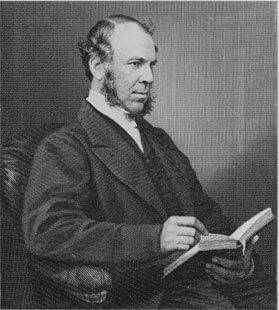
A summary of ch. 16 of Practical Religion, by J. C. Ryle
Rom 8: 14-17
The Apostle is speaking to the richest people on earth. The inheritance of which he speaks:-
- is the only inheritance really worth having. All others are unsatisfying and ‘They bring with them many cares. They cannot cure an aching heart or lighten a heavy conscience. They cannot keep off family troubles. They cannot prevent sicknesses, bereavements, separation, and deaths.’
- is the only inheritance which is within everybody’s reach. ‘Glory, honour, and eternal life, are offered to every man freely, who is willing to accept them on God’s terms.’
In order to have a part in this inheritance, you must have a part in God’s family.
1. The relation of all true Christians to God. They are “sons of God”. To be servants, subjects, soldiers, disciples, friends, of God, all are excellent titles; but to be a son is higher still, Jn 5: .55.
To be a son of the rich and noble is often reckoned a great privilege. But to be a son of God is far better:- and it is the portion of every true Christian.
We look to our earthly fathers for affection, maintenance, provision and education. There is an open home. There is a love which even bad conduct does not lessen. How great then is the privilege of those who can say of God, “He is my Father.”
This sonship is not ours by nature, Eph 2: 3. It is ours when we believe on Jesus Christ for salvation. Gal 3: 26; Jn 1: 12. .
We do not deny God’s Fatherhood over all mankind (Acts 17: 28). But this is a limited sonship, which does not give a man title to heaven.
We do not deny that God loves all mankind with pity and compassion (Psa 145: 9). But he is a reconciled and pardoning Father to none but those who believe and trust in Christ.
This view is not narrow-minded or harsh; it sets an open door before every man, and its promises are wide and full. But the Scripture does not warrant us to believe that the proud, the worldly, or the unbelieving have any part in Christ.
There is a school of theology, which talks much of liberality and love. Everything is right, and nothing is wrong. But it leads to hell.
- Facts are against it. There is evidence in the world that God does punish
- Man’s conscience is against it. Nothing so comforting in death, as real Christian faith. Nothing so empty as religion without conversion.
- Every reasonable conception we can form of a future state is against it. ‘Surely the mind revolts from the idea of a heaven in which there would be no distinction between the righteous and the wicked,-‘between Pharaoh and. Moses, between Abraham and the Sodomites, between Paul and Nero, between Peter and Judas Iscariot.’
- The interests of all holiness and morality are against it. This doctrine is subversive of all holiness and morality. It removes one of the great motivations for Christian faith and life.
- The Bible is against it. This view throws away Gods word. ‘And what do men give us in its place? Nothing, – nothing at all! They rob us of the bread of life, and do not give us in its stead so much as a stone.’
If anyone desires to know whether he is a child of God:- let him ask whether he has repented and believed; whether he is experimentally acquainted with Christ, and united to him in heart.
If anyone desires to become a child of God:- let him see and feel his sins; flee to Christ for salvation; and he will that day become a child of God.
If anyone is a child of God indeed:- he has ample reason to rejoice.
2. The special evidences of the true Christian’s relation to God.
- The sons of God are led by his Spirit (Rom 8: 14). They are no longer led by self, by sin. They are led by the Spirit away from sin to Christ. The Spirit leads them to Sinai, to Calvary, to Pisgah.
- They have the feelings of adopted sons towards their heavenly Father. They are delivered from a slavish fear of God; they are delivered from their guilt; They no longer feel that there is a great gulf separating themselves and God. Their feelings towards God are now those of peace and confidence. They draw near to him with boldne; They can speak to him with freedom.
- They have the witness of the Spirit in their consciences. It is the indwelling Spirit who tells them that their relationship with God is real. It is he who imparts a felt, positive, reasonable hope. They have the “seal” and the “earnest” of the Spirit.
- They take part in suffering with Christ. They have a cross to carry; they have trials, troubles and afflictions..
No man can suppose himself to be a son of God unless he has these marks of sonship. These marks may indeed vary in degree, but they must be present. Baptism, Church membership, and the like, are insufficient by themselves.
3. The privileges of the true Christian’s relation to God. Our prospects are glorious. We are hears: something is prepared for us which is yet to be revealed. We are “hears of God” – better far than to be hears of any earthly we are joint hears with Christ – we will share in his majesty, and take part in his glory.
This is for all God’s children.
We can scarcely begin to comprehend the nature and scope of the riches of this inheritance (1 Jn 3: 2). The Bible only lifts a corner of the veil. It often employs language to describe the absence of certain things, leaving the picture of what is present unpainted: no fading; no withering, no devil, no curse of sin, no sorrow, no tears, no sickness, no death – 1 Pet 1:4; 5:4; Rev 20:2; 21: 25; 22:3; 20:14; 21:4; Isa 33:24.
But there are positive things too:-
- our knowledge will be perfect, 1 Cor 13:12
- our holiness will be perfect, Eph 5:27
- our rest will be perfect, Heb 4:9
- our service will be perfect, Rev 7:15
- our satisfaction will be perfect, Psa 17:15
- our communion with the saints will be perfect, Psa 16:3; Mt 24:31
- our communion with Christ will be perfect, 1 Thess 4:17
see also Rom 8: 18; Col 3: 4
In conclusion
- Whose son are you?
- If you are not a son of God, become one without delay
- If you are a child of God, labour to feel and behave like one.