Imagine a world without suffering
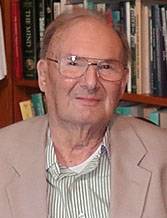
Readers of this blog will not expect to find much here by, or about, John Hick. However, his writings on the philosophy of religion are not without interest or value.
Hick has thought deeply about the problem of suffering. He asks us to imagine what the world would be like if there were no possibility of pain or suffering. I have always been struck by what he says about this:-
Suppose…that this world were a paradise from which all possibility of pain and suffering were excluded. The consequences would be very far-reaching. For example, no one could ever injure anyone else: the murderer’s knife would turn to paper or his bullets to thin air; the bank safe, robbed of a million dollars, would miraculously become filled with another million dollars (without this device, on however large a scale, proving inflationary); fraud, deceit, conspiracy, and treason would somehow always leave the fabric of society undamaged. Again, no one would ever be injured by accident the mountain-climber, steeplejack, or playing child falling from a height would float unharmed to the ground; the reckless driver would never meet with disaster. There would be no need to work, since no harm could result from avoiding work; there would be no call to be concerned for others in time of need or danger, for in such a world there could be no real needs or dangers.
To make possible this continual series of individual adjustments, nature would have to work by ‘special providences’ instead of running according to general laws which men must learn to respect on penalty of pain or death. The laws of nature would have to be extremely flexible: sometimes gravity would operate, sometimes not; sometimes an object would be hard and solid, sometimes soft. There could be no sciences, for there would be no enduring world structure to investigate. In eliminating the problems and hardships of an objective environment, with its own laws, life would become like a dream in which, delightfully but aimlessly, we would float and drift at ease.
One can at least begin to imagine such a world. It is evident that our present ethical concepts would have no meaning in it. If, for example, the notion of harming someone is an essential element in the concept of a wrong action, in our hedonistic paradise there could be no wrong action – nor any right action in distinct from wrong. Courage and fortitude would have no point in an environment in which there is, by definition, no danger or difficulty. Generosity, kindness, the “agape” aspect of love, prudence, unselfishness, and all other ethical notions which presuppose life in a stable environment, could not even be formed. Consequently, such a world, however well it might promote pleasure, would be very ill-adapted for the development of the moral qualities of human personality. In relation to this purpose it would be the worst of all possible worlds.
It would seem, then, that an environment intended to make possible the growth in free beings of the finest characteristics of personal life, must have a good deal in common with our present world. It must operate according to general and dependable laws; and it must involve real dangers, problems, obstacles, and possibilities of pain, failure, sorrow, frustration, and defeat. If it did not contain the particular trials and perils which – subtracting man’s own very considerable contribution – our world contains, it would have to contain others instead.
(Philosophy of Religion, 44-46)