Laughter: the best change agent?
Much has been written about the power of story, of narrative, to change attitudes and behaviours.
But I would like to put it to you, ladies and gentlemen, that humour can be just as powerful an agent for change. This is so with regard to topical satirical shows such as Have I Got News For You (BBC). And it is doubly so, of course, when humour is employed at part of (maybe the main part) of story-telling.
Enter the sit-com.
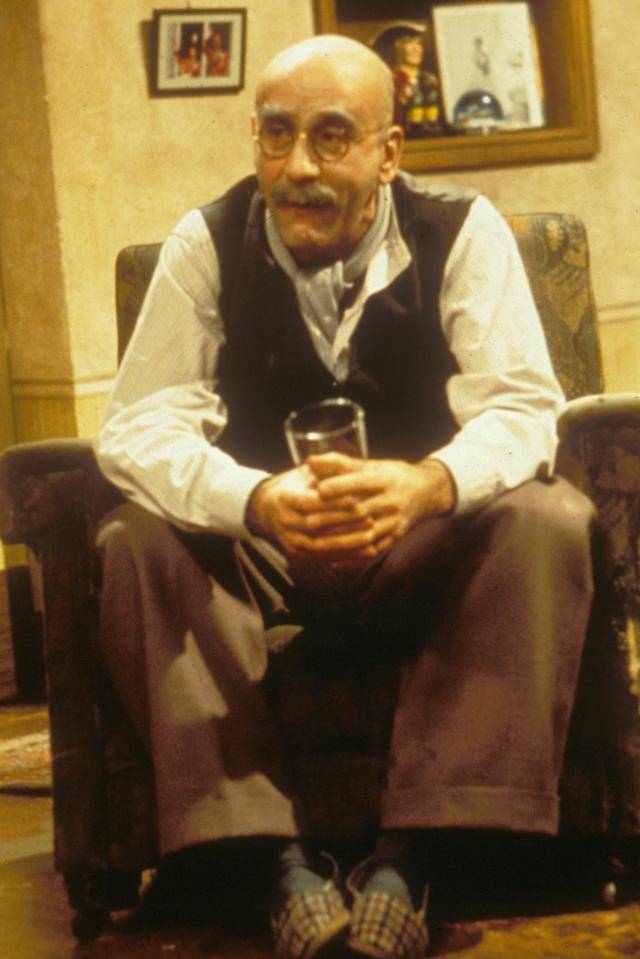
Till Death Us Do Part (1965-1975) was famous for its lead character, the bigoted Alf Garnett (played by Warren Mitchell). Garnett is such a detestable character that the louder he voices his opinions (whether on a political, moral, sexual, racial or religious subject) the more surely any ‘reasonable’ viewer will conclude that his opinion must be dead wrong. Thus the writer, Johnny Speight, gave himself a powerful vehicle for his own brand of (secular) bigory. When Mary Whitehouse spoke out against the foul language used in the show, Speight did his bit to turn the nation against her by making Garnett a big fan of hers.
The Vicar of Dibley was a regular on British TV during the 1990s. It began just a couple of years after the Church of England approved the ordination of women. But The Vicar of Dibley did not simply reflect the mood of the day: it helped change it. Richard Curtis, its creator, has stated that fully intended to enter the fray and use comedy to disarm the opponents of women’s ordination. (Sorenson, The Collar: Reading Christian Ministry in Fiction, Television and Film, p194.
Graham Linehan, co-creator of Father Ted (1995-1998), has spoken of his Roman Catholic upbringing, his loss of faith (as the age of 16), and the impact of that television series:- ‘I’m very proud that Irish people… kind of know Ted by heart. And I think it possibly went some way to changing the society. In a healthy way. I think we lanced a boil. You could not ask for anything greater for a writer. It’s the ultimate.’