Grayling and the fine-tuning argument
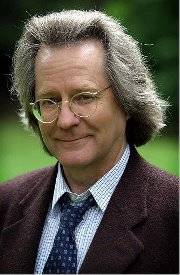
Philosopher A.C. Grayling has appeared on radio shows on both sides of the Atlantic recently, in order to promote his latest book The God Argument.
I happen to be a regular listener (via the podcasts) of both shows.
The American show is ‘Point of Enquiry’. This is associated with The Centre for Enquiry, which describes itself as ‘a think-tank advancing reason, science and secular values in public affairs and at the grass roots’. Grayling was interviewed Chris Mooney. Both were so entirely on the same wave-length that there was virtually no disagreement, debate, or even probing of Grayling’s arguments. Mooney says, at the outset, that ‘all’ the of arguments that are mounted in support of God’s existence are ‘bunk’, and Grayling does not disagree. In fact, ‘Point of Enquiry’ very rarely gives any space at all to those who would represent any ‘faith position’. It’s all very conspiratorial.
The British show is ‘Unbelievable’, hosted by Justin Brierley for Premier Christian Radio. In contrast to ‘Point of Enquiry’, this show exists to bring Christians and non-Christians together in order to facilitate thoughtful and intelligent debate and discussion.
I would like to ask you: which of these radio shows – the sceptical ‘Point of Enquiry’ or the avowedly Christian ‘Unbelievable’ best represents respectful open-mindedness? The answer is pretty obvious, isn’t it?
Mooney and Grayling begin by agreeing that the notion of God as an all-powerful being is meaningless, because there are obviously things that God cannot do – he cannot commit suicide, for example, and he cannot eat himself. But this is fatuous reasoning. The Puritans were wont to say that there are three things that even God cannot do: he cannot lie, he cannot die, and he cannot deny himself. And that pretty much sums up what any thoughtful theist would say.
But now to the main matter. On both shows, Grayling attempted to de-bunk the fine-tuning argument for the existence of God. According to this argument, the universe exhibits a number of finely-tuned characteristics which seem exceptionally fitted to (or even designed for) the eventual development of life. If any of these characteristics were varied by just a very small degree, life as we know it would never have developed.
Grayling’s attempted rebuttal went along the following lines: if I look back over my own ancestry, he says, I see that a series of random occurrences (including, perhaps a chance meeting by my great-grandparents many years ago) have led to my existence. But it would be egotistical in the extreme to conclude that all these events happened in order for me to exist.
But the analogy is not appropriate. The question is not, ‘How did we end up with this particular life – A.C. Grayling, Jonathan Mason, or Jean Smith?’ Once we accept that all the conditions for life are present, then contingent events such as chance meetings and the shuffling of genes can plausibly be appealed to in order to explain each particular life. No: the real question addressed by the fine-tuning argument is, ‘How did we end up with any life at all?’
We can agree that, from a naturalistic perspective, to explain the existence of any given person in teleological terms is like drawing a bull-eye around the bullet-mark after the shot has been fired. But it is an entirely different matter to assert that the conditions for life in general are so finely-tuned as to point towards (though not, of course, to actually prove) the existence of a Creator.