Slavery: how involved was the C of E?
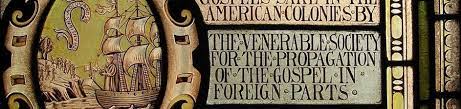
Once again, the involvement of the Church of England in the slave trade is being referred to in simplistic and misleading ways.
This time, according to the BBC, it’s Labour peer Lord Boateng, chair of the Archbishops’ Racial Justice Commission:
‘He referred to the church’s missionary organisation, the Society of the Propagation of the Gospel, which owned a plantation in the 18th Century – and which branded the word “Society” on the skins of the people they enslaved.’
The truth of the matter – although certainly indefensible – is more nuanced than that.
It reflects the many half-truths contained in Ben Lindsay’s We Need To Talk About Race (SPCK, 2019), a book endorsed by Justin Welby, Archbishop of Canterbury, as a ‘must-read’. It is also recommended by the Church of England Evangelical Council.
According to Giles Udy,
‘The sole involvement of the Anglican church in slavery was when its missionary society, the Society for the Propagation of the Gospel in Foreign Parts (SPG), was left a plantation [the Codrington plantation) in Barbados in 1711 in the will of a man who wanted to found an order of medical missionaries to alleviate the plight of slaves, funded by plantation profits. It was bound by the will to maintain the plantation and slaves. If it had closed the plantation down the slaves would have been seized by other planters. The SPG got excited by the prospect of being able to create a new more humane model of a slave-run plantation. But if ever there was a poisoned chalice, this was it. It was mistaken, morally questionable, and ultimately a failure.’
But even this failure, though indefensible, must be seen in its historical context. For,
‘Until Christians in the third quarter of the 18th Century investigated and publicised the conditions in which slaves were transported and then held, virtually no one in England knew much of their plight. This was why the famous print of slaves stacked on the ‘Brookes’ slave ship (1787) created such a stir, was printed in thousands of copies, and was hung in inns and private houses throughout the country. People did not know what slave conditions were until then. They were appalled when they found out.’
Moreover, in terms of numbers, it should be noted that the Codrington plantation, at the time of emancipation, had 400 slaves out of a total of 83,000 in Barbados, and 750,000 throughout the West Indies. On these figures, the Church of England can hardly be said to have had a central role in the slave trade.
Lindsay repeats the oft-heard accusation that the Society for the Propagation of the Gospel branded its slaves. This, too, is deeply misleading. The truth is that
‘the SPG were absentee landlords and put local managers in place to run the plantation who did brand some slaves. This was discovered by the resident SPG chaplain who was utterly horrified and put an immediate stop to it.’
It is often said that C of E clergy benefitted financially from compensation when the slaves were emancipated. This is true, but once again, the scale and context must be noted. As Udy points out:
‘Fewer than 100 out of the 6500 [or more] Anglican clergy serving in 1833 received compensation for slaves at emancipation…47,000 compensation payments were made on emancipation. 97 payments were made to clergy (not all of whom were direct owners of slaves, in that some had inherited shares in plantations). Those 97 represent just 0.2% of the total.’
Although not mentioned by Lindsay (who suggests, without evidence, that more C of E bishops supported, than opposed, slavery), Udy notes the charge made in Synod in 2006 that the Bishop of Exeter ‘was paid for slaves he owned’ and that this has ‘ever since held up as the ‘smoking gun’ of wider CofE guilt.’
The claim continues to be cited in popular sources, as, for example, by Nigel Pocock and Victoria Cook:
‘Phillpotts and three business associates invested in slave plantations in Jamaica, and when slavery was abolished they were paid compensation for the loss of 665 slaves. A bishop personally owning slaves must have been a powerful legitimating tool for Caribbean interests in Britain.’
But, as Udy says, the claim
‘is totally without foundation. He was one of a number of executors of an aristocrat’s will, and had nothing to do with slavery (he even presented petitions to parliament for its abolition). It is deeply regrettable that the clergyman who raised was not better informed and that there has never been a retraction.’
The UCL ‘Centre for the Study of Legacies of British Slavery’ agrees that this claim is unfounded:
‘Ever since Eric Williams discovered the bishop’s name in the compensation records, several authors have claimed that the bishop was a slave owner, but there is no evidence of this.’
In this paper, Peter Wingfield-Digby adds some detail:
‘Several respected writers in Devon have stated that, because the bishop’s name appears in the LBS database, he must have been a slave-owner. But this is not true. The compensation that he and three other people received in 1835 was in their role as executors and trustees of the will of a person who had died two years earlier. That person was John William Ward, 1st Earl of Dudley, who owned large industrial enterprises in the Midlands as well as three plantations in Jamaica. He had had a short spell as Foreign Secretary in 1827. Since he was unmarried, he had set up a comprehensive trusteeship in his will to look after his extensive estate after his death, so that the estate would pass to William Ward, his second cousin once removed, then aged only 16. It is most unlikely that any of the four executors would have benefited financially from this compensation payment. Also, I want to make it quite clear that, so far, no evidence has been found that the bishop ever owned slaves.’