That’s not what I call preaching 6
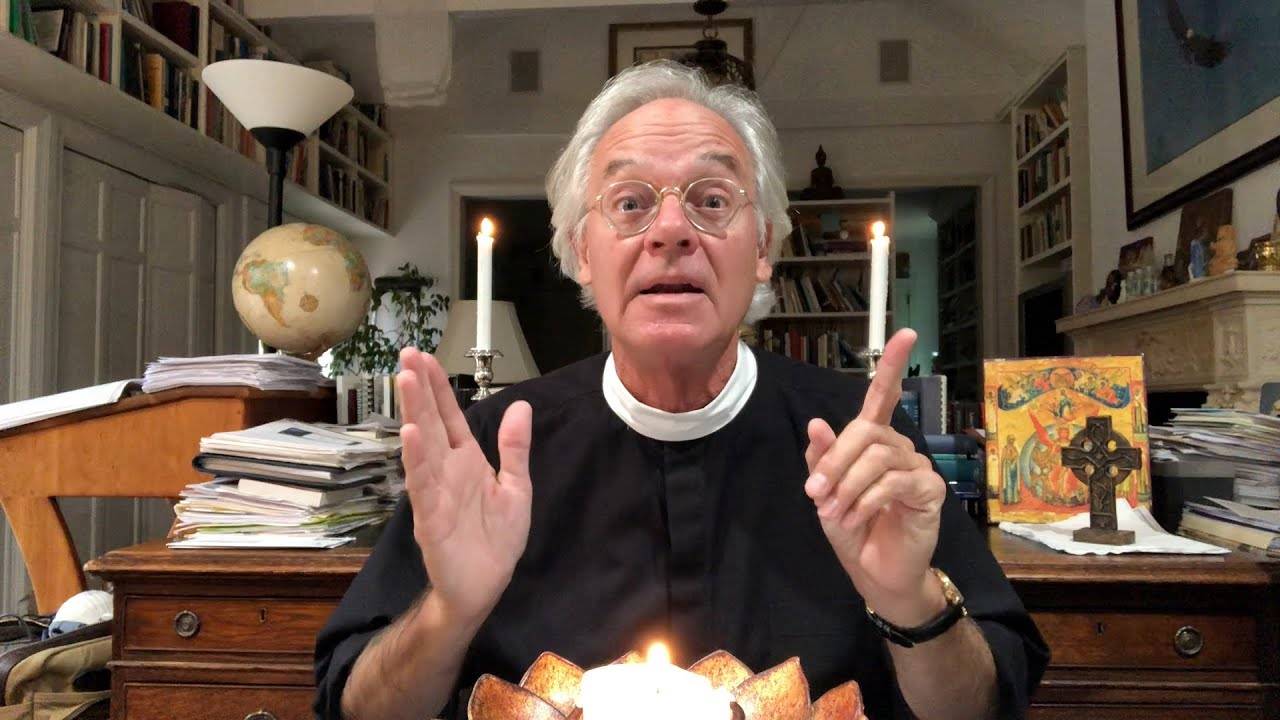
The Very Reverend Samuel G. Candler, Dean of the Cathedral of St. Philip, Atlanta, GA, preached this sermon on Heb 12:1-2.
12:1 Therefore, since we are surrounded by such a great cloud of witnesses, we must get rid of every weight and the sin that clings so closely, and run with endurance the race set out for us, 12:2 keeping our eyes fixed on Jesus, the pioneer and perfecter of our faith. For the joy set out for him he endured the cross, disregarding its shame, and has taken his seat at the right hand of the throne of God.
The preacher’s intention is clear enough:
‘I want to speak this morning about clouds.’
Yes, you read it right.
The preacher identifies the ‘cloud of witnesses’ as the heroes of faith that have been catalogued in the previous chapter. So far, so correct. But he then departs from this train of thought in order to show how we (presumably, the preacher and his hearers) resemble clouds.
Clouds, we are informed, come in different shapes and sizes. In the same way,
‘Some of us are light and airy, like high-level clouds. Some of us are dark and stormy, maybe brooding. Some of us provide nourishment with our water, raining blessing down upon others during needy times. But some of us have the potential to do great damage with our storms. Some of us are down-to-earth, and some of us are high and lofty.’
Clouds form when water vapour coalesces around a tiny speck of dust:
‘Every one of us starts as a particle of dust. Stardust, maybe. “Remember that you are dust, and to dust you shall return.” It is water that turns us into a cloud. It is this baptismal water, which we will bless later in this service, it is this baptismal water that turns us into a cloud of witnesses.’
Water in the air is not always seen, but clouds give it shape. In the same way, what we believe is not always visible (Hebrews 11:1), but takes shape as we meet the various challenges of daily life.
Ultimately, this ‘cloud of witnesses’ testifies to the Jesus we have seen, or would like to see. Sin is any illusion that gets in the way of seeing Jesus. Clouds can themselves be illusions, but, more often, they are inspiration for us. They nourish us with living water.
The preacher concludes:
‘What do you see in the clouds this morning? I see witness. I see the lovely shapes and sizes of faith, some billowing and beautiful, and some wispy and fragile, but still beautiful—all of us giving shape to faith and following Jesus, our pioneer, our perfecter, our Lord.’
Evaluation
This sermon is an exercise in missing the point.
It is not rooted in the meaning of the text, fairly interpreted. It is, rather a gratuitous product of the preacher’s own imagination.
In the text, the word ‘cloud’ is used for one reason: as a metaphor for the multitude of witnesses to which the writer has referred in the previous chapter (so Allen, O’Brien, Hagner, Lane and others.) This was all the writer to the Hebrews intended by his use of the word ‘cloud’, and the preacher has no warrant for developing the metaphor in ways that are alien to the writer’s intent.
The sermon is not redeemed by the preacher correctly observing that the ‘cloud of witnesses’ glances back to the catalogue of heroes of the faith of the previous chapter, by mentioning ‘sin’, or by having something positive to say about Jesus Christ.
Nor is it excused by its apparent ‘harmlessness’. Actually, it is not harmless. The preacher is saying, in effect: The meaning of text as it stands is not interesting or important enough; therefore I will use it as a peg on which to hang my own thoughts (which are more interesting and more important). In this way, the sermon becomes a gratuitous product of the preacher’s own imagination, an insult to the Holy Spirit, who inspired the text, and a dereliction of the duty the preacher has towards his hearers (who should have been urged to ‘run the race with perseverance’ as the text pleads).
That’s not what I call preaching!